
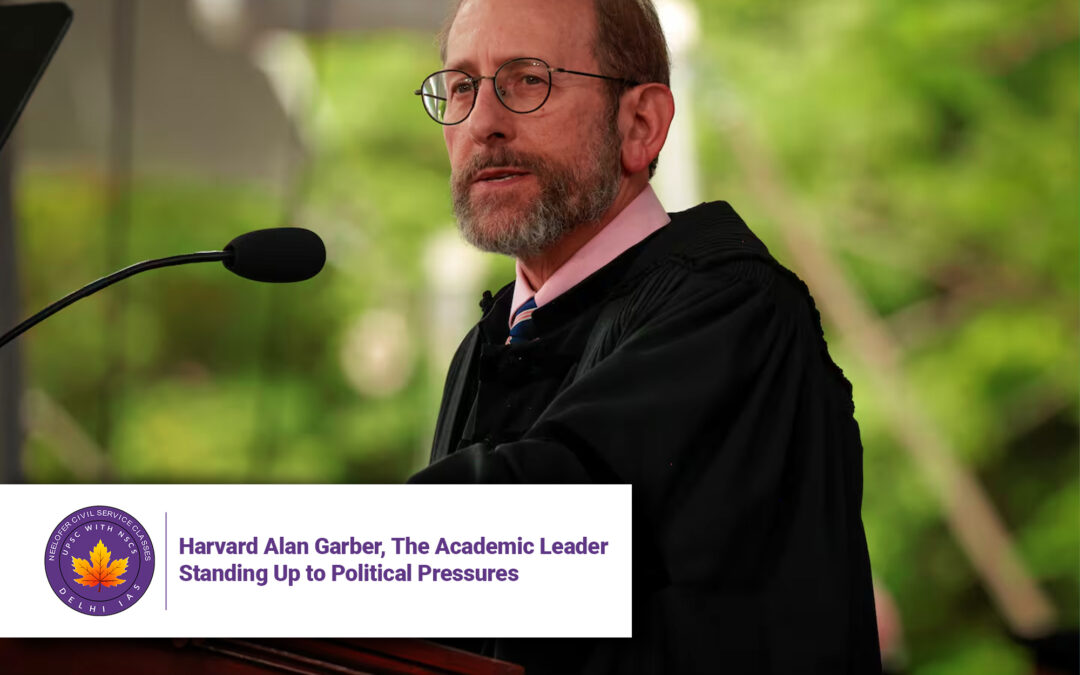
Harvard Alan Garber, The Academic Leader Standing Up to Political Pressures
Why in News?
Alan Garber, Harvard University’s interim president, has emerged as a pivotal figure in defending academic freedom against political interference, particularly from the Trump administration. His leadership during controversies over campus anti-Semitism, diversity policies, and federal overreach highlights the growing tensions between U.S. universities and government mandates. 
Key Developments
-
Crisis Leadership:
-
Appointed in January 2024 after predecessor Claudine Gay resigned amid plagiarism allegations and criticism over handling anti-Semitism.
-
Established task forces to address anti-Semitism and Islamophobia, appointing contentious figures like Jewish history professor Derek J. Penslar, drawing mixed reactions.
-
-
Clash with the Trump Administration:
-
Federal Demands: In April 2024, the Trump administration demanded oversight of faculty hiring, mandatory reporting on international students, and enforced “viewpoint diversity.”
-
Garber’s Pushback: Issued a public letter declaring, “No government should dictate what universities teach or whom they hire,” and filed a lawsuit alleging First Amendment violations.
-
-
Policy Reforms:
-
Ended mandatory diversity statements for job applicants.
-
Adopted a policy of not issuing official statements unrelated to Harvard’s “core functions.”
-
Canceled affinity-group graduation ceremonies, signaling a shift toward race-neutral policies.
-
Challenges & Controversies
-
Financial Threats: The administration froze $2.2 billion in grants and $90 million in contracts, while GOP lawmakers targeted Harvard’s tax-exempt status.
-
Legal Battles: Lawsuits over federal interference may take years to resolve, with potential long-term damage to academic programs.
-
Balancing Act: Garber’s concessions (e.g., scaling back diversity initiatives) aim to preserve Harvard’s autonomy but risk alienating progressive faculty and students.
Historical Context
-
Garber’s Legacy: A Harvard alumnus (BA, MA, PhD) and former provost, known for consensus-building during crises.
-
Trump’s Higher Education Agenda: Pledged to combat “radical Left” influence in universities, mirroring broader conservative critiques of elite institutions.
5 Critical Questions Answered
Q1: Why did Alan Garber become Harvard’s president?
A: He stepped in after Claudine Gay’s resignation, amid scandals over plagiarism and campus anti-Semitism.
Q2: How has Garber responded to federal pressure?
A: By suing the Trump administration over First Amendment violations and resisting mandates on hiring/curriculum.
Q3: What reforms has Harvard implemented under Garber?
A: Scrapped diversity statements, limited official pronouncements, and revised race-based policies.
Q4: What are the financial risks to Harvard?
A: Loss of federal funding and tax-exempt status threats could cripple research and operations.
Q5: What makes Garber’s leadership unique?
A: His calm diplomacy and willingness to make unpopular decisions to shield Harvard’s independence.
Conclusion
Alan Garber’s presidency epitomizes the struggle to uphold academic freedom in an era of political polarization. While his pragmatic concessions may ensure Harvard’s survival, they also reflect the precarious tightrope walk between institutional integrity and external pressures. As legal battles loom, Garber’s legacy will hinge on whether Harvard emerges as a bastion of open inquiry or a cautionary tale of government overreach.
*— Reported with inputs from The Harvard Crimson and The New York Times
