
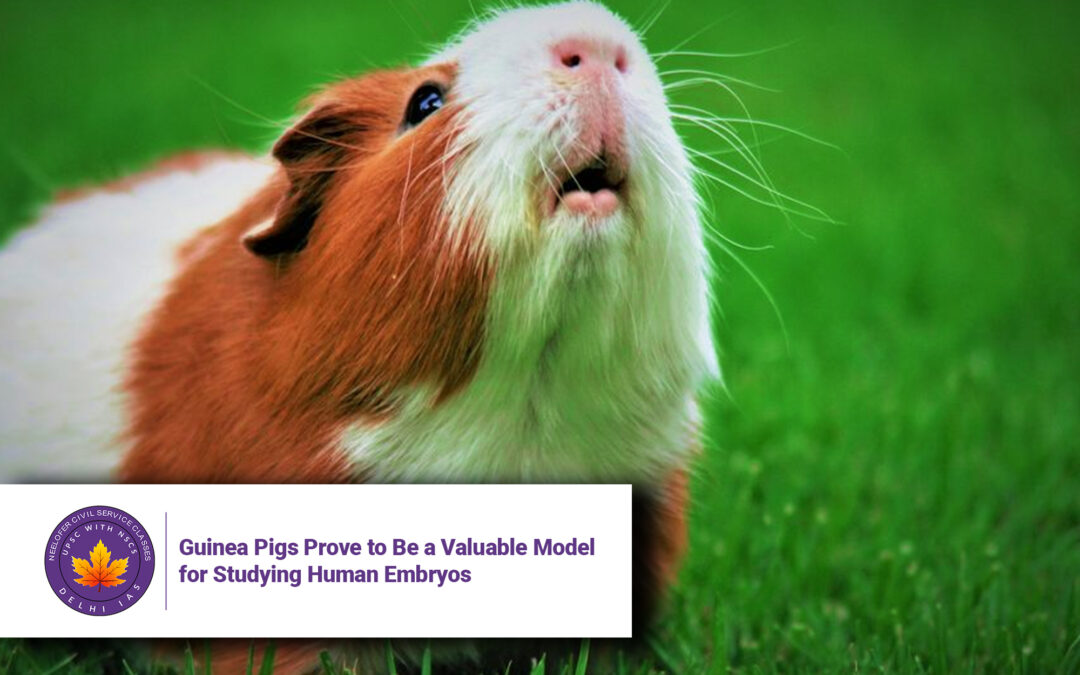
Guinea Pigs Prove to Be a Valuable Model for Studying Human Embryos
Why in News?
A recent study has found that guinea pigs can serve as a reliable animal model for studying the early stages of human embryo development. This breakthrough is significant due to the ethical and legal restrictions on using human embryos in research. 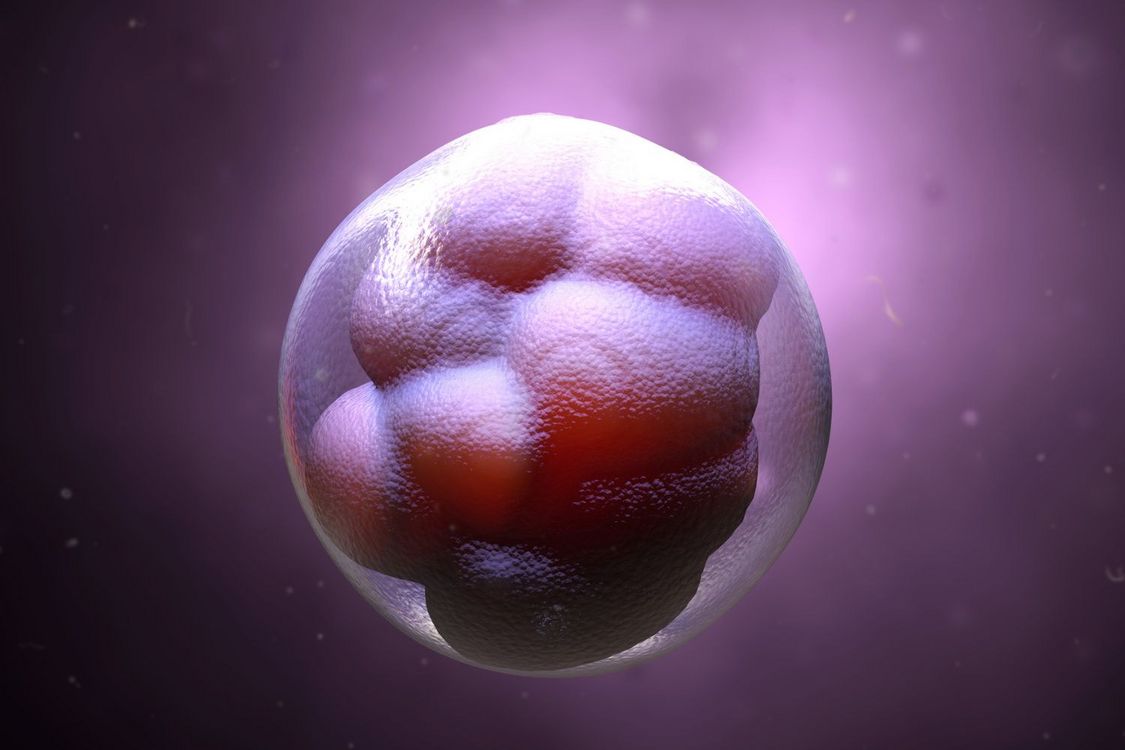
Introduction
Understanding how a human embryo develops in its earliest stages—especially during pre-implantation—is crucial for improving fertility treatments, preventing birth defects, and gaining insights into human development. However, direct study of human embryos is restricted by various ethical and legal limitations. Scientists are now turning to guinea pigs as a promising alternative.
Key Points of the Study
-
Pre-implantation stage refers to the first few days of embryo development when the first cells form.
-
This stage determines:
-
Whether the embryo can survive.
-
How it will implant in the womb.
-
How fetal tissues will develop.
-
-
Due to restrictions on human embryo use, researchers sought an alternative model.
-
Guinea pigs are now being recognized as a reliable and robust small animal model for this purpose.
Why Guinea Pigs?
-
Their reproductive biology shares key similarities with humans.
-
Guinea pigs are already widely used in biomedical research.
-
Their embryo development processes make them ideal for studying early human embryogenesis.
Challenges and the Way Forward
-
Ethical Research: Continued efforts are needed to ensure animal models are used responsibly.
-
Further Validation: More studies are required to fully confirm the comparative biological accuracy between guinea pig and human embryos.
-
Innovation in Fertility Treatments: This model may pave the way for better understanding of implantation failures, IVF improvements, and birth defect prevention.
Conclusion
Using guinea pigs as a model for human embryo development marks an important step forward in reproductive and developmental biology. With this method, researchers can gain vital insights without breaching ethical lines, helping advance medicine and fertility science in a responsible and impactful way.
Q&A Section
Q1. What stage of embryo development is being studied in this research?
The pre-implantation stage, which is the first few days when initial cells form.
Q2. Why is studying human embryos directly a problem?
There are ethical, legal, and logistical limitations on using human embryos for research.
Q3. How do guinea pigs help in this research?
They serve as a reliable and robust animal model for studying the early stages of embryo development similar to humans.
Q4. What can researchers learn from using guinea pigs?
They can better understand how embryos survive, implant in the womb, and form tissues, which helps improve fertility and developmental treatments.
Q5. Why is this development important?
It allows researchers to study critical biological processes without violating ethical guidelines, opening the door for safe and informed reproductive medicine.
