
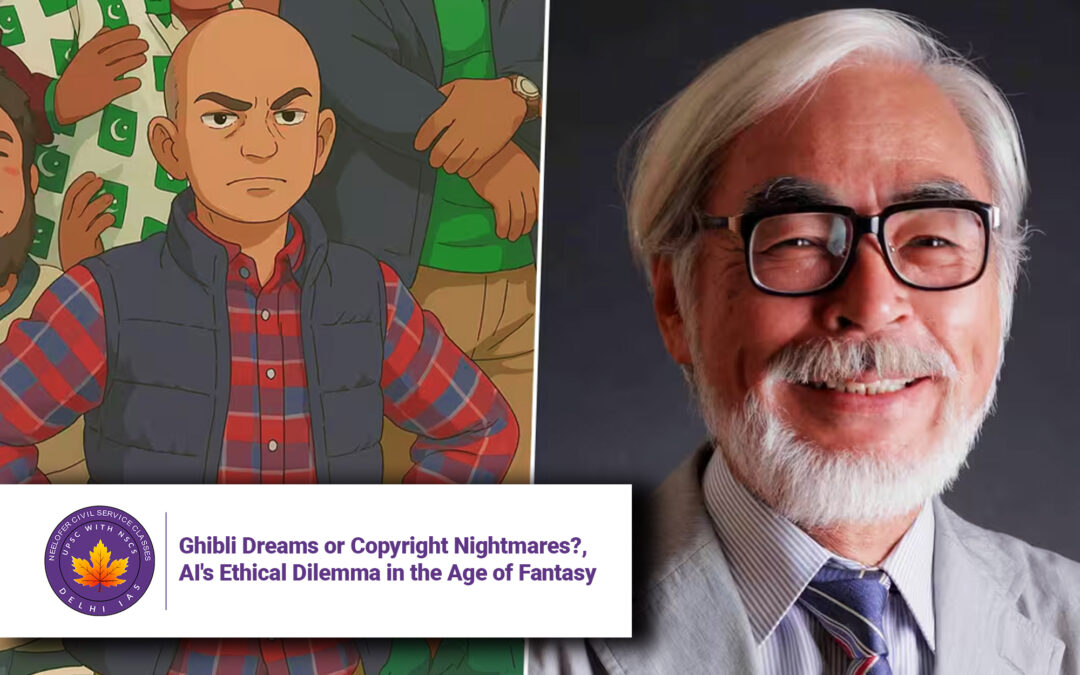
Ghibli Dreams or Copyright Nightmares?, AI’s Ethical Dilemma in the Age of Fantasy
Why in News?
OpenAI’s new image-generation capabilities, which can create visuals mimicking Studio Ghibli’s iconic animation style, have sparked global debate. From military propaganda to erotic content, AI-generated images are now touching sensitive political, legal, and artistic boundaries — raising urgent copyright and ethical questions.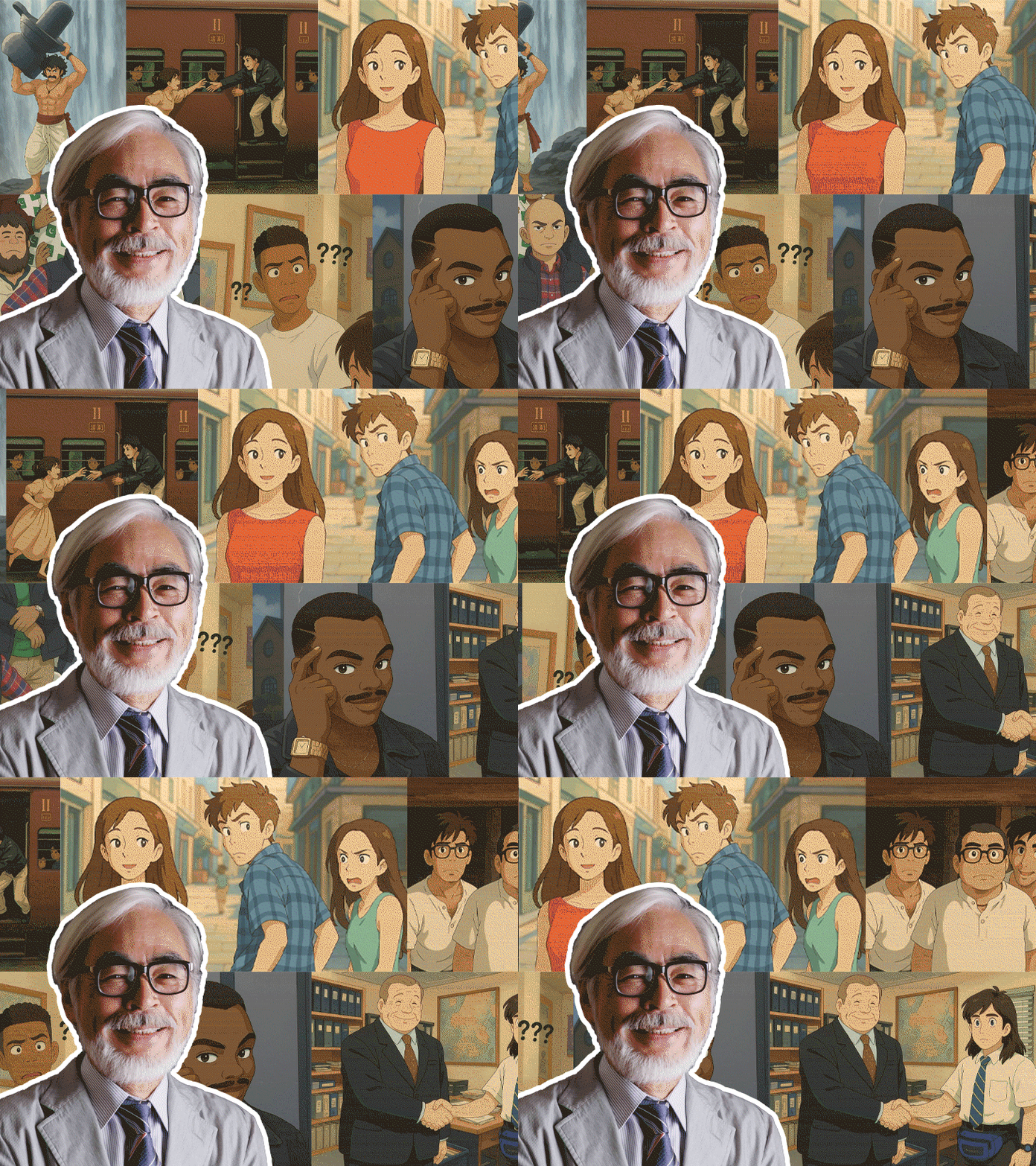
Introduction
The charm of Japanese director Hayao Miyazaki’s films lies in their anti-war, anti-militarist themes. However, a recent wave of AI-generated images mimicking the Ghibli aesthetic has seen this art style applied to deeply inappropriate content — including war scenes, pornography, and terrorism. With OpenAI’s GPT-4o model now enabling users to easily create these images, the internet is awash with ethically troubling outputs.
Key Issues
1. Clashing Values: Ghibli’s Ethics vs AI’s Reach
Miyazaki’s anime films like Princess Mononoke and Castle in the Sky promote peace and oppose militarism. Yet, AI-generated images — including an Israeli military post using Ghibli-style graphics — trivialize these values and exploit the beloved animation style for political ends.
2. Ethical Concerns over Realism and Consent
From transforming Oppenheimer into a Ghibli-style character to reimagining tragic events like the JFK assassination or destruction of religious sites, AI is blurring ethical lines. Professor David Leslie emphasized the troubling ethics of turning real people and painful moments into cartoon fantasy.
3. Copyright Confusion
OpenAI defends its image generation by claiming “fair use,” but legal experts argue that using protected styles or copying distinct art forms may infringe on moral rights — especially in countries that respect creators’ rights beyond economic ownership.
4. Social Ramifications and Misuse
Many users are weaponizing AI to create misleading visuals — including manipulated pornography, hate propaganda, and offensive satire. Rights experts worry that AI tools will continue being misused unless stricter laws are put in place.
5. The Role of Law and Responsibility
While U.S. copyright law protects only “fixed expressions,” it often fails to safeguard “moral rights” like the intention or soul of an artist’s work. In contrast, countries like Japan and France offer stronger protection, valuing the creator’s original vision.
Challenges and the Way Forward
-
Strengthen Global Copyright Laws: Broaden the definition of protected creative expression to include style and ethical use.
-
Enforce AI Content Regulations: Platforms must develop tools to identify, flag, or ban AI-generated offensive or deceptive content.
-
Educate the Public: Creators and users alike must understand the implications of generating or sharing AI content that mimics real-world people or events.
-
Protect Moral Rights: Governments should uphold an artist’s right to control how their work or legacy is adapted or imitated.
-
Tech Company Accountability: AI developers like OpenAI must create safeguards, review content misuse, and be transparent about training data.
Conclusion
AI-generated imagery offers exciting creative potential, but when misused, it threatens artistic integrity, public trust, and human dignity. As technology outpaces regulation, the need to balance freedom of expression with ethical responsibility becomes paramount. Protecting the spirit of original art — like Miyazaki’s gentle rebellion against war — may be the real battle we must fight in the AI era.
5 Q&A on Ghibli-Style AI and Copyright Law
Q1: Why is Studio Ghibli’s name involved in this controversy?
AI image tools are generating visuals in the distinct style of Studio Ghibli, often applied to military propaganda, pornographic scenes, and tragedies — directly contradicting the studio’s anti-war, humanist themes.
Q2: Is using an art style like Ghibli’s illegal?
Not exactly. While art styles themselves aren’t copyrighted, using them in misleading, exploitative, or offensive contexts can violate ethical standards or moral rights, especially in countries that recognize these rights.
Q3: How is copyright law reacting to AI art?
Copyright law — especially in the U.S. — is currently struggling to keep up. AI-generated works aren’t typically protected, but copying a fixed expression or using someone’s identity or likeness can still be a legal issue.
Q4: What is OpenAI’s stance?
OpenAI argues that the generated images are protected under “fair use” as long as they’re transformative or not directly copied. However, critics argue this undermines original creators and misuses artistic intent.
Q5: What’s the broader implication?
This issue isn’t just about Studio Ghibli. It reflects a global challenge — how do we allow creative AI use while respecting artists, preventing misuse, and avoiding cultural and emotional harm?
