
Free Speech, Democracy, and the Epidemic of Hurt Sentiments
Why in News?
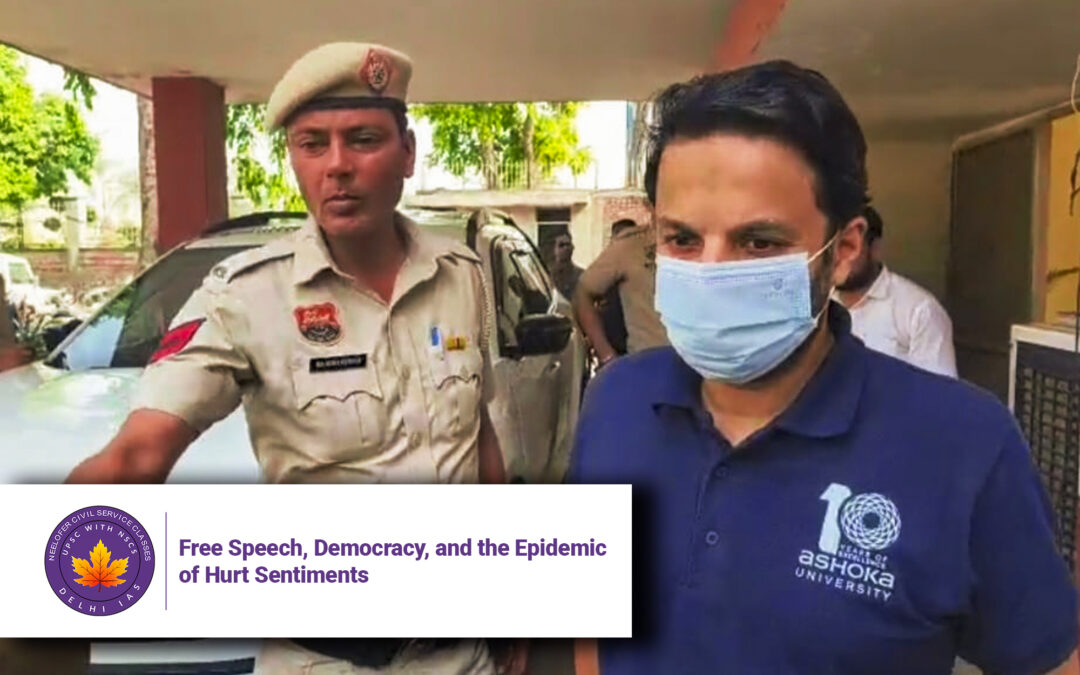
The recent arrest of Ashoka University professor Dr. Karan Mahajan over a social media post criticizing the Ram Temple consecration has sparked debate on the state of free speech in India. It comes amid rising concerns over how hurt sentiments are used to justify suppression of dissent in democratic societies. 
Introduction
Freedom of speech is central to individual liberty and democracy. However, recent trends suggest a growing tendency to silence or penalize expressions that offend sentiments—religious, nationalistic, or otherwise. This tension between free expression and the epidemic of hurt feelings is now at the forefront of India’s political and legal discourse.
Key Issues and Institutional Concerns
1. Ancient Roots of Freedom
The Indian tradition, as expressed in the Upanishadic mantra “moksha is the function of freedom,” reflects a philosophical reverence for liberty. Thinkers like Aurobindo Ghosh linked freedom directly to truth and progress.
2. Arrest of Academics
Dr. Mahajan’s arrest over a tweet critical of the Ram Temple event highlights the shrinking space for dissent and the increasing role of state policing of opinion.
3. Supreme Court’s Stance
While the Supreme Court of India has reiterated the need to protect freedom of speech, its directions are often undermined by executive action, especially at the local police level.
4. The Danger of “Offense Culture”
A culture where individuals can demand censorship simply because they feel “offended” is dangerous. The author draws a parallel to Ayn Rand’s idea that the “right to be offended” must not override the right to speak freely.
5. The Impact on Knowledge and Democracy
Freedom of speech is vital for academic inquiry, intellectual growth, and democratic health. Without dissent, questioning, and debate, democracy risks intellectual stagnation.
Conclusion
The rise of legal and social sanctions against speech under the guise of “hurt sentiments” poses a threat to both individual liberty and public discourse. In a democracy, freedom of expression must be preserved even at the cost of discomfort. As philosopher George Orwell noted, true liberty is the freedom to tell people what they don’t want to hear.
Q&A Section
Q1. What recent event reignited the free speech debate in India?
The arrest of Ashoka University professor Karan Mahajan over a social media post critical of the Ram Temple consecration.
Q2. Why is the concept of ‘hurt sentiments’ problematic in a democracy?
It allows people or groups to suppress dissenting voices and stifle free expression under the pretext of emotional offense.
Q3. What does the article suggest about India’s philosophical roots in freedom?
The Indian philosophical tradition, from the Upanishads to modern thinkers, has always emphasized freedom as essential to truth and progress.
Q4. How is freedom of speech linked to academic and scientific progress?
Free expression is vital for questioning, challenging norms, and disseminating knowledge—all crucial to research and democratic functioning.
Q5. What solution does the article propose to counter the epidemic of hurt feelings?
It urges a return to rational public discourse, legal protections for free speech, and public understanding that freedom includes the right to offend.

