
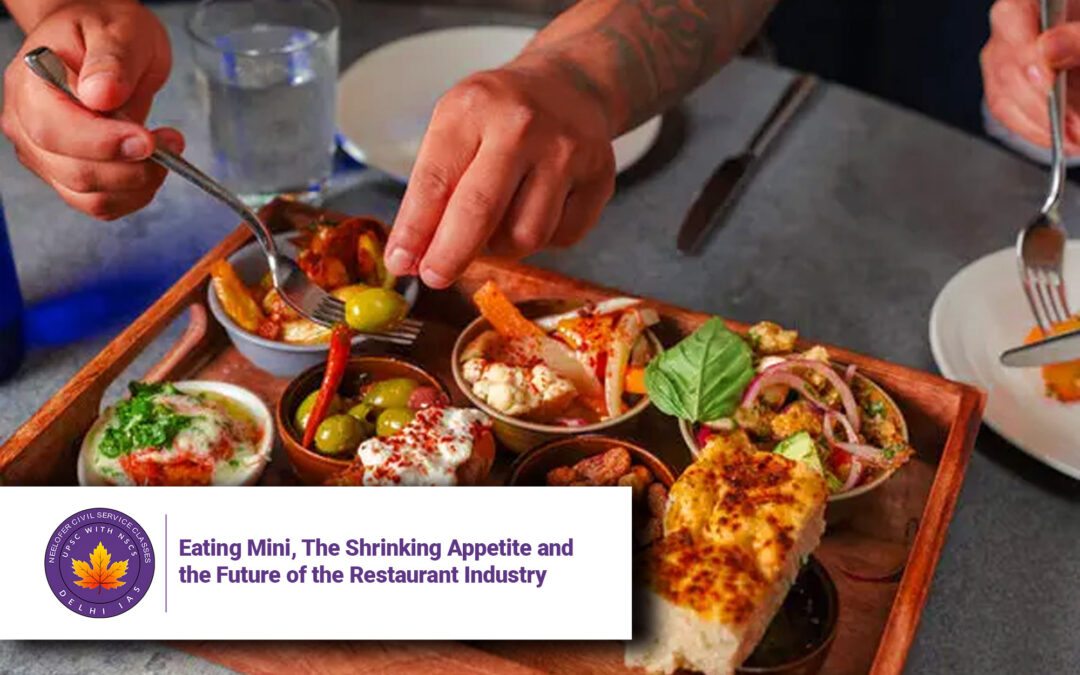
Eating Mini, The Shrinking Appetite and the Future of the Restaurant Industry
Introduction: The Appetite Revolution
In the sprawling global restaurant industry, where abundance has long been a cornerstone of customer appeal, a new phenomenon is quietly reshaping menus, portion sizes, and business strategies. This shift is not being driven by a change in culinary trends or economic downturns alone, but by a medical and pharmaceutical revolution: the rise of GLP-1 drugs, such as Ozempic and Wegovy. These medications, initially developed for diabetes management, have garnered attention for their potent appetite-suppressing side effects, leading to a profound transformation in eating behaviors.
From London to Dubai to New York City, restaurateurs are encountering an unexpected challenge — customers who simply can’t (or won’t) eat as much as they used to. This is not about fleeting diet fads or temporary seasonal trends. Instead, it is about a pharmaceutical intervention with long-lasting implications for the very structure of the dining experience. As waistlines shrink, so too must the portions on plates, but this recalibration is proving anything but straightforward.
GLP-1 Drugs and the Appetite Contraction
The GLP-1 class of drugs works by mimicking a hormone in the body that regulates appetite and slows digestion. Patients taking these drugs often report feeling full after eating much smaller amounts of food — sometimes just a few bites. The impact on daily caloric intake can be dramatic, and for restaurants, this means that the heaping plates of the past are now more liability than luxury.
In practical terms, this has triggered a scramble among chefs and business owners to rethink their menus. Restaurants are rolling out “mini meal” options, featuring smaller servings paired with appropriately scaled-down pricing. The challenge lies in finding the right balance: diners who barely make a dent in their entrée are unlikely to pay full price for what feels like wasted food, yet businesses still need to cover overhead costs.
The Irony of the ‘Mini’ Revolution
There is an ironic twist to this trend. For decades, public health experts have been warning about the problem of oversized restaurant portions. Studies — such as a notable 2016 investigation published in the Journal of the American Academy of Nutrition and Dietetics — have shown that a single main course in many restaurants often exceeds the recommended caloric intake for an entire meal. These supersized servings have played a significant role in the global obesity epidemic, contributing to lifestyle-related illnesses like heart disease, diabetes, and hypertension.
The so-called “mini” portions now being introduced are, in many cases, simply aligning with what nutritionists have long advised as healthy and appropriate. In other words, what the industry is treating as a compromise to suit customers’ shrunken appetites is, from a public health standpoint, a long-overdue course correction.
Portion Distortion: How We Got Here
The term “portion distortion” refers to the gradual increase in serving sizes over time, which has recalibrated our perception of what constitutes a normal meal. Over decades, restaurant plates have grown — not just in fancy eateries, but in fast food chains, casual dining spots, and even in home cooking. Burgers have become thicker, fries more plentiful, and soda cups comically oversized. The result? A cultural norm that equates value with quantity, and satisfaction with excess.
The appetite-suppressing effects of GLP-1 drugs are cutting against this deeply ingrained mentality. Customers on these medications may find themselves physically incapable of consuming “good value” portions. For them, finishing a traditional entrée might be as uncomfortable as overeating at a holiday feast. The cultural implications are profound: it’s not just stomachs that are shrinking — it’s expectations.
The Business Model Under Pressure
The restaurant business has always operated on tight margins, with profitability often depending on high turnover and efficient use of ingredients. Smaller portions may reduce ingredient costs, but they also risk lowering perceived value for customers not on appetite-suppressing medications. A diner paying $30 for what amounts to a few mouthfuls — even if that’s all they want — may feel shortchanged unless presentation, quality, and service create a compelling sense of worth.
As a result, some restaurants are experimenting with innovative approaches:
-
Tiered Menus: Offering smaller, mid-sized, and large versions of the same dish at different prices.
-
Tasting Menus: Encouraging variety through small plates served sequentially, creating a feeling of abundance without overwhelming the appetite.
-
Ingredient Upgrades: Using higher-quality, premium ingredients to justify smaller portions.
-
Experience-Centric Dining: Selling the ambiance, storytelling, and service as part of the meal’s value proposition.
However, these adjustments come with their own risks. Smaller portion sizes could alienate customers who still prefer — and can consume — traditional quantities. Balancing the needs of both groups is becoming a central challenge for the industry.
The Willpower vs. Biology Debate
Diet culture has long promoted willpower as the key to healthy eating, but research increasingly shows that biological and neurological factors play a dominant role in food intake. The GLP-1 phenomenon underscores this truth. These drugs succeed where willpower often fails because they influence the body’s own hunger cues, overriding the psychological triggers that make portion control so difficult.
In essence, GLP-1 drugs are recalibrating the internal “fullness meter” of millions of people. Where willpower can be worn down by the sight and smell of food, or by the social expectation to finish what’s on the plate, biological satiety signals induced by medication can cut the meal short without internal conflict. For the restaurant industry, this represents both a challenge and an opportunity: adapt to smaller appetites now, or risk losing relevance as pharmaceutical appetite control becomes more common.
A Cultural Shift Toward Eating at Home?
One potential long-term consequence of this trend is a revival of home cooking. For those on GLP-1 drugs, preparing small, nutritionally balanced meals at home is often cheaper, easier, and more satisfying than navigating oversized restaurant portions. With restaurant dining traditionally being a mix of indulgence and social experience, a shift toward eating more at home could reshape not only the economics of the food industry but also the cultural rituals surrounding meals.
Public health advocates might welcome this development, as it could encourage healthier portion sizes, reduce calorie intake, and lower the frequency of high-fat, high-salt, and high-sugar restaurant foods in the average diet. For the restaurant sector, however, the message is clear: to stay competitive, they must innovate — not just in the kitchen, but in how they define value for a customer base whose appetites are, quite literally, changing.
Q&A Section
1. What are GLP-1 drugs, and how are they affecting the restaurant industry?
GLP-1 drugs, such as Ozempic and Wegovy, were developed to help manage diabetes by regulating blood sugar levels. They also have a powerful side effect: appetite suppression. Users often feel full much sooner than before, leading to reduced food consumption. This is causing restaurants worldwide to reconsider their portion sizes, as traditional servings now often overwhelm customers.
2. Why are “mini” portions significant from a public health perspective?
“Mini” portions align closely with what nutritionists have long recommended for healthy eating. While the restaurant industry frames them as a concession to smaller appetites, they actually represent a return to sensible serving sizes that can help combat obesity and related illnesses. Decades of “portion distortion” have made oversized meals seem normal, so this shift could be a step toward healthier eating habits.
3. What challenges do smaller portion sizes create for restaurants?
The biggest challenge is balancing perceived value with actual consumption. Diners may balk at paying premium prices for smaller servings, even if that’s all they want or can eat. This forces restaurants to rethink their business models, potentially offering tiered pricing, tasting menus, or ingredient upgrades to justify the cost while still meeting diverse customer needs.
4. Could GLP-1 drugs change eating habits beyond restaurants?
Yes. Appetite suppression from GLP-1 drugs could encourage more people to cook at home, where portion sizes can be more easily controlled. This could lead to healthier eating patterns and fewer calories consumed overall. However, it may also reduce restaurant patronage, pushing the industry toward creative adaptations to retain customers.
5. What does the future hold for portion sizes and restaurant dining?
If the use of GLP-1 drugs continues to grow, we may see a permanent shift toward smaller, more nutrient-dense meals in restaurants. Dining experiences might place greater emphasis on quality, presentation, and ambiance rather than sheer quantity. For the industry, the key will be finding ways to maintain profitability while aligning with customers’ evolving appetites.

