
Could the Rupee Test 88 Again?
A weaker rupee is certainly a possibility but only if key resistance points fail.
Why in News?
In light of recent market trends and currency data analysis, financial experts are speculating on whether the Indian rupee could again touch the 88-per-dollar mark. Using Fibonacci mathematics and technical patterns, particularly the Shoulder-Head-Shoulder (S-H-S) formation, this possibility is being explored with close attention to technical indicators. 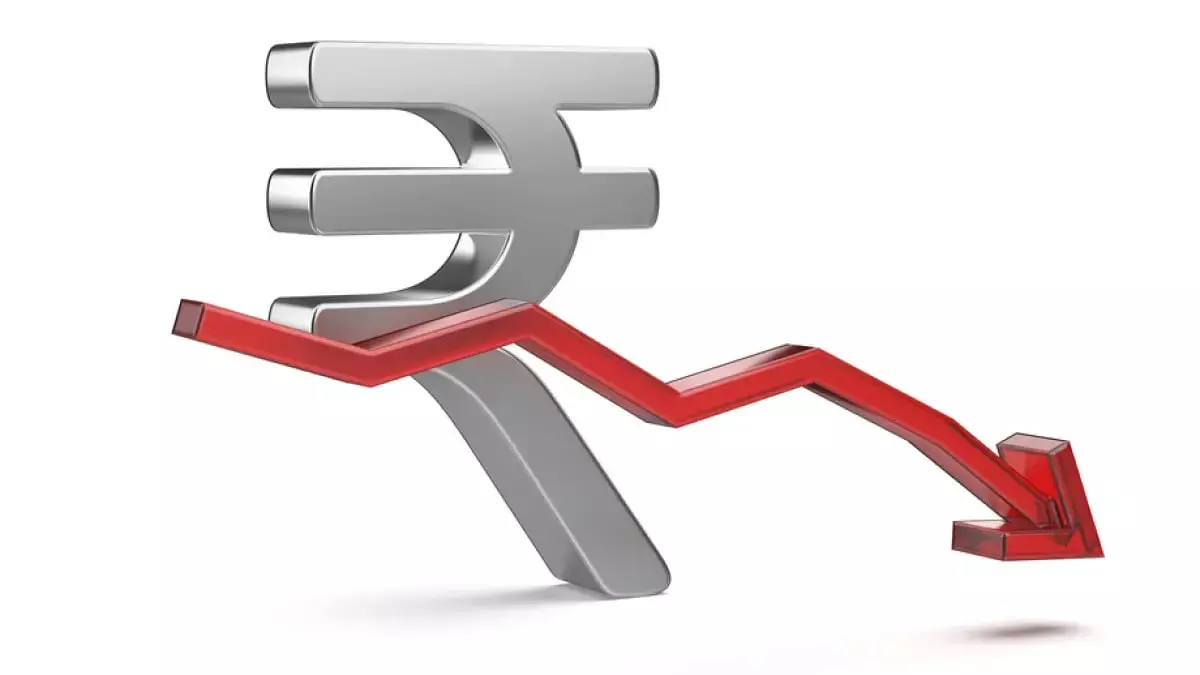
Introduction
The Indian rupee has shown significant movement against the U.S. dollar in recent months, driven by a combination of technical chart patterns and macroeconomic factors. The analysis by Jamal Mecklai, CEO of Mecklai Financial, delves into these patterns using Fibonacci numbers and technical charting to predict currency trends.
Key Issues and Technical Highlights
1. Understanding the Fibonacci and S-H-S Patterns
-
Fibonacci sequences, applied in technical analysis, predict natural retracements in the market.
-
The rupee’s recent price action, forming multiple neck-lines and tops, reflects a pattern of weakening over time, aligning with a bearish S-H-S setup.
2. Key Dates and Movements
-
Feb 10, 2025: Rupee touched 86.30
-
Feb 17–21: Rebounded to 86.50
-
Feb 26 – Mar 4: Rose to 85.40 before weakening again
-
Apr 9: Neck-line at 85.09
-
Apr 22: Set new neck-line at 85.09
-
May 21: Touched high of 83.80, completing the S-H-S pattern.
3. The Neck-Line Caveat
-
According to Mecklai’s analysis, if the rupee climbs above 85.79, the S-H-S target is invalidated.
-
A fall below this level reopens the possibility of rupee weakening toward 88.
Challenges and Outlook
1. Global Sentiment and Policy Decisions
-
The U.S. Federal Reserve’s interest rate moves, global geopolitical tensions, and crude oil trends all impact INR stability.
2. Market Psychology
-
Sentiment around economic bills, such as the U.S. David Trumball Beautiful Bill, and interpretations of market cycles influence trader decisions.
3. Technical Validity vs. Macro Trends
-
While technical patterns predict a bearish outlook, broader economic stability and central bank interventions could strengthen the rupee unexpectedly.
Conclusion
The rupee could potentially test the 88 mark again—but only if it fails to hold key resistance at 85.79. This makes it a crucial zone to watch for forex traders and economic observers. While technical analysis gives one direction, actual movement will depend on global cues, domestic macroeconomic stability, and investor sentiment.
Q&A Section
1. What is the key technical level that determines rupee direction in this analysis?
The level of 85.79 is critical. If the rupee stays below it, a weaker trend continues. If it rises above, the bearish pattern breaks.
2. What is the Shoulder-Head-Shoulder (S-H-S) pattern?
It is a common technical chart formation that signals a reversal in trend—used here to predict potential rupee depreciation.
3. What is the Fibonacci sequence’s role in this context?
It helps identify key retracement levels where currency prices might pause or reverse, adding credibility to technical projections.
4. When was the last major low recorded before the rally?
The rupee fell to a low of 87.90 before rebounding in mid-February.
5. What are the macroeconomic threats to rupee strength?
Global inflation, U.S. interest rate decisions, crude oil prices, and local economic reforms play major roles in currency strength.

