
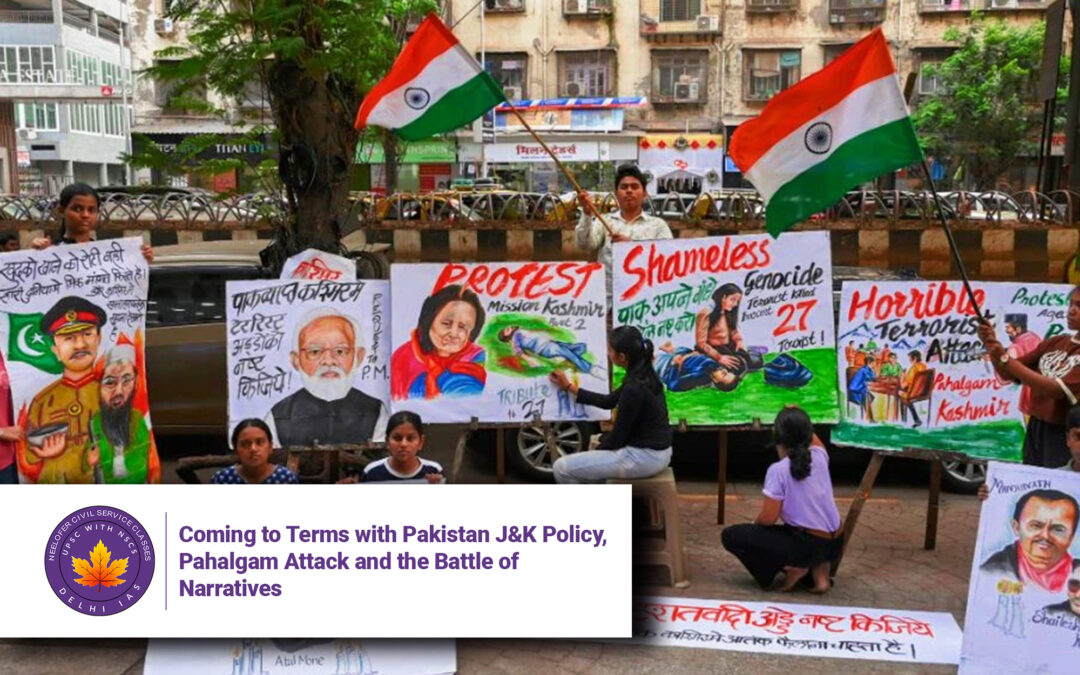
Coming to Terms with Pakistan J&K Policy, Pahalgam Attack and the Battle of Narratives
Why in News?
On April 22, 2024, terrorists brutally killed three innocent tourists in Pahalgam, Jammu & Kashmir, a popular tourist destination. This attack has once again brought attention to Pakistan’s longstanding proxy war in Kashmir and highlighted the narrative war being played through terrorism. 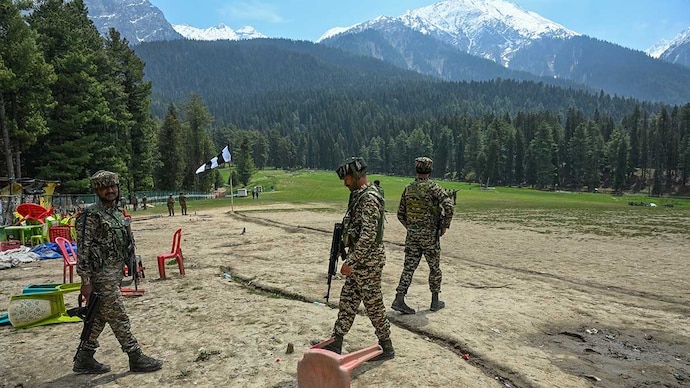
Introduction
Terrorism is not just about violence—it is a battle of perceptions. The recent attack in Pahalgam demonstrates how terrorists aim not only to inflict casualties but to dominate media headlines, create fear, and instill a sense of insecurity. These actions are part of Pakistan’s broader policy of proxy warfare in J&K, which continues to fuel instability in the region.
Key Issues and Background
-
The Pahalgam Tragedy
-
On April 22, three tourists were killed in a cowardly terrorist attack in Pahalgam.
-
The attack came during a time of growing tourism in the region, which had previously seen over 1.8 crore tourists in 2023.
-
-
Pattern of Proxy War
-
Pakistan has repeatedly used non-state actors and terror outfits to target peace efforts in Kashmir.
-
Even during visits by foreign dignitaries like U.S. President Bill Clinton in 2000 or PM Narendra Modi in 2016, major terror attacks were staged—demonstrating Pakistan’s use of timing to draw global attention.
-
-
Narrative Strategy in Terrorism
-
The goal is to disrupt internal peace, weaken the morale of civilians, and influence public perception against the government.
-
Pakistan’s use of terrorism is tied with ideological and strategic interests, especially over Kashmir.
-
-
India’s Firm Response
-
India, under PM Modi, has stated it will not tolerate terror, and that talks and terror cannot go together.
-
India responded with the Balakot airstrikes in 2019 after the Pulwama attack and has since hardened its stance diplomatically and militarily.
-
-
Future Concerns
-
Rising India-Pakistan tensions, especially after such attacks, may bring more confrontation along the Line of Control (LoC).
-
Pakistan may resort to nuclear blackmail or rhetoric, though its global credibility has significantly eroded.
-
India needs to sustain a multi-pronged approach: militarily, diplomatically, and politically.
-
5 Key Takeaways
-
The Pahalgam attack is a calculated move by terrorists to strike at soft targets and disturb Kashmir’s growing peace.
-
Terrorism remains Pakistan’s primary tool to exert pressure on India over Kashmir.
-
India has consistently responded with firm actions—military strikes and global diplomatic isolation of Pakistan.
-
Pakistan’s nuclear rhetoric is losing global credibility, but still remains a tool of provocation.
-
The Indian government must continue to engage internally in Kashmir, build resilience among civilians, and maintain security preparedness.
Challenges and the Way Forward
Challenges:
-
Pakistan’s persistent use of proxy groups for asymmetric warfare.
-
Global community’s inconsistent pressure on Pakistan.
-
Local radicalisation and spread of disinformation.
-
Fragility in peace gains within Kashmir due to sudden terror incidents.
Way Forward:
-
Intensify counterterrorism operations across J&K.
-
Engage with local communities to prevent radicalisation.
-
Continue isolating Pakistan on global platforms.
-
Strengthen border surveillance and intelligence networks.
-
Create a national political consensus around Kashmir and security policies.
Conclusion
The recent Pahalgam attack is a reminder that India’s fight against terrorism is far from over. Terrorism is used not just to kill, but to shape global and domestic narratives. A firm, united political and military resolve—backed by strategic messaging and grassroots peacebuilding—will be key to overcoming this persistent threat from across the border.
Q&A Section
1. What happened in Pahalgam on April 22, 2024?
Three tourists were killed in a terror attack in Pahalgam, Jammu & Kashmir, aimed at disturbing peace and creating panic in a popular tourist area.
2. Why is this attack being seen as part of a bigger strategy?
The attack is part of Pakistan’s proxy war strategy—a calculated attempt to influence narratives, attract global attention, and destabilise internal peace.
3. How has India responded to such attacks in the past?
India has responded with military actions (like the Balakot strikes), diplomatic isolation of Pakistan, and internal security strengthening.
4. What is the role of narratives in Pakistan’s terrorism policy?
Terrorist actions are timed and designed not just to kill, but to dominate headlines, spread fear, and portray India as unstable—especially during tourism booms or diplomatic events.
5. What should India’s approach be moving forward?
India must combine military preparedness, internal engagement in Kashmir, and global pressure on Pakistan, while ensuring all political parties remain united on national security.

