
China India Relations, 75 Years of Diplomatic Ties and the Road Ahead
Why in News?
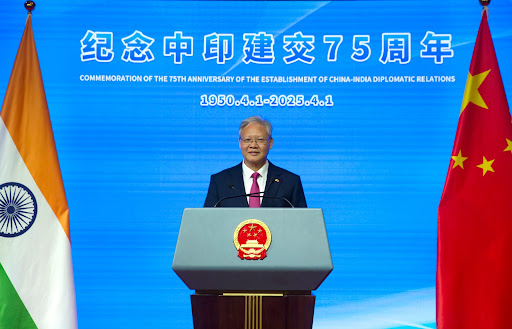
April 1 marked the 75th anniversary of diplomatic relations between China and India. Despite historical ups and downs, both nations have continuously worked towards strengthening bilateral cooperation in trade, security, and multilateral engagements. 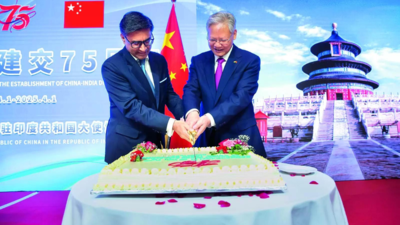
Introduction
China and India share a long history of cultural and economic exchanges, and their diplomatic relationship has played a crucial role in shaping regional and global stability. Looking at the past and the future, four key factors highlight the trajectory of their ties:
Key Factors in China-India Relations
1. Leadership and Strategic Guidance
-
Strong leadership has been the anchor in guiding bilateral relations through critical historical moments.
-
In 1950, India became the first non-socialist country to establish diplomatic ties with China.
-
In 1988, Indian PM Rajiv Gandhi visited China, marking a shift towards normalization.
-
In recent years, PM Narendra Modi and President Xi Jinping have engaged in “hometown diplomacy”, fostering a new chapter in bilateral ties.
2. Foundation of Friendship and Cooperation
-
Historically, India and China have supported each other’s national independence movements.
-
Cultural figures like Rabindranath Tagore and Dr. Kotnis symbolize the friendship between the two civilizations.
-
Today, both nations collaborate in multilateral forums like BRICS, SCO, and the G20, aiming to uphold the interests of developing countries.
3. Economic and Trade Growth
-
Trade between China and India has grown significantly, increasing from $3 billion (2000) to $138.5 billion (2024).
-
Despite challenges, both countries recognize that economic cooperation is vital for regional prosperity.
-
Sectors such as infrastructure, technology, and green energy offer immense potential for growth.
4. Bridging Differences through Dialogue
-
While differences persist, diplomatic channels such as the Special Representative Mechanism on the China-India Boundary Question are in place to ensure peaceful resolution.
-
Both sides acknowledge that healthy ties benefit not only India and China but also the broader global order.
Why This Matters for the Future
-
Peaceful relations between China and India are crucial for global economic stability.
-
Closer cooperation in trade, technology, and security can unlock mutual growth opportunities.
-
Joint initiatives like “Visit Bharat 2047” and China’s economic modernization plans can strengthen development efforts.
Conclusion
As China and India step into the next phase of their partnership, they must work together to build a mutually beneficial relationship based on trust, cooperation, and respect. Strengthening diplomatic ties will not only enhance regional stability but also create new economic and geopolitical opportunities for both nations.
Q&A Section
Q: Why is the 75th anniversary of China-India ties significant?
A: It marks a milestone in bilateral cooperation, highlighting historical achievements and future growth opportunities.
Q: What are the major areas of China-India cooperation?
A: Trade, infrastructure development, technology, security, and multilateral diplomacy.
Q: How has trade between India and China evolved?
A: It has grown from $3 billion in 2000 to $138.5 billion in 2024, showing strong economic interdependence.
Q: What steps should India and China take for better ties?
A: Prioritizing peaceful dialogue, resolving boundary issues, enhancing economic cooperation, and fostering cultural exchanges.
Q: How can China and India contribute to global stability?
A: By working together in multilateral organizations like SCO, BRICS, and G20, promoting economic growth and regional security.
