
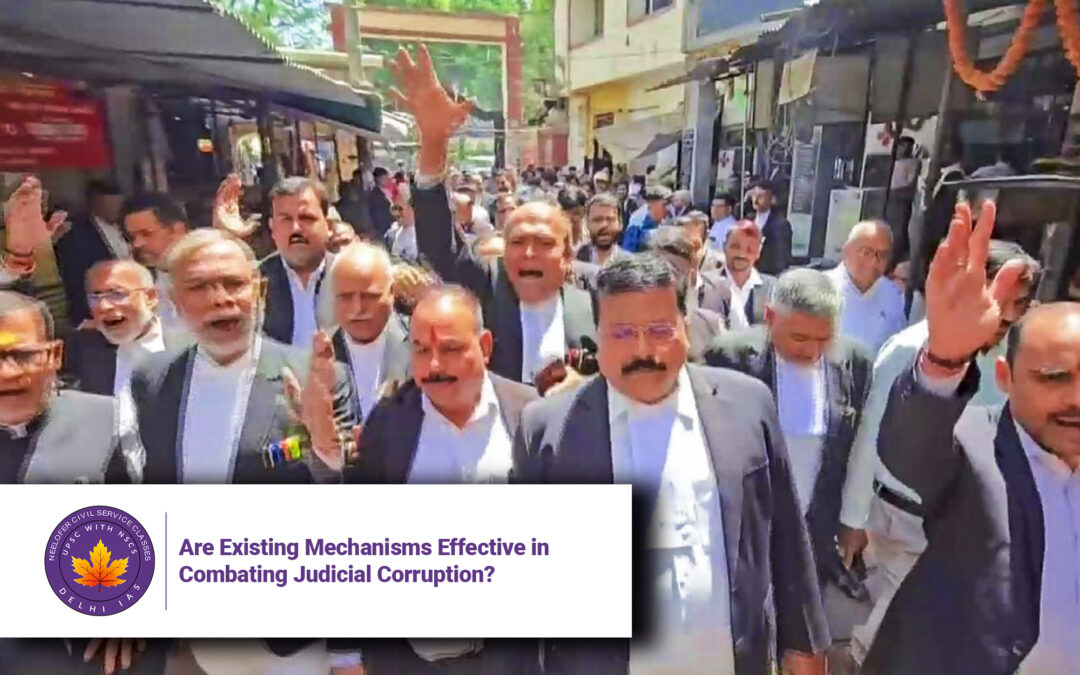
Are Existing Mechanisms Effective in Combating Judicial Corruption?
Why in News?
Last month, unaccounted cash was reportedly recovered from the official residence of former Delhi High Court judge Justice Yashwant Varma. The Supreme Court, led by Chief Justice Sanjiv Khanna, initiated an in-house inquiry, and Justice Varma was transferred to his parent High Court in Allahabad. This event reignited a critical national conversation about the effectiveness of current mechanisms in addressing judicial corruption and ensuring accountability within the higher judiciary. 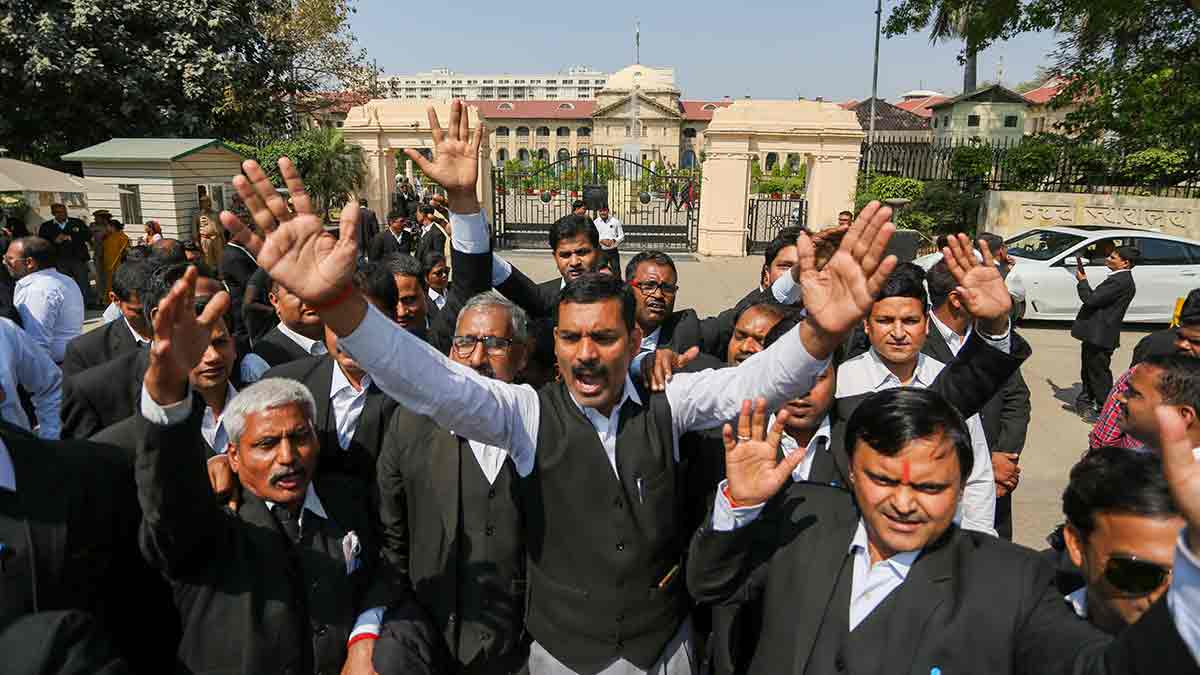
Introduction
The judiciary is one of the pillars of democracy and must remain above suspicion. However, incidents like the Justice Varma case have raised concerns about whether current judicial accountability mechanisms are adequate. Legal experts Sanjay Hegde and Alok Prasanna Kumar recently discussed this in detail, highlighting key institutional flaws and suggesting reforms to preserve the credibility and independence of the judiciary.
Key Issues and Institutional Concerns
1. Ineffectiveness of the Impeachment Process
Sanjay Hegde points out that the impeachment process, which requires a two-thirds majority in both Houses of Parliament, is rarely successful due to its heavy political dependence. Rather than serving as a deterrent, it often results in inaction. Alok Prasanna Kumar adds that impeachment may serve symbolic purposes but fails to deliver real accountability.
2. Limitations of the In-House Procedure
The in-house mechanism, although established to ensure due process, lacks transparency and enforceability. SH argues that while transparency is important, media pressure can lead to premature and potentially unfair conclusions. APK emphasizes the need to institutionalize transparency and avoid ad hoc responses.
3. Absence of a National Judicial Appointments Commission (NJAC)
The controversy has led to renewed demands for reviving the NJAC to bring more objectivity to judicial appointments. SH believes that allowing the government too much influence may risk judicial independence. APK argues that the collegium system is no longer effective and lacks accountability.
4. Lack of Calibrated Standards for Accountability
APK stresses that India lacks clear, enforceable standards to address judicial misconduct. He points out that, for example, judges related to lawyers practicing in the same court are not mandated to disclose these relations — a loophole that undermines fairness.
5. Need for Court Law Liberalisation with Safeguards
While APK agrees that contempt of court laws could be liberalised to allow legitimate criticism, he insists that protections must remain to prevent baseless or politically motivated attacks against judges. The goal is to create a space for critique while preserving the judiciary’s dignity.
Challenges and the Way Forward
-
Reform In-House Mechanisms: They must become more transparent, with case-based communication and accountability.
-
Revisit NJAC with Caution: A new version of the NJAC may be needed, but it must balance independence with accountability.
-
Set Clear Ethical Standards: Enforceable judicial conduct guidelines are essential to prevent familial or political biases.
-
Strengthen Public Engagement: Establishing credible grievance redressal systems and inviting feedback from bar associations can help.
-
Balanced Media Reporting: Media trials must not replace judicial procedures; court communication protocols must be improved.
Conclusion
Judicial accountability is not just about punishing misconduct — it’s about protecting the integrity of the institution. Current mechanisms like impeachment and the in-house procedure are either too political or too opaque. India must adopt a forward-looking, transparent, and structured approach to judicial reform. A system that ensures fairness, preserves independence, and builds public confidence is the only way to combat judicial corruption effectively.
Q&A Section
Q1. Why is the impeachment process considered ineffective in India?
Because it is highly political, requiring a two-thirds majority in both Houses of Parliament, making it difficult to execute even in serious cases.
Q2. What are the flaws in the in-house inquiry system?
It lacks transparency and enforceability. Decisions are made behind closed doors, and public confidence suffers due to limited communication and perceived secrecy.
Q3. What role could the NJAC play in judicial reforms?
The NJAC could introduce greater objectivity and transparency in appointments, though it needs safeguards to avoid executive overreach.
Q4. What are the risks of not having clear standards of judicial conduct?
Without enforceable standards, conflicts of interest or unethical behavior (like not disclosing familial ties) can undermine fairness and erode trust in the judiciary.
Q5. Should contempt of court laws be liberalised?
Yes, but with caution. Liberalisation should allow for fair criticism without enabling malicious or politically motivated attacks on the judiciary.
