
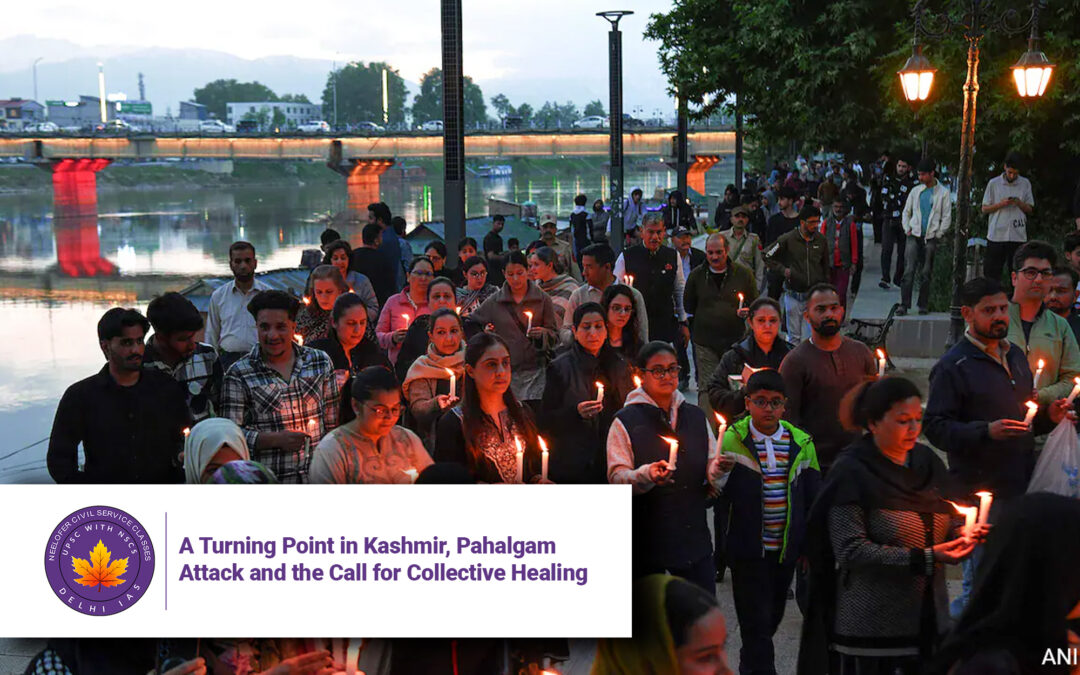
A Turning Point in Kashmir, Pahalgam Attack and the Call for Collective Healing
Introduction
The massacre in Pahalgam has wounded Kashmir’s soul. Beyond immediate security responses, there is now a deeper realization that true healing must be social, collective, and long-term, addressing decades of mistrust and alienation. 
The Pahalgam Tragedy: Immediate Response
-
The local and union governments are reacting to the massacre with expected security measures.
-
However, the real challenge lies not just in law enforcement but in mending the broken emotional and social fabric of Kashmir.
-
The pain of the Kashmiri people is profound; it is not enough to condemn violence — a broader atonement is needed.
Kashmir’s Broken Trust and Lost Economy
-
Every Kashmiri, across religious lines, feels the weight of this tragedy.
-
Tourism, the backbone of Kashmir’s economy, faces a severe setback, with huge losses expected in the hospitality and services sector.
-
Investments aimed at creating jobs are now at risk due to instability.
Need for a New Social Compact
-
The break from Kashmir’s troubled past requires more than economic packages or political assurances.
-
A new foundation based on peace, trust, and dignity must be laid — not through violence or politics, but through societal healing.
-
The focus must shift from reactive politics to proactive citizen engagement that spans generations.
Importance of Tourism and Diversity
-
Tourism has historically been a symbol of Kashmir’s diversity and openness.
-
Protecting this industry is not just an economic need but a way to reinforce Kashmir’s multicultural identity.
-
True progress in Kashmir cannot come from external imposition but must grow organically from the aspirations of its people.
Conclusion
The tragedy in Pahalgam could mark a true turning point. Healing Kashmir’s soul requires collective atonement — a shared commitment by government, civil society, and every citizen. Only then can Kashmir emerge stronger, more inclusive, and peaceful.
5 Important Q&A
Q1: What happened recently in Pahalgam, Kashmir?
A: A massacre occurred targeting civilians, deeply wounding Kashmir’s social and emotional fabric.
Q2: How has the government responded to the Pahalgam incident?
A: Security measures and law enforcement responses have been initiated, but deeper societal healing is recognized as necessary.
Q3: What economic sectors are most affected by the attack?
A: The tourism industry, along with investments aimed at job creation, has been severely impacted.
Q4: What is proposed as the real solution to Kashmir’s troubles?
A: Building a new social compact focused on peace, dignity, and multi-generational engagement beyond politics and ideology.
Q5: Why is protecting tourism important for Kashmir?
A: Tourism symbolizes Kashmir’s historical diversity and economic resilience, making it crucial for restoring normalcy and trust.
