
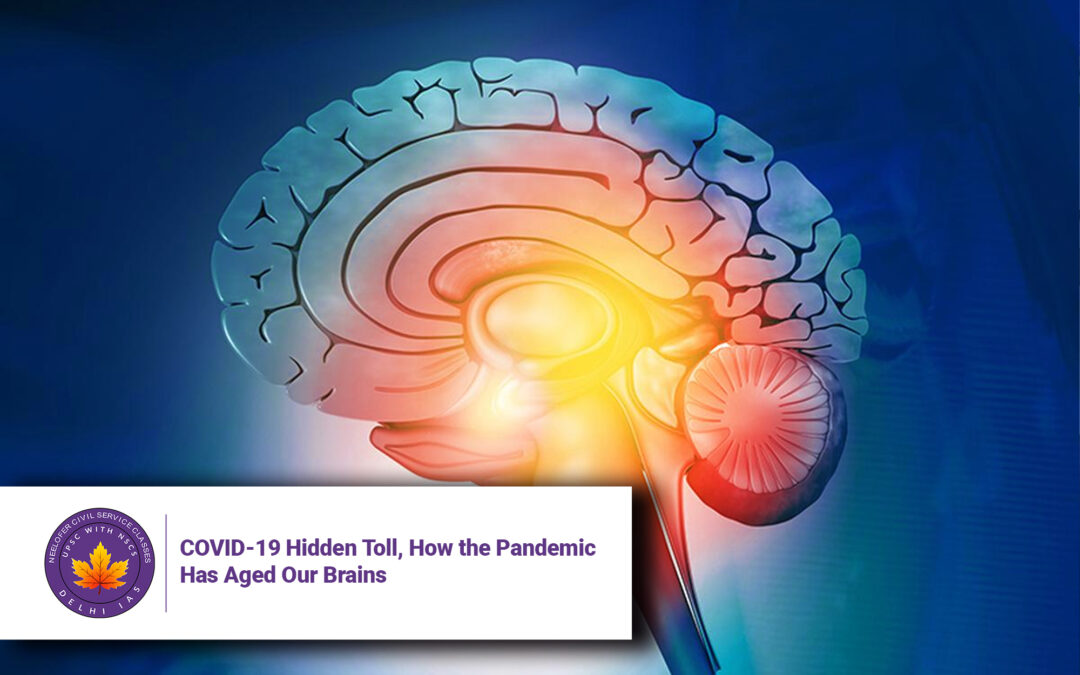
COVID-19 Hidden Toll, How the Pandemic Has Aged Our Brains
Why in News
Recent studies have revealed that the COVID-19 pandemic, apart from its immediate physical symptoms, has had profound and long-term effects on the human brain. Advanced brain scans of individuals who experienced COVID-19 infection, as well as those merely exposed to the stressful pandemic environment, indicate that the human brain may have aged significantly faster than expected. On average, people demonstrated a biological brain age increase of 5.5 months, with the effects more pronounced in men and those from disadvantaged socio-economic groups.
This revelation has added a new dimension to the global understanding of the pandemic’s long-lasting impact, bringing to light neurological and psychological aftershocks that extend far beyond the lungs and immune system.
Introduction
When the COVID-19 pandemic first spread across the globe in early 2020, most of the focus was on its acute symptoms: fever, cough, respiratory distress, and, in severe cases, death. However, as the pandemic lingered, scientists and healthcare experts began noticing unusual patterns in survivors and even those indirectly affected.
Unlike traditional viruses that primarily attack one organ system, COVID-19 was found to be far more complex—capable of damaging multiple organs, including the heart, kidneys, and most alarmingly, the brain. The stress of prolonged lockdowns, isolation, and disruption to normal life further compounded these neurological effects.
Scientists now warn that the pandemic may have accelerated brain ageing, pushing the biological age of millions of people ahead of their chronological age. With long COVID (or Post-Acute Sequelae of COVID-19, PAS-C) becoming an established global concern, the long-term consequences on brain health have come under serious scrutiny.
Key Issues and Background
1. Brain Ageing and Cognitive Decline
In a healthy population, brain age typically matches chronological age. Over time, natural ageing causes minor wear and tear. However, brain scans from over 15,000 healthy adults showed that people exposed to COVID-19, whether through infection or pandemic-related stress, had brains appearing significantly older than expected.
Researchers found:
-
An average brain age increase of 5.5 months.
-
Accelerated decline was sharper in men than women.
-
People from lower socio-economic backgrounds were disproportionately affected.
2. Double Whammy Effect of COVID-19 on the Brain
COVID-19 impacts the brain through two major pathways:
-
Direct Viral Impact: The virus infects cells in the body, causing inflammation that damages blood vessels and the brain’s protective barriers.
-
Indirect Pandemic Impact: Prolonged stress, isolation, fear of illness, and disruption of normal life caused measurable deterioration in mental health.
Brain scans revealed that survivors showed reduced brain volume, elevated markers of neurological ageing, and cognitive issues like memory problems, difficulty concentrating, and persistent fatigue.
3. Social and Educational Disruptions
Teenagers and young adults, who were not directly infected, still exhibited accelerated brain ageing due to isolation, school closures, and prolonged stress. On average, teenage brains showed 1.5–2 years of accelerated ageing, particularly in areas critical for memory, emotional regulation, and social development.
This finding indicates that the pandemic’s psychological toll was as destructive as its biological effects.
The Science Behind the Damage
Researchers have outlined several mechanisms through which COVID-19 and its associated stress accelerated brain ageing:
-
Inflammation:
-
The virus triggers a hyper-inflammatory response in the body.
-
Excessive inflammation damages blood vessels and neural tissue, impairing normal brain function.
-
-
Blood-Brain Barrier Breakdown:
-
COVID-19 compromises the barrier that normally protects the brain from harmful substances in the blood.
-
This leads to toxins and pathogens entering the brain, damaging neurons.
-
-
Oxygen Deprivation:
-
Severe COVID-19 reduces oxygen supply to the brain.
-
Lack of oxygen accelerates brain cell death and contributes to long-term deficits.
-
-
Stress and Depression:
-
Social isolation, unemployment, grief, and anxiety during the pandemic heightened cortisol levels.
-
Chronic stress is known to shrink areas of the brain like the hippocampus, crucial for memory and learning.
-
Specific Impacts or Effects
1. Long-Term Neurological Symptoms (Long COVID)
Studies reveal that at least 10% of people recovering from COVID-19 develop long-lasting neurological issues, including:
-
Persistent headaches
-
Brain fog
-
Sleep disturbances
-
Memory lapses
-
Difficulty in concentration
-
Mood disorders such as anxiety and depression
2. Impact on Teenagers and Children
Teenagers were among the hardest hit psychologically. Brain scans showed accelerated ageing in regions tied to social interaction and emotional processing, worsening risks of depression, anxiety, and learning difficulties.
3. Hospitalized vs Non-Hospitalized Patients
-
Non-Hospitalized: Those with mild infections showed brain ageing but symptoms improved gradually.
-
Hospitalized: Patients with severe infections continued to show brain ageing and neurological decline even three years later, suggesting irreversible damage in some cases.
4. Disadvantaged Groups More Affected
Socio-economic stress magnified the brain’s ageing process. Those with fewer resources faced greater pandemic-related hardships, leading to disproportionate mental and neurological decline.
Challenges and the Way Forward
-
High Prevalence of Long COVID
With an estimated 65 million people globally suffering from long COVID, healthcare systems face a massive challenge in diagnosing and treating neurological complications. -
Under-Researched Brain Impacts
The neurological effects of COVID-19 are only beginning to be understood. Current medical approaches are largely reactive, not preventive. -
Need for Multi-Disciplinary Treatment
No single treatment can reverse brain ageing. Scientists argue for a combined approach involving:-
Neurorehabilitation
-
Advanced neurotechnology
-
Psychotherapy
-
Holistic healing methods
-
-
Innovative Therapies
Specialized clinics are experimenting with integrative neurorehabilitation that combines technology with mental health therapy to restore brain health. While results are promising, large-scale accessibility remains an issue. -
Mental Health Investment
Governments and global health organizations must recognize the psychological dimension of pandemics and invest in long-term counseling, rehabilitation, and preventive mental health programs.
Conclusion
The discovery that COVID-19 and the pandemic environment accelerated brain ageing has reshaped how we view the virus’s legacy. What started as a respiratory disease has proven to be a multi-system illness with far-reaching consequences.
The findings serve as a reminder that pandemics do not just end when infection rates decline. Their echoes remain in the human body and mind for years, sometimes decades. With millions suffering from long COVID symptoms, urgent action is required to:
-
Expand research on neurological impacts
-
Develop innovative treatment programs
-
Ensure equitable healthcare access for vulnerable populations
As the world reflects on the lessons of COVID-19, brain health must be prioritized as an integral component of pandemic recovery efforts.
5 Questions and Answers
Q1. What was the key finding about brain ageing during the COVID-19 pandemic?
A1. The study found that people exposed to COVID-19 or the pandemic environment showed an average brain age increase of 5.5 months, with accelerated decline particularly in men and those from disadvantaged backgrounds.
Q2. What mechanisms cause brain damage in COVID-19 survivors?
A2. The main mechanisms include inflammation, blood-brain barrier breakdown, oxygen deprivation, and stress-induced damage to critical brain regions.
Q3. How did the pandemic affect teenagers differently from adults?
A3. Teenagers experienced accelerated brain ageing of about 1.5–2 years, especially in regions critical for memory, emotional regulation, and social interaction, largely due to social isolation and educational disruptions.
Q4. What long-term symptoms are seen in long COVID patients?
A4. Long COVID patients often report brain fog, memory issues, sleep disturbances, headaches, mood disorders, and difficulty concentrating, which may persist for years after infection.
Q5. What steps are suggested to mitigate the neurological effects of COVID-19?
A5. Experts recommend integrative neurorehabilitation programs, mental health interventions, advanced neurotechnology, and holistic therapies to help reverse or manage long-term brain damage.

