
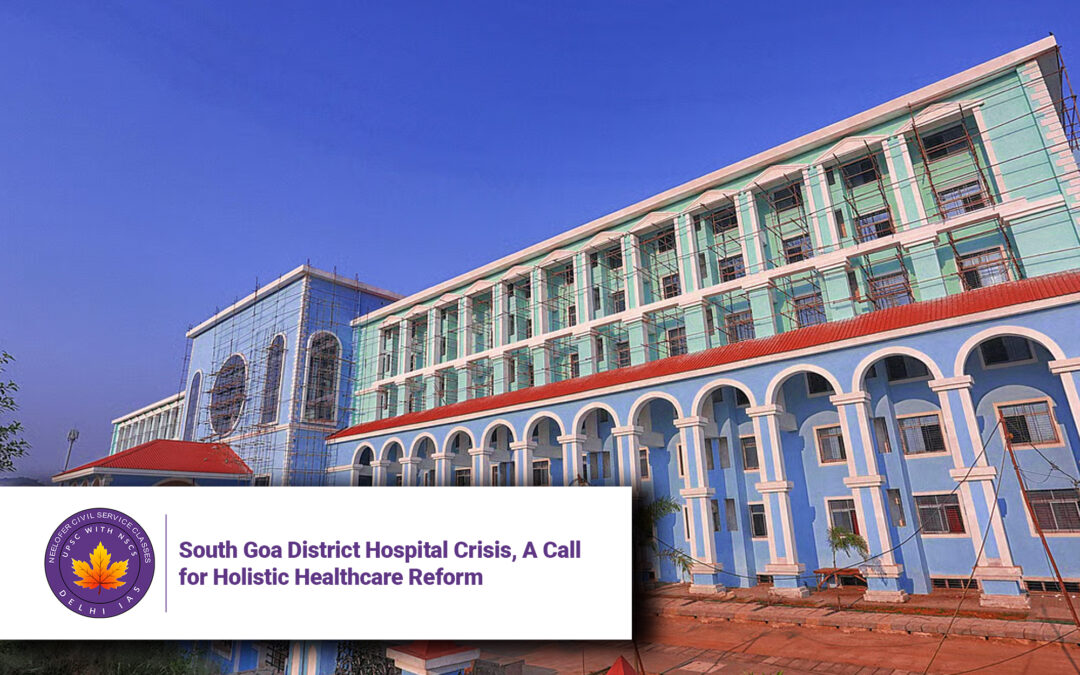
South Goa District Hospital Crisis, A Call for Holistic Healthcare Reform
Introduction
The South Goa District Hospital, a critical healthcare lifeline for the region, is in the midst of a severe crisis. Patients are being treated on stretchers and wheelchairs due to an acute bed shortage, while two entire floors of the hospital remain unused for nearly five years. Despite assurances from Chief Minister Pramod Sawant to address the issue, the situation highlights a systemic failure in healthcare planning and resource allocation.
This article examines:
-
The root causes of the bed shortage crisis
-
Misplaced priorities (nursing college vs. patient care)
-
Staff shortages and overworked healthcare workers
-
Lack of critical specialty services (cardiac, neurology)
-
A 5-point action plan for sustainable solutions
Why in News?
-
Severe bed shortage forces patients to sleep on floors or return untreated.
-
Top two floors unused for 5 years—planned nursing college deemed “illogical.”
-
Staff shortages: Doctors, nurses overworked; no proportional hiring with bed expansion.
-
Missing specialties: No dedicated cardiac/neurology units—patients referred to overburdened Goa Medical College (GMC).
-
CM’s assurance: Immediate steps promised, but no clear roadmap.
Key Issues and Analysis
1. Infrastructure Mismanagement: Empty Floors Amid Bed Shortages
The hospital’s top two floors have been vacant since 2019, while patients suffer due to:
-
Only 300 operational beds (demand exceeds 500+).
-
Proposal to convert unused space into a nursing college—ignoring immediate patient needs.
Why This Is Problematic:
-
Nursing colleges can be built elsewhere (e.g., nearby govt. land).
-
Unused hospital space should prioritize:
-
Additional wards
-
ICU expansion
-
Specialty clinics
-
2. Staff Shortages: More Beds ≠ Better Care
Even if beds are added:
-
No proportional increase in doctors/nurses → overworked staff.
-
Current staff-patient ratio: 1 nurse per 15 patients (WHO recommends 1:4).
-
Consequences:
-
Medical errors due to fatigue
-
Longer wait times for critical care
-
Case Study: Kerala’s Aardram Mission
-
Added 50,000 beds but also recruited 5,000+ healthcare workers.
-
Result: Reduced patient load at tertiary hospitals.
3. Lack of Specialty Services: Cardiac & Neurology Gaps
The hospital lacks:
-
Cardiac care unit (Goa’s heart disease prevalence = 12%, above national avg.).
-
Neurology department (rising stroke, epilepsy cases).
Current System:
-
Patients referred to GMC (40 km away), which is already overcrowded.
-
Delayed treatment increases mortality risks.
Solution:
-
Recruit specialists (offer incentives like housing allowances).
-
Partner with private hospitals under PPP model.
4. Misplaced Priorities: Nursing College vs. Patient Care
Government’s Argument:
-
Nursing college will increase manpower supply in the long run.
Reality Check:
-
Goa already has 5 nursing colleges (no shortage of institutes).
-
Immediate need: Fix bed shortages, staff deficits, and specialty gaps.
Alternative Proposal:
-
Build nursing college on separate land (use hospital space for wards).
5. Systemic Failures in Healthcare Planning
-
No long-term demand forecasting (Goa’s population grew by 18% since 2011).
-
Funds allocated, but utilization poor (unused floors prove this).
-
Political promises ≠ actionable plans (CM’s assurance lacks deadlines).
5-Point Action Plan for South Goa District Hospital
1. Immediate Relief (0-3 Months)
-
Convert unused floors into 200+ additional beds.
-
Hire temporary nurses/doctors to manage increased capacity.
2. Medium-Term (3-12 Months)
-
Recruit 50+ permanent healthcare workers (doctors, nurses, technicians).
-
Establish cardiac & neurology units (PPP model with pvt. hospitals).
3. Nursing College Relocation
-
Shift proposed college to nearby govt. land (free up hospital space).
4. Technology Integration
-
Telemedicine hubs for remote consultations with GMC specialists.
-
Digital patient records to reduce administrative burden.
5. Long-Term Policy Reforms
-
State Health Authority to monitor bed-staff-specialty balance.
-
Mandatory 5-year infrastructure audits for all hospitals.
Conclusion: Healthcare Cannot Wait
The South Goa District Hospital crisis is a microcosm of India’s broken public health system. While infrastructure gathers dust, patients suffer due to neglect, poor planning, and misplaced priorities.
The Way Forward:
✔ Utilize existing space for beds, not bureaucratic projects.
✔ Hire staff before expanding capacity.
✔ Add specialty units to reduce GMC burden.
As Health Minister Vishwajit Rane pushes reforms, South Goa’s hospital must become a benchmark—not a cautionary tale.
5 Key Questions & Answers
Q1: Why are patients sleeping on floors?
A1: Only 300 beds for 500+ patients; unused floors not converted into wards.
Q2: What’s wrong with the nursing college plan?
A2: Hospital space should prioritize patients, not education (college can be built elsewhere).
Q3: How does staff shortage worsen care?
A3: 1 nurse handles 15 patients (WHO recommends 1:4) → fatigue, errors, delays.
Q4: Why are cardiac/neurology units critical?
A4: 12% of Goans have heart disease; no local neuro care means risky referrals to GMC.
Q5: What’s the first step to fix this?
A5: Convert unused floors into beds NOW, then hire staff and add specialties.

