
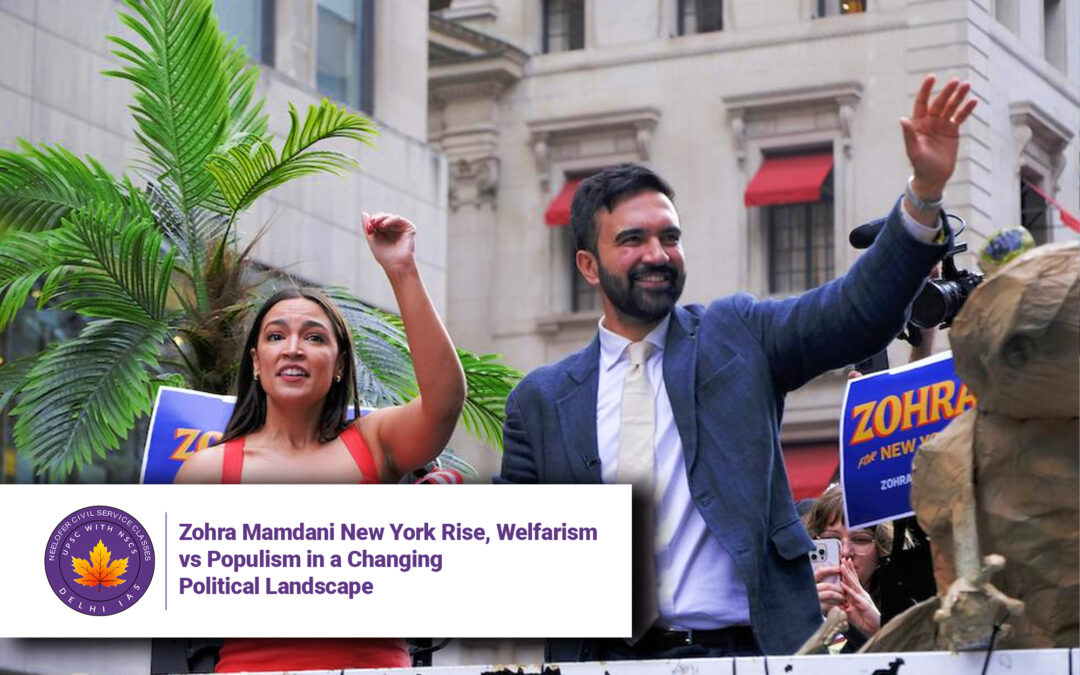
Zohra Mamdani New York Rise, Welfarism vs Populism in a Changing Political Landscape
Why in News?
Zohra Mamdani, a 33-year-old Ugandan-American, has made headlines by defeating former New York Governor Andrew Cuomo in the Democratic Party’s mayoral primary poll. His unexpected victory signals a profound ideological shift within the party, highlighting the tensions between welfarist and populist approaches to governance and sparking national debate about urban policy, inclusiveness, and progressive politics in the U.S. 
Introduction
Mamdani’s win is not only significant because of his identity—as a son of immigrants, a Muslim, and potentially the first Indian-American mayor of New York City—but also because of the values he represents. Unlike traditional political heavyweights backed by elite donors and institutions, Mamdani positioned himself as a champion of affordability, redistribution, and inclusive governance. His campaign prioritized systemic reforms over rhetorical populism, earning grassroots support and making waves nationally.
Key Issues and Ideological Themes:
-
Welfarism vs Populism:
The central theme of Mamdani’s campaign revolved around affordability and welfarism—providing universal access to essential services such as childcare, food, housing, and public transport. In contrast, populist models tend to define affordability as a right tied to battling “villainous elites” such as developers, rather than promoting sustainable solutions. -
Housing & Transport Focus:
Mamdani’s proposals include stabilizing rent, adding 20,000 new housing units, free bus and subway rides, and price-controlled affordable groceries. His vision rejects the traditional reliance on private capital and emphasizes public welfare through state support. -
Economic Roots of Welfarism:
Mamdani’s policy thinking is grounded in economics that values public investment in health, education, and infrastructure, akin to the welfare models in Japan and parts of Europe. The goal is not just equity, but long-term sustainability and dignity for citizens. -
Rhetoric vs Governance:
Populist rhetoric may deliver immediate emotional appeal, but often lacks structural solutions. Mamdani’s appeal lies in carefully crafted plans that marry fairness with fiscal responsibility—highlighting that urban governance need not be reactive or polarizing. -
Political Implications:
With a projected budget shortfall of $150 billion in New York, Mamdani plans to increase taxes on the rich and corporations. While such measures face political resistance, they could realign fiscal priorities toward the working and middle classes.
Conclusion
Mamdani’s success signals that American urban voters, particularly in diverse and dense regions like New York City, are receptive to leaders who combine equity with pragmatism. His victory has disrupted traditional power structures and offers a blueprint for progressive, welfare-oriented politics. As the global discourse on inequality intensifies, New York might be leading the way in redefining what truly inclusive governance looks like.
Q&A Section
-
Q: Who is Zohra Mamdani and why is his victory significant?
A: Mamdani is a 33-year-old Ugandan-born Indian-American who won the Democratic primary for New York mayor, marking a progressive shift in urban politics. -
Q: What are the main themes of Mamdani’s campaign?
A: Affordability, welfarism, and equitable redistribution through policies like free transit, rent stabilization, and expanded childcare. -
Q: How does Mamdani’s vision differ from populist politics?
A: While populism often vilifies elites and relies on emotional appeal, Mamdani’s welfarist model emphasizes systemic reform, public investment, and fairness. -
Q: What fiscal policies does Mamdani advocate?
A: Raising taxes on the super-rich and corporations to fund expanded public services and close New York City’s budget gap. -
Q: What broader message does Mamdani’s win send?
A: It suggests a growing voter base in America that values inclusive governance, economic justice, and long-term welfare over political grandstanding.
