
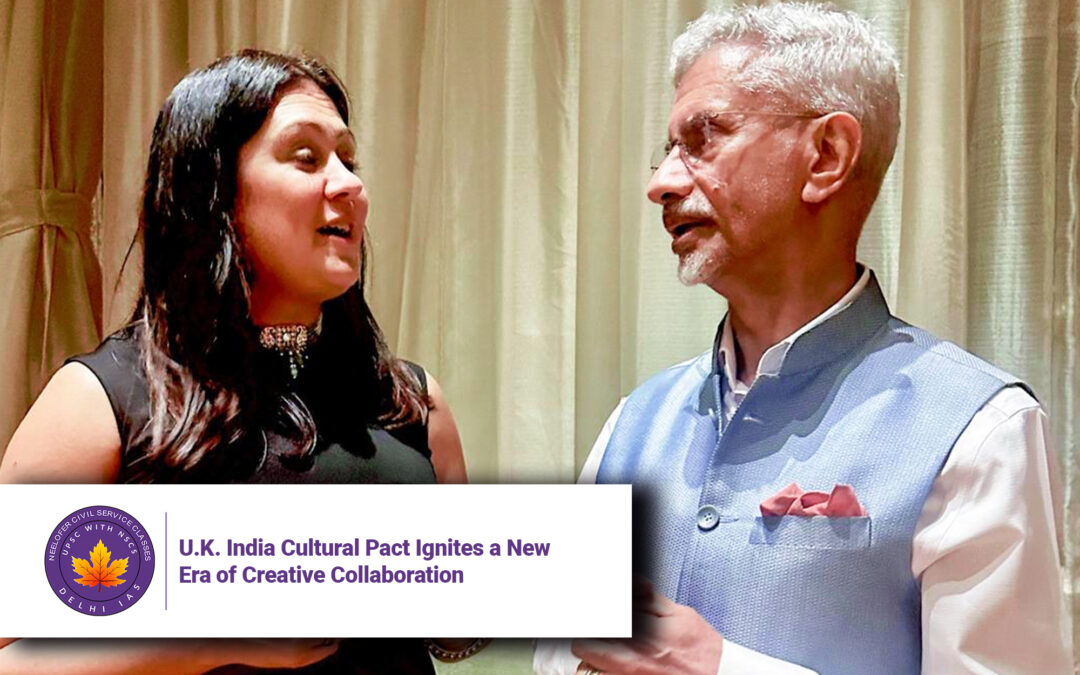
U.K. India Cultural Pact Ignites a New Era of Creative Collaboration
Why in News?
In May 2025, the United Kingdom and India signed a landmark Programme of Cultural Cooperation (POCC), marking a significant moment in U.K.-India relations. Beyond trade and diplomacy, this agreement emphasizes the creative and cultural sectors, reaffirming the deep-rooted, shared artistic and cultural spirit between the two nations. 
Introduction
On May 2, 2025, U.K. Secretary of State for Culture Rt Hon Lisa Nandy and India’s Minister for Culture, Gajendra Singh Shekhawat, officially signed the POCC agreement. This milestone underscores the importance of culture as a bridge of diplomacy and economic collaboration, focusing on digital innovation, cultural performances, sustainability, and heritage preservation.
Key Features of the POCC Agreement
● Five Programme Areas Defined
-
Digital technologies for culture
-
Exhibitions and collections
-
Performances and events
-
Cultural property
-
Sustainability
These directly align with the creative economy, a fast-growing sector projected to reach 10% of global GDP by 2030.
● Institutional Collaboration
Includes collaboration between British Council India and major U.K. cultural institutions such as:
-
British Library
-
Arts Council England
-
British Museum
-
Natural History Museum
-
Science Museum Group
● Technological Integration
Emerging technologies such as Artificial Intelligence (AI) and Augmented Reality (AR) will be integrated into cultural exhibitions and events.
● Employment and Youth Engagement
The pact targets upskilling Indian youth, especially in areas like design, content creation, digital storytelling, and heritage management. It is seen as a key contributor to India’s youth employment and creative entrepreneurship ecosystem.
Specific Impacts or Effects
● Economic Growth
-
Creative industries are seen as future economic drivers.
-
India’s creative economy is estimated at $35 billion, employing 8% of the workforce.
-
The initiative aligns with India’s G20 presidency theme of “One Earth, One Family, One Future”.
● Skill Development and Global Exposure
-
300 Indian universities and over 300 colleges already offer courses in arts and design.
-
The POCC will enhance student exchanges, industry training, and curriculum development across borders.
● Preservation of Cultural Heritage
-
Projects like The Himalayan Knot, in partnership with UNESCO, aim to protect and revitalize fragile ecological and cultural zones through sustainable practices.
● Stronger Ties in Global Creative Networks
-
Indian creative hubs like Badgam (J&K) and Tiruppur (Tamil Nadu) are now connected to U.K.’s global creative economy.
-
Ongoing events such as the Serendipity Arts Festival, supported by the British High Commission, are key players in this partnership.
Challenges and the Way Forward
Challenges:
-
Uneven infrastructure across Indian states.
-
Bridging the gap between grassroots artists and global markets.
-
Need for more inclusive access to training and tools for rural and underrepresented artists.
Way Forward:
-
Prioritize capacity building and training in cultural management and digital skills.
-
Encourage private sector involvement in art and cultural financing.
-
Implement public-private partnerships to scale local initiatives globally.
Conclusion
The U.K.-India Programme of Cultural Cooperation is more than a bilateral pact; it is a vision for the future where creativity is central to diplomacy, economy, and youth empowerment. As both nations harness their heritage and innovation, this cultural bridge promises to inspire a new generation of global artists, storytellers, and changemakers.
Q&A Section
Q1. What is the Programme of Cultural Cooperation (POCC)?
It’s a bilateral agreement between the U.K. and India focusing on shared goals in digital arts, cultural exchange, and sustainability.
Q2. When was it signed?
On May 2, 2025, in Delhi.
Q3. What is its main objective?
To strengthen cultural relations, promote employment in the creative sector, and support mutual prosperity through arts and technology.
Q4. Which sectors are emphasized?
Digital storytelling, heritage preservation, sustainable design, and cultural events.
Q5. How does this benefit India’s youth?
It provides access to global creative networks, modern skills training, and job opportunities in a growing creative economy.
