
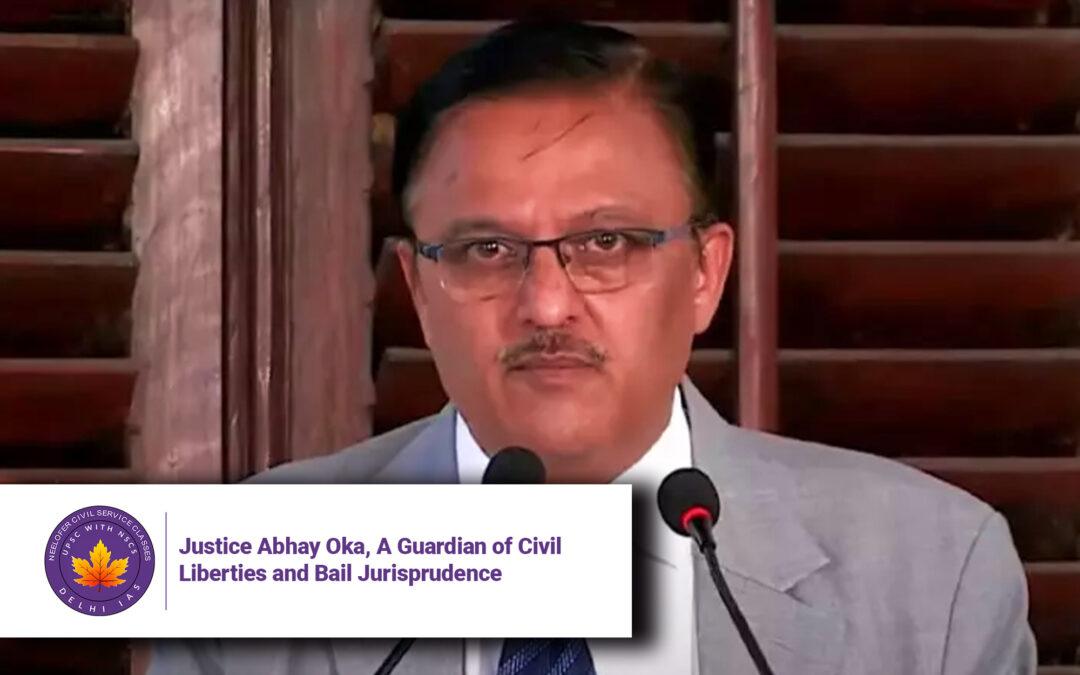
Justice Abhay Oka, A Guardian of Civil Liberties and Bail Jurisprudence
Why in News?
As Justice Abhay Shreeniwas Oka retires from the Supreme Court of India, his legacy is being celebrated for significantly relaxing bail jurisprudence and consistently upholding civil liberties, particularly in politically sensitive and dissent-related cases. 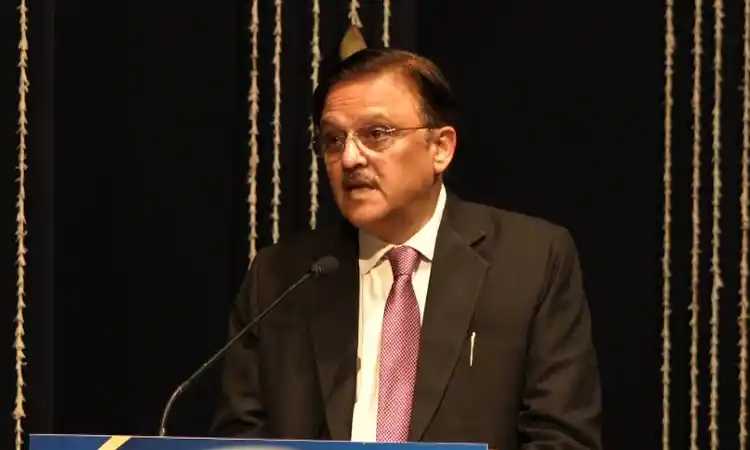
Introduction
Justice Oka’s judicial career, from his time at the Bombay High Court to the Supreme Court, has been marked by progressive rulings that protected individual rights, upheld the rule of law, and challenged state overreach. He is notably recognized for his stand on free speech, bail reform, and human rights violations.
Key Cases and Judicial Contributions
1. Bail and Freedom of Speech
-
In Tukaram v. State of Maharashtra (2006), Justice Oka struck down a bail condition that restricted public speech, strengthening the right to dissent.
-
In Hitesh Sitaram v. State of Maharashtra (2019), he ruled Section 509 (insulting modesty of a woman) could not be used to punish speech on social media without clear threat or harm.
2. PoK Citizenship Ruling (2017)
-
Justice Oka questioned the Pakistani visa stamp on a person’s passport and ruled that such individuals, if born in India, cannot be declared foreigners unless the law clearly defines such a basis.
3. Bail for Protesters and Critics of Government
-
A bench led by Justice Oka granted bail to a professor charged under Section 153A (hate speech) for forwarding a WhatsApp message critical of the abrogation of Article 370.
-
In Javed Ahmad Case (2024), the Supreme Court emphasized that criticism of government policy is not sedition, and such criticism does not justify prosecution under Section 153A.
The Core of the Concern
In a climate where civil liberties are often compromised by state overreach, Justice Oka’s rulings offered a legal shield to dissenters and those targeted for opposing official narratives.
Key Observations
-
He ruled against the UP Government’s action on protestors, including the illegal display of their personal details on public hoardings during the anti-CAA protests.
-
Justice Oka stressed that law enforcement cannot become a tool for political retaliation.
-
In multiple cases, he emphasized that “democracy will not survive if criticism is criminalized.”
-
He took a stand for the homeless and slum dwellers, ruling that housing demolition requires legal safeguards and not unilateral action.
Challenges and the Way Forward
Challenges:
-
Increased attempts to criminalize speech and protests.
-
Misuse of vague laws like Section 153A and Sedition to silence dissent.
-
Delayed justice and undertrial prisoners suffering due to strict bail norms.
Steps Forward:
-
Follow Justice Oka’s precedents to liberalize bail laws.
-
Strengthen judicial review to prevent misuse of criminal laws.
-
Train law enforcement to respect constitutional boundaries.
Conclusion
Justice Abhay Oka stands out as a pillar of India’s liberal democratic values. His fearless judgments in favor of liberty, free expression, and humane law enforcement will continue to inspire future jurists. As India navigates complex challenges around civil rights and state power, his jurisprudence serves as a vital legal compass.
Q&A Section
-
Who is Justice Abhay Oka?
A former judge of the Supreme Court known for promoting civil liberties and liberal bail jurisprudence. -
What is Justice Oka’s key contribution?
He relaxed bail conditions and upheld the right to dissent, especially in politically sensitive cases. -
Which laws did Justice Oka challenge?
He questioned the misuse of Section 153A, Sedition laws, and public shaming practices. -
Why is his work important now?
In an era of increasing government criticism crackdowns, his rulings protect freedom of speech and civil rights. -
What legacy does Justice Oka leave behind?
A strong pro-liberty judicial path that defends democracy and empowers the common citizen.

