
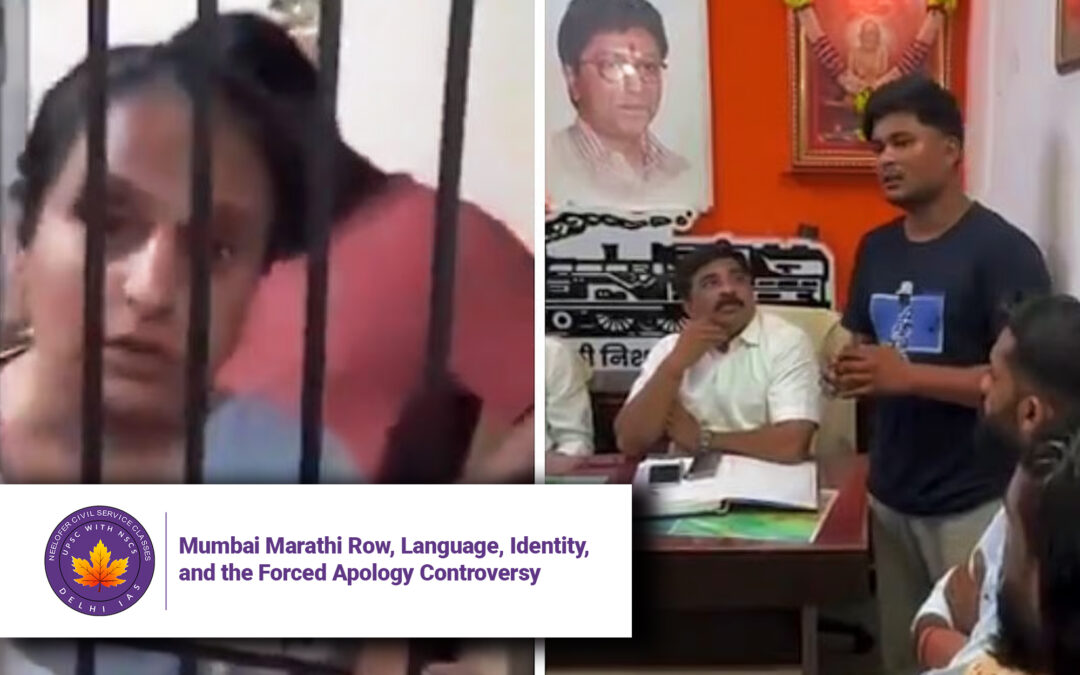
Mumbai Marathi Row, Language, Identity, and the Forced Apology Controversy
Why in News?
A video recently went viral from Mumbai’s Bhandup area showing a Domino’s pizza delivery boy allegedly being harassed for not speaking Marathi. What followed was even more controversial — the delivery boy was seen making a public apology at the office of the Maharashtra Navnirman Sena (MNS). The incident has reignited a national debate on linguistic identity, regionalism, and freedom of speech. 
Introduction
India’s linguistic diversity is both a source of pride and, at times, political conflict. The recent controversy involving a delivery boy being allegedly forced to apologize for not speaking Marathi has stirred emotions across the nation. Critics argue that political pressure and language enforcement violate individual freedoms, while others view it as a defense of regional culture.
Key Features
-
Incident Date: May 12, 2025
-
Location: Sai Radhe Building, Bhandup, Mumbai
-
Subject: Domino’s delivery executive allegedly harassed for not speaking Marathi
-
Political Involvement: MNS (Maharashtra Navnirman Sena)
-
Viral Video: Recorded and circulated by an individual named Rohit Lavare
-
Apology: Delivery boy seen apologising publicly at the MNS office, stating he would learn and speak Marathi
Specific Impacts or Effects
-
Social Media Uproar: The video triggered wide criticism on platforms like X (formerly Twitter), Instagram, and Facebook.
-
Regionalism vs. Nationalism Debate: The incident reignited old tensions between promoting regional languages and ensuring national linguistic unity.
-
Corporate Caution: Domino’s and other delivery platforms may now face pressure to train employees in local languages.
-
MNS’s Role Questioned: Critics accused the party of using the incident to push its political agenda.
-
Fear Among Migrant Workers: The event has increased anxiety among North Indian and South Indian workers in Maharashtra.
Challenges and the Way Forward
Challenges:
-
Linguistic Intolerance: Forcing a person to speak a regional language undermines their constitutional rights.
-
Political Exploitation: Involvement of political groups like MNS may shift focus from justice to propaganda.
-
Fear and Intimidation: Workers may feel threatened, especially those from non-Marathi-speaking backgrounds.
Steps Forward:
-
Promote Voluntary Language Learning: Encourage learning of regional languages through positive incentives, not coercion.
-
Stronger Legal Action: Authorities must ensure that such incidents are addressed through police, not political parties.
-
Sensitisation Programs: For both citizens and workers to understand the value of linguistic diversity and mutual respect.
-
Corporate Guidelines: Companies must establish clear protocols to support employees in case of harassment.
Conclusion
The Bhandup incident is not just about a pizza delivery gone wrong. It reflects deep-rooted linguistic tensions, regional pride, and the misuse of political influence in individual matters. While it is essential to preserve local languages and cultures, it must not come at the cost of an individual’s dignity and freedom. The need of the hour is a balanced approach — one that fosters unity in diversity without enforcing uniformity.
10 Questions and Answers
Q1: What happened in the Mumbai Marathi controversy?
A: A Domino’s delivery boy was allegedly harassed for not speaking Marathi and was later seen apologising at an MNS office.
Q2: When and where did the incident occur?
A: On May 12, 2025, at Sai Radhe Building in the Bhandup area of Mumbai.
Q3: Who circulated the viral video?
A: A man named Rohit Lavare recorded and shared the video on social media.
Q4: What did the apology video show?
A: The delivery boy said, “Main Marathi bolunga bhi. Aur seekhunga bhi. Jai Hind. Jai Maharashtra,” seemingly under pressure.
Q5: Was the woman in the video related to the man?
A: Yes, the delivery boy clarified that they were mother and son, not a couple.
Q6: Why was the MNS involved?
A: The MNS has a history of advocating for Marathi language use and took up the issue publicly.
Q7: What was the public reaction?
A: Many called it a “forced apology” and criticized the political involvement instead of going to the police.
Q8: What are the concerns raised by this incident?
A: Linguistic intolerance, political pressure, and fear among migrant workers.
Q9: What does the Constitution say about language use?
A: The Indian Constitution allows citizens to live and work anywhere in India and does not mandate the use of any specific regional language.
Q10: What can be done to avoid such incidents?
A: Promote language learning peacefully, strengthen police involvement over political action, and build workplace protection policies.

