
A Farmer Suicide Highlights India Deepening Irrigation Crisis
Why in News?
On March 13, 2025, Kailash Arjun Nagare, a recipient of the 2020 Young Farmer Award from Maharashtra, died by suicide due to unaddressed irrigation demands. His tragic death sheds light on India’s persistent and systemic irrigation issues, water inequity, and mismanagement. 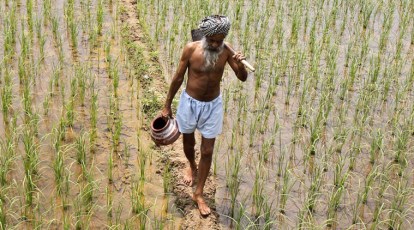
Introduction
While India is one of the highest users of water globally in agriculture, access to irrigation water remains unequal and inefficient. Nagare’s death brings attention to the inequitable distribution of water resources, driven by social injustice, policy failures, and aggressive groundwater exploitation.
Key Issues and Background
1. Unequal Access and Regional Disparities
-
Agriculture uses 80% of India’s water, with irrigation being key to farm output.
-
Expansion of irrigation, especially for water-guzzling crops like rice and sugarcane in arid zones, has led to unsustainable water use.
-
States such as Punjab and Tamil Nadu show low irrigation water productivity (IWP), despite high inputs and government support.
2. Environmental and Economic Impact of Over-Extraction
-
Around 17% of India’s groundwater zones are over-exploited.
-
Intensive pumping leads to aquifer depletion and high carbon emissions (6.3–20.3 million metric tons of CO₂ yearly from irrigation).
-
Paddy field flooding, inefficient irrigation methods, and the expansion of irrigation in water-scarce regions have made things worse.
3. Impact on Marginalized Groups
-
Inequity in irrigation access particularly impacts marginalized farmers and women, who face reduced resilience in the face of climate change and water table declines.
4. Policy and Governance Failures
-
Poor management practices, lack of state-wise coordination, and insufficient promotion of efficient water-saving technologies have stalled progress.
-
Despite multiple government programs, adoption rates of micro-irrigation systems (like drip/sprinklers) remain low.
The Way Forward
To address this systemic issue, the following steps are essential:
-
Improve Irrigation Efficiency: Invest in water-saving technologies such as drip irrigation, sprinklers, and solar-powered pumps.
-
Promote Alternative Water Sources: Encourage rainwater harvesting, treated wastewater use, and groundwater recharge.
-
Strengthen Knowledge and Governance: Establish state-specific water policies based on resource availability, rather than one-size-fits-all approaches.
-
Rationalise Crop Patterns: Promote climate-resilient crops and limit high water-consuming crops in dry areas.
-
Participatory Water Management: Involve local water user groups and communities in irrigation decisions for equitable allocation.
Conclusion
Nagare’s death is not an isolated incident—it reflects a broader crisis of water mismanagement, policy failure, and growing inequality in India’s irrigation system. The country must act urgently to balance agricultural demands with environmental sustainability, and ensure just and efficient irrigation access for all farmers.
5 Questions and Answers
Q1. Why did Kailash Arjun Nagare’s death draw national attention?
Answer: His suicide highlighted India’s growing irrigation crisis and pointed to unaddressed inequalities in water access for farmers.
Q2. What percentage of India’s water is used by agriculture?
Answer: About 80% of India’s water is used by the agricultural sector, making it the largest consumer of water.
Q3. What are the environmental impacts of over-extraction of groundwater?
Answer: Over-extraction leads to aquifer depletion, groundwater stress, and contributes to 6.3–20.3 million metric tons of CO₂ emissions annually.
Q4. Why is irrigation water productivity (IWP) low in states like Punjab and Tamil Nadu?
Answer: These states use inefficient irrigation methods, grow water-intensive crops, and have poor policy alignment, despite heavy subsidies.
Q5. What measures are recommended to address India’s irrigation problems?
Answer: Solutions include improving irrigation efficiency, adopting climate-smart technologies, promoting crop diversification, and enabling community-led water governance.

