
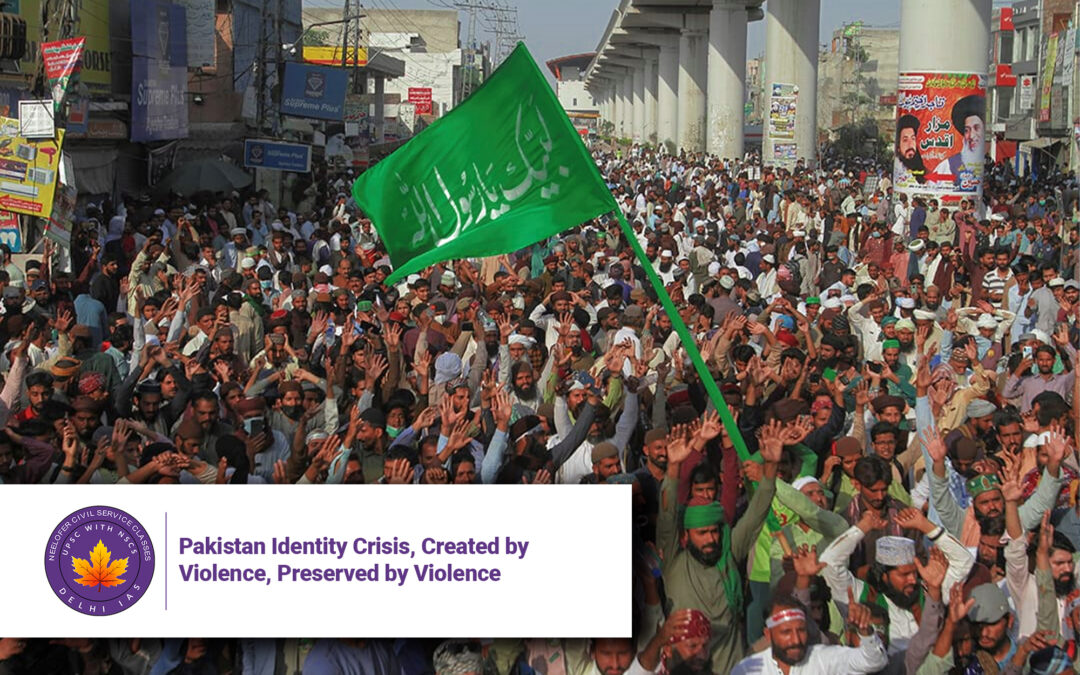
Pakistan Identity Crisis, Created by Violence, Preserved by Violence
Why in News?
The article by senior journalist MJ Akbar explores how Pakistan’s founding ideology, rooted in violence, extremism, and anti-India sentiments, continues to shape its internal and external politics. The context is Pakistan’s current economic turmoil, internal instability, and its recent confrontations with India.
Introduction
Pakistan was carved out of British India in 1947 as a separate homeland for Muslims. However, over the decades, it has struggled with its own identity, caught in a web of military dominance, Islamist radicalism, and deep-rooted anti-India propaganda. Its use of terrorism as state policy and continued attempts to destabilize India are increasingly being exposed and rejected globally.
Key Issues Highlighted
The Role of General Ayub Khan and Zia-ul-Haq
-
Pakistan’s direction changed drastically under military rule, especially under General Zia-ul-Haq, who used Islam as a political weapon and institutionalized extremism.
-
General Zia turned Pakistan into a jihadi state, pushing radical Islamic ideologies into governance, education, and military affairs.
India’s Response – Strategic Clarity
-
Over the decades, India’s stance towards Pakistan has hardened.
-
PM Narendra Modi’s government has taken a firm line, refusing to negotiate under threat or tolerate cross-border terrorism.
-
India revoked Article 370 in Jammu & Kashmir despite Pakistani warnings, called Pakistan’s nuclear bluff, and retaliated after terror attacks with surgical strikes and Balakot airstrikes.
Pakistan’s Economic & Political Collapse
-
Internally, Pakistan is facing a crippling economic crisis, widespread unrest, and no functioning democracy.
-
Its strategy of using Kashmir and terrorism as political tools has isolated it internationally, while India’s global image has risen.
Challenges and the Way Forward
-
Pakistan continues to propagate violence as policy, harboring terror groups and destabilizing South Asia.
-
India must stay alert, and continue its strategy of zero tolerance towards terror, diplomatic isolation of Pakistan, and strong defense preparedness.
-
The international community is increasingly siding with India, recognizing Pakistan’s double standards on terrorism.
Conclusion
Pakistan today stands as a paradoxical state—a country that was created through violence, sustained by militarism, and continues to justify its failures through anti-India narratives. India, by contrast, has evolved into a stable, democratic power. The region’s peace depends on the world calling out and isolating Pakistan’s state-sponsored terror framework.
5 Q&A Based on the Article
Q1. What is the central theme of MJ Akbar’s article?
A: The article explores how Pakistan was created and is sustained through violence, radical ideology, and anti-India sentiment, while India has taken a firmer, more strategic stance.
Q2. How did General Zia-ul-Haq shape Pakistan’s ideology?
A: He transformed Pakistan into a jihadi state, using Islamism as a political tool and embedding extremism into its military, education, and governance.
Q3. What has been India’s response to Pakistan’s provocations in recent years?
A: India has shown strategic clarity, conducting surgical strikes, Balakot airstrikes, and revoking Article 370 in Jammu & Kashmir while refusing to negotiate under pressure.
Q4. How has Pakistan’s global standing changed recently?
A: Pakistan is facing international isolation due to its support for terrorism, while India’s image as a responsible democracy has improved globally.
Q5. What is the future of peace in South Asia according to the article?
A: Peace can only come when the world holds Pakistan accountable for its support of terrorism and when Pakistan abandons violence as state policy.

