
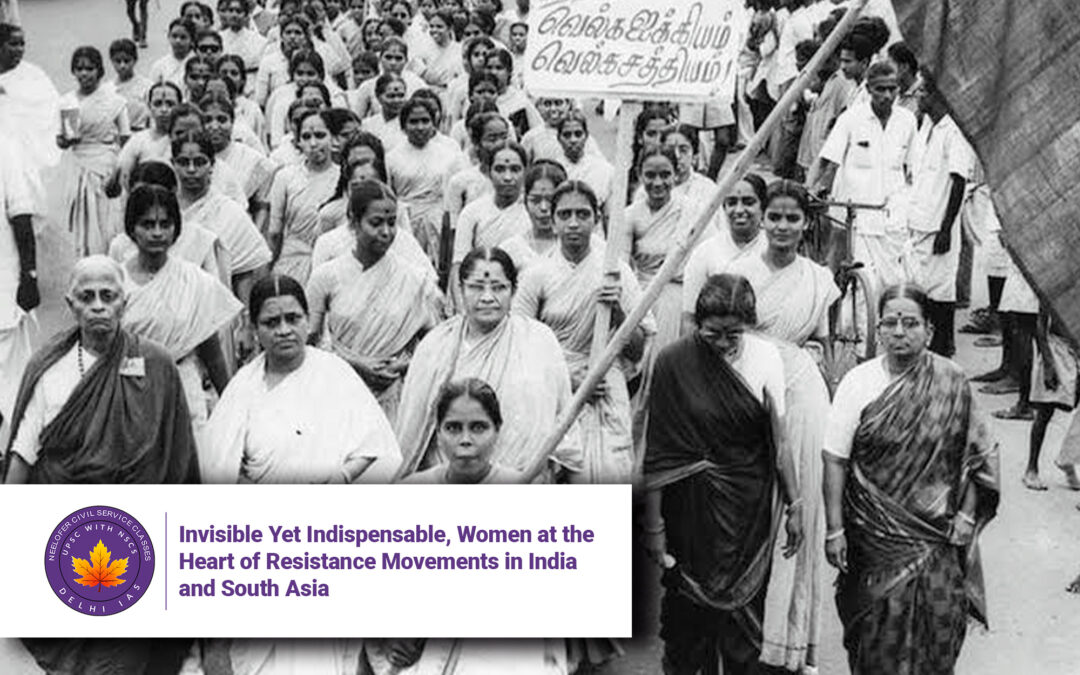
Invisible Yet Indispensable, Women at the Heart of Resistance Movements in India and South Asia
Why in News?
A recent analysis has highlighted how women across India and South Asia have been at the forefront of environmental and developmental resistance movements — yet remain systematically excluded from decision-making and consultations, particularly around land, rehabilitation, and climate issues. 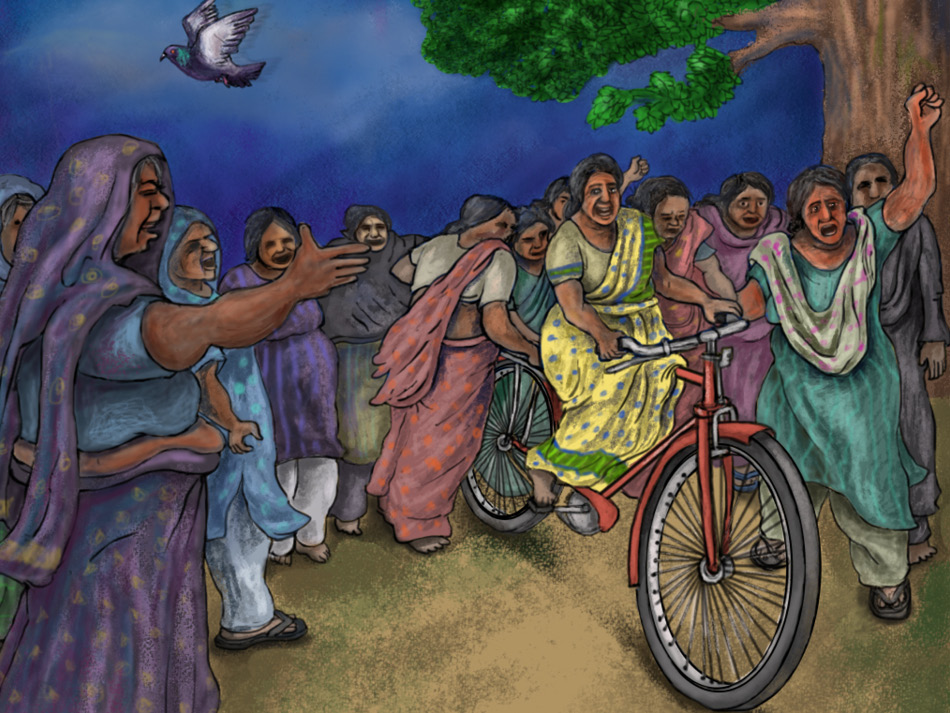
Introduction
From Odisha’s forests to Tamil Nadu’s coasts, women have consistently resisted destructive mining, extractivism, and infrastructure projects. Their leadership in community protests is visible, but their voices remain unheard in planning, consultations, and policy decisions.
The article by Bhoomika Choudhury and Yukti Choudhary, both researchers on gender and rights, draws attention to this systemic exclusion of women from critical decision-making processes despite their pivotal roles in ground-level activism.
Key Issues and Institutional Concerns
1. Lack of Recognition in Decision-Making
-
Women lead and sustain movements but are excluded from official consultations under Free, Prior and Informed Consent (FPIC) mechanisms.
-
Community meetings and decisions on land often overlook women, focusing only on male household heads.
2. Inadequate Legal Frameworks
-
Legal frameworks in India and South Asia have some gender-sensitive provisions, such as:
-
India’s Forest Rights Act (2006) and PESA Act (1996) recognizing women’s roles in Gram Sabhas.
-
Nepal’s Joint Land Ownership Policy.
-
Bangladesh’s land distribution efforts.
-
-
However, these are often poorly implemented or tokenistic, with women’s voices sidelined.
3. Exclusion from Land and Climate Policies
-
Women, especially from tribal and marginalized communities, are excluded from land titles, despite amendments like the 2005 Hindu Succession Act.
-
Climate adaptation and development projects rarely account for gendered vulnerabilities, such as women’s reliance on forests, water, and agriculture.
4. FPIC and Token Participation
-
FPIC is often reduced to a box-checking exercise. Women’s participation is limited or silenced.
-
Consultation spaces frequently lack real inclusion and ignore the lived realities of women.
Challenges and the Way Forward
1. Structural Change Needed
-
Consultation meetings must include women explicitly and ensure prior, informed, and free consent.
-
Women’s ownership of land and leadership must be recognized legally and socially.
2. Women as Stakeholders, Not Dependents
-
Development planning must treat women not just as dependents of male members, but as independent landowners, workers, and citizens.
3. Supporting Leadership Roles
-
Governments, NGOs, and policymakers must actively support and amplify women’s leadership, especially at the grassroots.
Conclusion
Women have always been central to resistance movements in India and South Asia. Yet, they remain marginalized in policy decisions. To build a just, inclusive, and democratic development model, it is essential to not only listen to women but also give them a seat at the decision-making table. Their leadership is not symbolic — it is critical to the success of sustainable development.
Q&A Section
Q1. What is the main issue highlighted in the article?
The systemic exclusion of women from decision-making in environmental, land, and climate-related movements, despite their active participation in protests.
Q2. What are some legal frameworks supporting women’s rights in India?
India’s Forest Rights Act (2006) and PESA Act (1996) recognize women’s role in Gram Sabhas and land rights, but these are often poorly implemented.
Q3. What is the problem with FPIC in practice?
FPIC (Free, Prior and Informed Consent) often becomes tokenistic, excluding or silencing women’s voices instead of ensuring genuine participation.
Q4. How are women affected by climate and development projects?
They face displacement, lack of land ownership, and exclusion from planning, especially in tribal and rural areas.
Q5. What is the proposed way forward?
Ensure inclusive consultations, support women’s leadership, and implement gender-sensitive laws and land reforms meaningfully.

