
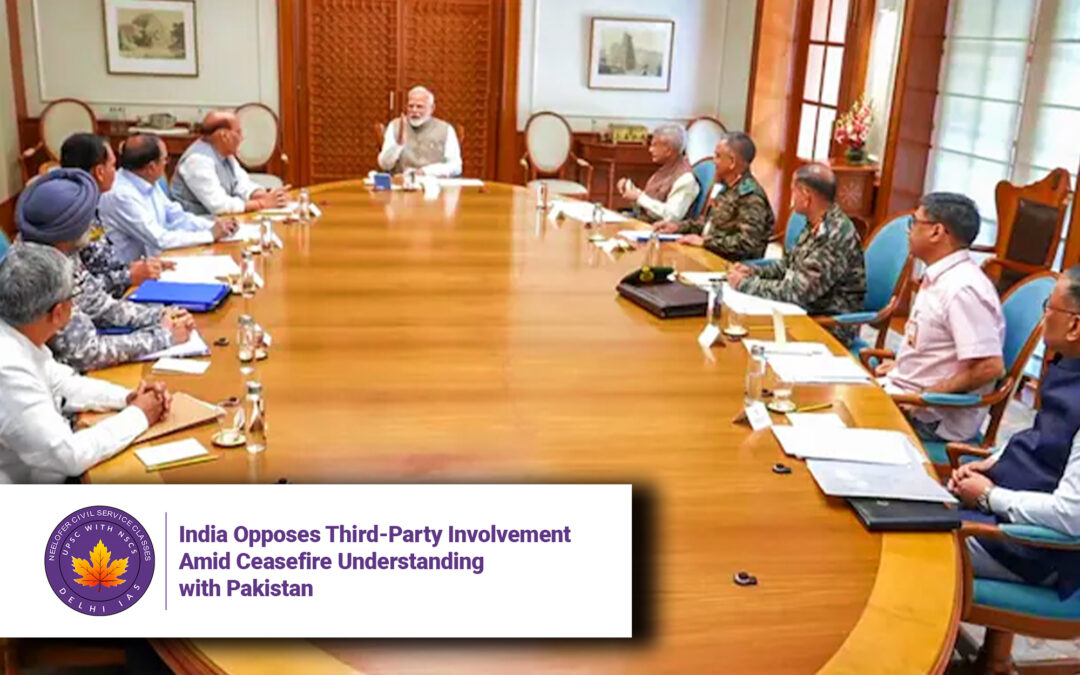
India Opposes Third-Party Involvement Amid Ceasefire Understanding with Pakistan
Why in News?
India and Pakistan recently announced an understanding to halt military actions against each other after days of heightened tensions and intense cross-border fighting. This move follows international attention and reported involvement by U.S. leaders, reigniting the debate over foreign interference in the Kashmir conflict. 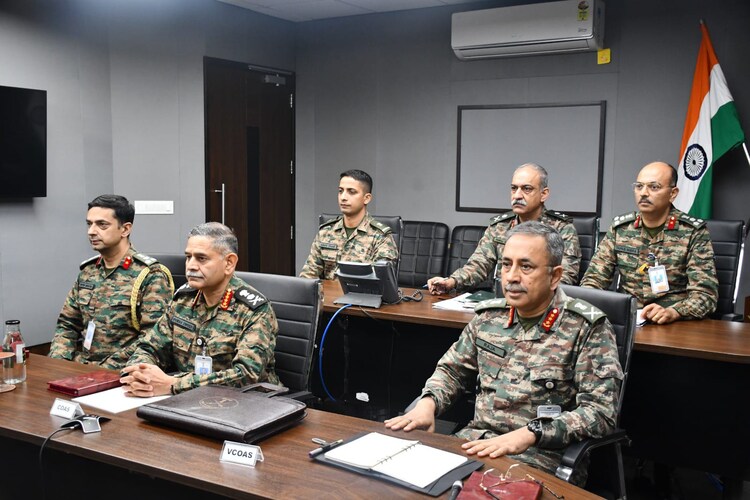
Introduction
The situation between India and Pakistan escalated after a terrorist attack in Pahalgam. India responded with military strikes targeting terror bases in Pakistan. With rising global concern, including statements by former U.S. President Donald Trump and Secretary of State Marco Rubio, India strongly reasserted its position against third-party mediation in Kashmir, a matter it considers bilateral.
Key Issues and Background
1. Ceasefire Agreement and U.S. Involvement
After violent exchanges, both countries agreed to stop military actions. While former President Trump claimed the U.S. helped mediate, India maintained that the understanding was bilateral. The involvement of U.S. Vice President J.D. Vance and other officials created concerns about foreign meddling.
2. India’s New Security Doctrine
The Indian government, under Prime Minister Narendra Modi, refused to allow Pakistan to hide behind deniability and persist in cross-border terrorism. India’s military acted decisively, asserting a doctrine that terrorism will no longer go unanswered.
3. Political and Human Cost
The confrontation deeply affected civilians, especially in Jammu, Kashmir, and Punjab. While the Indian armed forces acted with discipline and precision, the human cost in terms of lives, property, and peace was significant.
The Domestic Political Debate
-
The Congress Party and other opposition groups have demanded an all-party meeting and detailed briefings.
-
There is growing concern over the lack of transparency in the government’s actions, casualties, and geopolitical implications.
-
China’s support to Pakistan and the possible internationalization of Kashmir are viewed as emerging threats.
-
The BJP government, being in power, is expected to respond responsibly and not raise historical phantoms or communal sentiments.
Conclusion
India has reaffirmed its firm stance that Kashmir is a bilateral issue and rejected any third-party mediation. With the conflict de-escalated for now, the focus must shift to diplomatic clarity, national security, and transparent communication with the public and political stakeholders. Future steps must reflect mature diplomacy, strategic patience, and domestic political unity.
5 Questions and Answers
Q1. What triggered the recent military confrontation between India and Pakistan?
Answer: The conflict began after a terrorist attack in Pahalgam, leading to India’s military retaliation targeting terror camps in Pakistan.
Q2. How did the U.S. reportedly influence the ceasefire?
Answer: Former U.S. President Donald Trump and officials like Secretary Marco Rubio claimed involvement in brokering a ceasefire, though India maintains the understanding was bilateral.
Q3. What new doctrine has India announced?
Answer: India emphasized a security doctrine where terrorism, especially cross-border, will not go unanswered, and Pakistan will not be allowed to hide behind deniability.
Q4. Why is India opposing third-party mediation in Kashmir?
Answer: India sees Kashmir as a bilateral issue and believes foreign involvement, especially from the U.S. or China, threatens to internationalize and complicate the matter.
Q5. What has the Indian opposition demanded following the conflict?
Answer: The opposition has demanded an all-party meeting, a detailed review of operations, and answers on geopolitical developments and casualties.

