
Yeast Models Offer New Insight into Human Brain Defects
Why in News?
Two major studies by researchers at Emory University and University of Texas Health Science Center in the U.S. have revealed that yeast can be genetically modified to mimic human brain developmental disorders. These studies provide crucial insight into how RNA exosome mutations in humans affect brain growth and suggest that yeast models could be used to develop future treatments. 
Introduction
Brain developmental disorders such as Pontocerebellar Hypoplasia type 1 (PCH1) are rare and devastating conditions that affect the brainstem and cerebellum, often leading to motor impairments, intellectual disability, and in some cases, early death. The discovery that similar gene variants have the same effects in yeast opens up new possibilities for functional drug testing and understanding disease mechanisms.
Key Issues and Background
Understanding PCH1 and RNA Exosomes
-
PCH1 is a genetic disorder that affects newborns and causes defects in the pons and cerebellum, leading to motor and cognitive problems.
-
The RNA exosome is a critical complex in all cells that processes, monitors, and eliminates defective RNA to ensure cellular health.
-
In yeast, this exosome works similarly to human cells and plays a key role in maintaining RNA integrity.
Yeast as a Model Organism
-
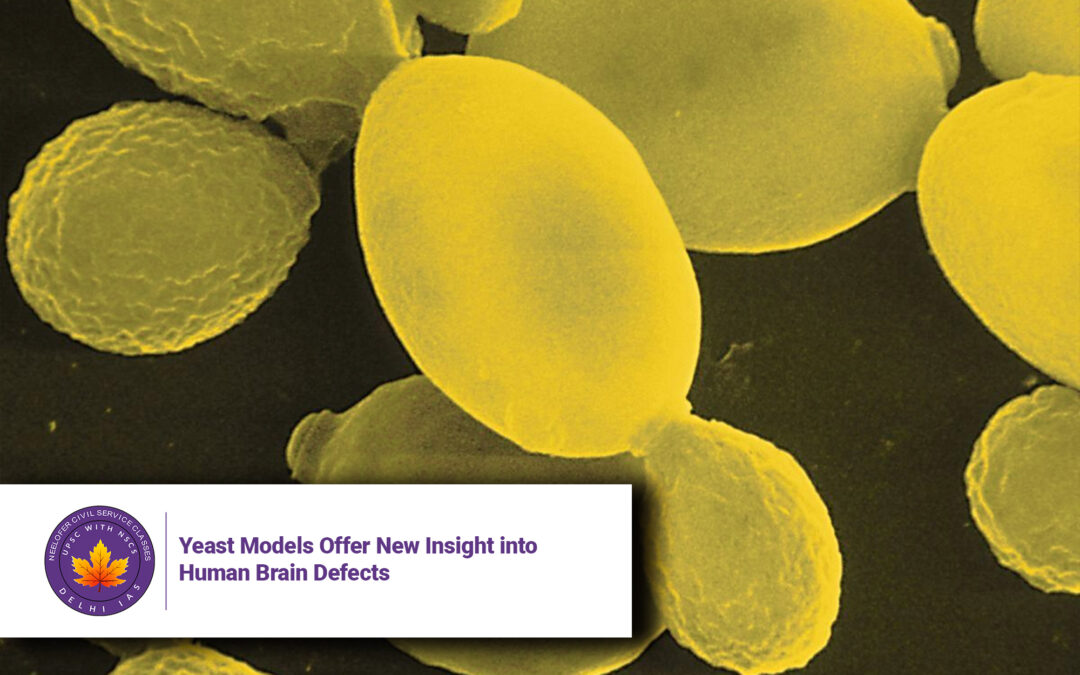
Yeast (Saccharomyces cerevisiae) is commonly used in genetics because of its simple structure and genetic similarities to humans.
-
Researchers engineered yeast to carry mutations found in PCH1 patients, and these yeast cells showed defects similar to those seen in human neurons, such as impaired growth and RNA processing errors.
The Core of the Concern
Genetic Modelling
-
Yeast cells with PCH1-linked mutations showed accumulation of faulty RNA, affecting critical processes such as ribosome biogenesis.
-
These findings confirm that RNA exosome mutations disrupt brain development through improper RNA degradation.
Functional Similarities
-
The study found that RNA exosomes in yeast react similarly to those in humans with respect to certain disease mutations, proving that yeast can be a reliable model for studying human RNA exosome disorders.
Key Observations
-
Faulty RNA Processing: Mutations interfere with how RNA exosomes identify and remove defective RNA, disrupting protein synthesis.
-
Humanized Yeast Models: The “G3 paper” introduced human genes into yeast, showing that the same mutations in yeast trigger the same defects as in human cells.
-
Conserved Functionality: Despite the evolutionary gap, core cellular processes are conserved, validating yeast as a model organism.
Conclusion
This discovery marks a breakthrough in understanding rare neurodevelopmental diseases and offers a cost-effective platform for drug testing. Yeast-based disease modelling could accelerate the development of therapies for brain defects caused by RNA exosome mutations, helping both researchers and patients in the years ahead.
5 Questions and Answers
Q1. What is Pontocerebellar Hypoplasia Type 1 (PCH1)?
Answer: It is a rare genetic disorder that affects brain development, particularly the cerebellum and brainstem, causing severe neurological and motor impairments from birth.
Q2. Why is yeast used in studying human genetic disorders?
Answer: Yeast shares many core cellular processes with humans and is easy to manipulate genetically, making it a useful model to study complex diseases.
Q3. What role does the RNA exosome play in the body?
Answer: The RNA exosome is responsible for processing, monitoring, and removing faulty RNA, ensuring proper gene expression and cellular health.
Q4. What did researchers discover when PCH1 mutations were introduced into yeast?
Answer: The yeast exhibited similar developmental defects seen in human cases, including impaired RNA processing and disrupted cell function.
Q5. How could this research help future drug development?
Answer: By using yeast as a model, scientists can test drugs that target faulty RNA processing, potentially leading to treatments for brain disorders caused by RNA exosome mutations.

