
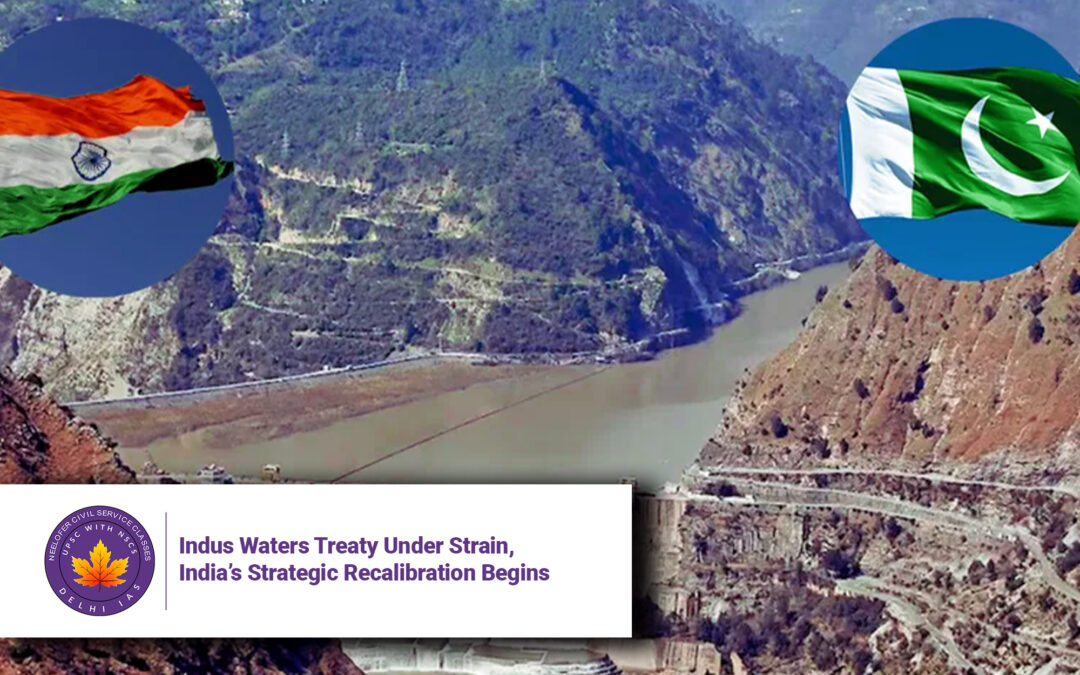
Indus Waters Treaty Under Strain, India’s Strategic Recalibration Begins
Why in News?
The continued cross-border terror incidents, including the recent Pahalgam attack, have pushed India to reconsider its commitments under the Indus Waters Treaty (IWT). India’s move to suspend the treaty’s implementation reflects a strategic recalibration in response to Pakistan’s misuse of goodwill and repeated provocations. 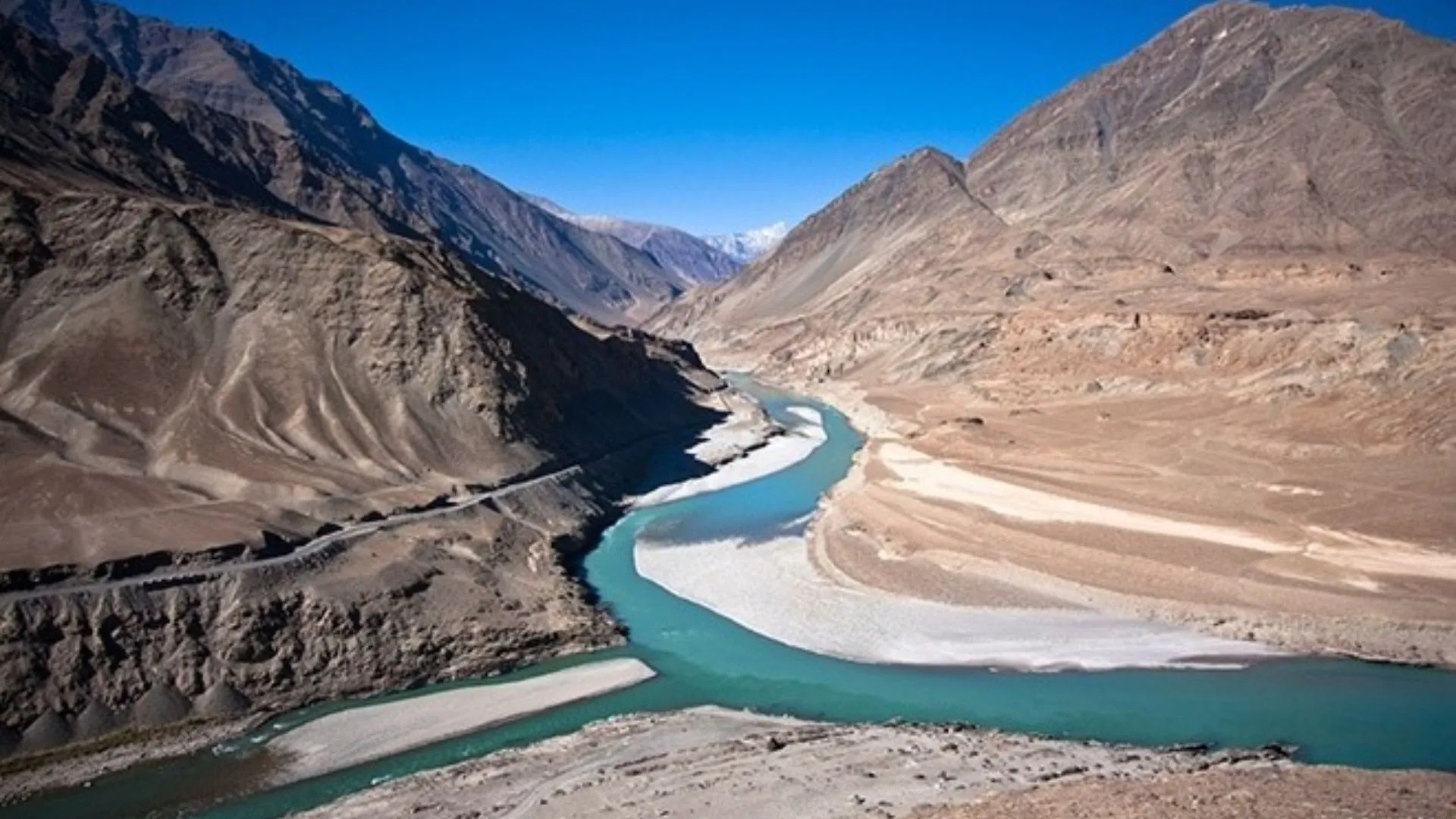
Introduction
The Indus Waters Treaty, signed in 1960, is globally acknowledged as a symbol of water-sharing cooperation even during wartime between India and Pakistan. However, increasing tensions and repeated acts of terror from Pakistan have eroded the trust and mutuality that upheld this agreement. The recent decision to put the IWT “in abeyance” signals a decisive shift in India’s strategic posture and foreign policy.
Key Issues and Background
A Treaty Meant for Peace
-
The IWT was seen as a resilient framework even during wars (1965, 1971, and 1999).
-
It divides the six rivers of the Indus Basin: Pakistan has full access to the western rivers (Indus, Jhelum, Chenab), while India retains usage rights over the eastern rivers (Ravi, Beas, Sutlej).
Pakistan’s Obstructionism
-
Pakistan has repeatedly blocked Indian hydro projects like Kishanganga, Ratle, Pakal Dul, raising objections and seeking arbitration.
-
It used mechanisms like the Neutral Expert (NE) and Court of Arbitration (CoA) to delay India’s projects, creating a chronic climate of mistrust.
The Core of the Concern
-
Terrorism from Pakistan, including attacks in Uri, Pulwama, and Pahalgam, has made India question the very spirit of cooperation that underpins the IWT.
-
The treaty was never intended to operate in a vacuum of hostility and terror.
-
Pakistan’s subterfuge and delays in water-sharing mechanisms are seen as strategic tools to provoke and hinder India’s development.
Key Observations
-
India, as the upstream state, holds significant hydrological leverage.
-
By putting the IWT in suspension, India sends a signal of intolerance towards cross-border terrorism, while preserving its right to future engagement.
-
The absence of trust undermines even technical collaborations like data-sharing, infrastructure development, and river basin management.
Conclusion
India’s suspension of the IWT is a strategic move to align water diplomacy with national security. While some argue for cautious engagement, the current climate demands measured assertiveness. This decision reclaims India’s upstream advantage and sends a clear message to Pakistan: cooperation must come with accountability.
5 Questions and Answers
Q1. What is the Indus Waters Treaty (IWT)?
Answer: It is a 1960 agreement between India and Pakistan that governs the distribution and usage of six rivers in the Indus Basin, promoting peaceful water sharing.
Q2. Why is India reconsidering the IWT now?
Answer: Continued terrorist attacks originating from Pakistan and deliberate obstructions to Indian hydro projects have eroded the trust and goodwill necessary for the treaty to function.
Q3. What actions has Pakistan taken to obstruct India’s water projects?
Answer: Pakistan has repeatedly sought arbitration and legal intervention through the CoA and NE, stalling India’s dam and hydropower projects on western rivers.
Q4. What does India mean by putting the treaty ‘in abeyance’?
Answer: It means India is temporarily suspending its obligations under the treaty while retaining the option to re-engage, signaling strategic displeasure without full withdrawal.
Q5. How does this decision affect India’s strategic interests?
Answer: As the upstream state, India gains significant leverage, both diplomatically and hydrologically, using water as a strategic tool to pressure Pakistan on terrorism and regional stability.

