
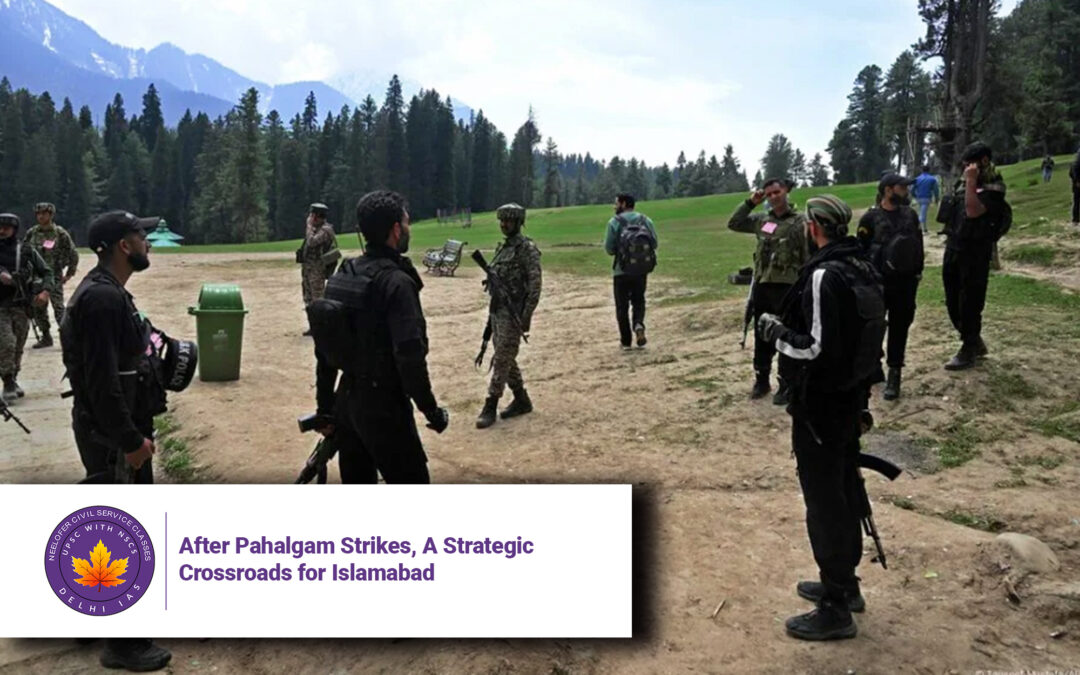
After Pahalgam Strikes, A Strategic Crossroads for Islamabad
Why in News?
India’s recent airstrikes on terrorist camps in Pakistan—particularly after the Pahalgam terror attacks—have reignited international and regional tensions. For the first time since the 1971 war, strikes reportedly targeted locations inside Punjab province of Pakistan, raising concerns over escalation and retaliation. 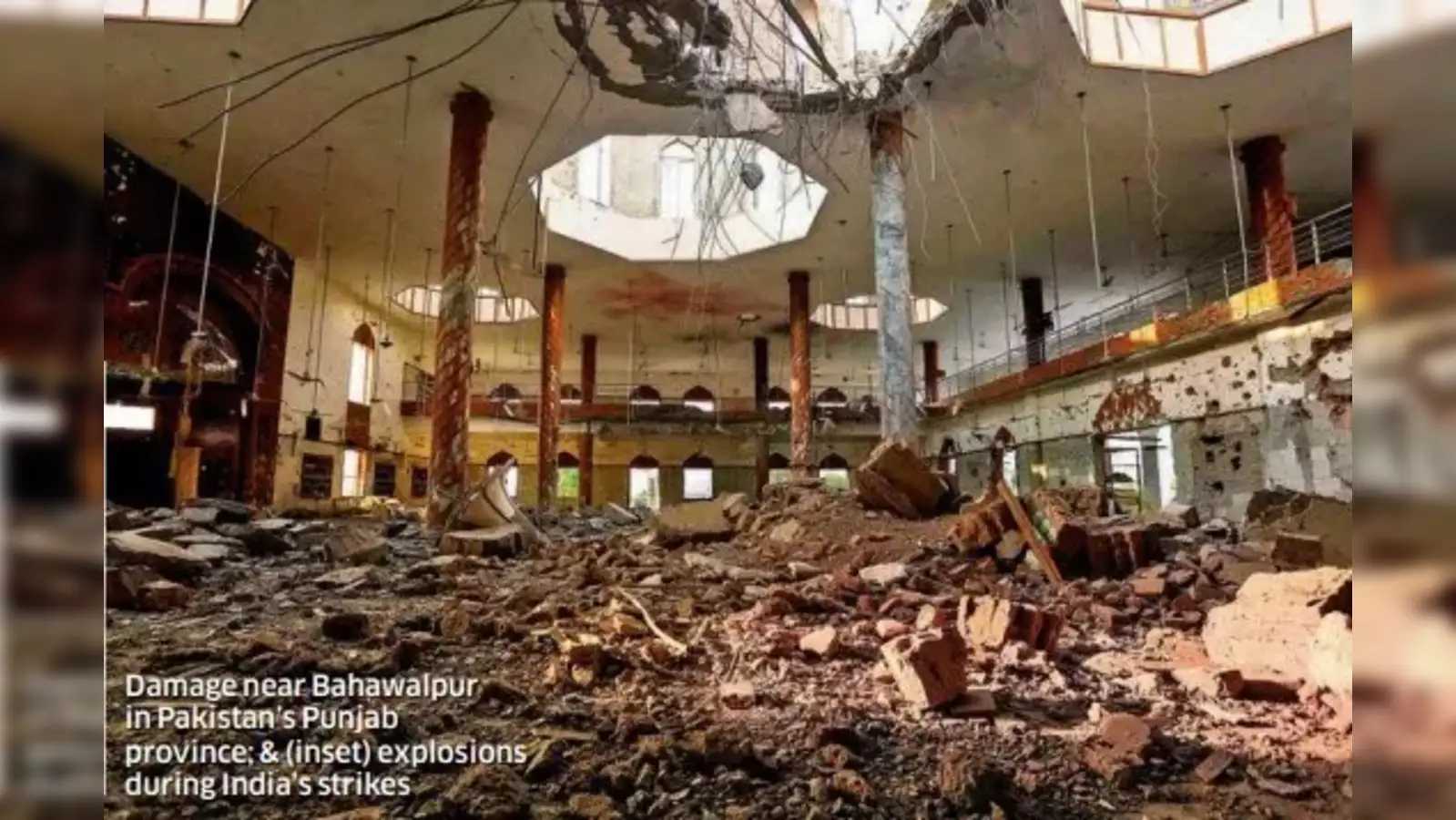
Introduction
India’s air response to the Pahalgam terror attack on April 18, which claimed multiple civilian lives, signals a major strategic shift. No longer confined to strikes across the LoC (Line of Control), the operations now hit deeper inside Pakistan. These developments raise critical questions about Pakistan’s response, international reaction, and regional peace.
Key Issues and Background
A Calculated Indian Counter-Strike
India’s response was not just symbolic. It was a pre-emptive and precision-based strike, possibly in coordination with inputs from intelligence agencies. According to former NSA chief Vikram Misri, it was “non-escalatory, measured… and did not hit any military target,” reflecting India’s intention to punish terror infrastructure—not provoke a war.
General Asim Munir and Internal Dynamics
General Asim Munir, Pakistan’s army chief, has a personal stake in this confrontation. After his earlier removal as ISI chief under Imran Khan’s rule, and his visible humiliation at the hands of rival officers, he now leads a fractured military and political system. With multiple arrests, political uncertainty, and anti-terror pressure, the Pakistani military is internally strained.
The Core of the Concern
Pakistan’s ability to retaliate remains limited. There’s no major mobilization of armed forces—only voluntary bodies like the National Cadet Corps. Strikes within Pakistan, especially in Punjab, show that India’s redlines have shifted. If India continues such measured preemptive strikes, it challenges the old nuclear threshold logic and forces Islamabad into a dilemma: retaliate and escalate, or absorb and endure?
Key Observations
-
International Response: Mostly muted, with major powers like the U.S., UK, and UN urging restraint. However, leaders like Donald Trump in earlier years had supported India’s retaliatory actions.
-
China’s Role: As Pakistan’s key ally and economic backer, Beijing holds de-escalatory leverage. If China intervenes to cool tensions, it may alter Islamabad’s options.
-
Domestic Pressure in Pakistan: Civil-military imbalance, economic collapse, and political isolation may prevent Pakistan from a strong response.
-
India’s Diplomatic Messaging: The strikes are framed as anti-terror, not anti-Pakistan, with clear targeting and restraint. This ensures international legitimacy.
Conclusion
The situation after Pahalgam highlights how modern warfare now includes precision strikes and careful messaging. While India showcased military and intelligence prowess, Pakistan stands at a diplomatic and strategic crossroads. If Islamabad escalates, it risks economic disaster and international isolation. If it shows restraint, it may lose face domestically. In this chessboard of geopolitics, Beijing’s next move could decide whether the situation worsens or stabilizes. As history suggests, escalation is easier than resolution—but peace demands wisdom and maturity from all players.
5 Questions and Answers
Q1. What triggered India’s recent airstrikes on Pakistan?
Answer: The strikes were in response to the April 18 Pahalgam terror attack in which civilians were killed, prompting India to target terrorist infrastructure inside Pakistan.
Q2. Why are the recent strikes significant compared to previous ones?
Answer: For the first time since 1971, the strikes were deep inside Pakistan’s Punjab province, indicating a shift in India’s red lines and strategic posture.
Q3. What has been the response of the international community?
Answer: The response has been largely muted, with calls for restraint. Western nations and the UN have advised both countries to avoid escalation.
Q4. How is China involved in the current scenario?
Answer: As Pakistan’s closest ally, China could act as a de-escalator due to its economic and political leverage, although its position remains cautious.
Q5. What options does Pakistan have moving forward?
Answer: Pakistan can choose to retaliate, risking further conflict and economic damage, or it can opt for diplomatic channels and internal adjustments to avoid escalation.

