
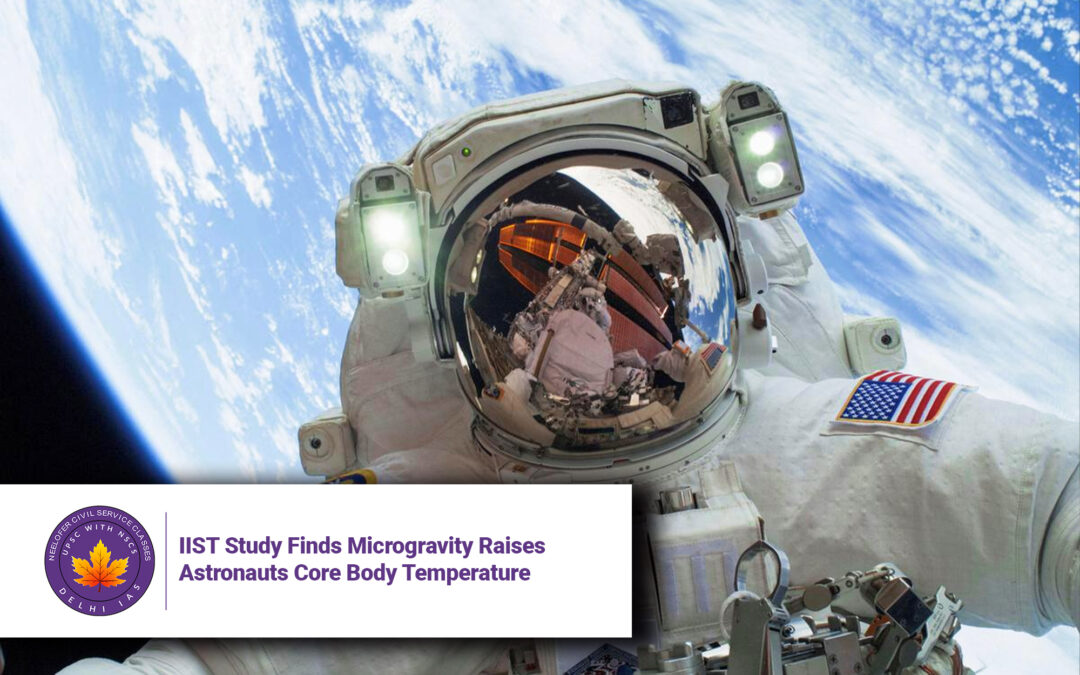
IIST Study Finds Microgravity Raises Astronauts Core Body Temperature
Why in News?
Researchers from the Indian Institute of Space Science and Technology (IIST), Thiruvananthapuram, have made a groundbreaking discovery that microgravity significantly increases core body temperature in space — a factor with major implications for astronaut safety and space mission planning. 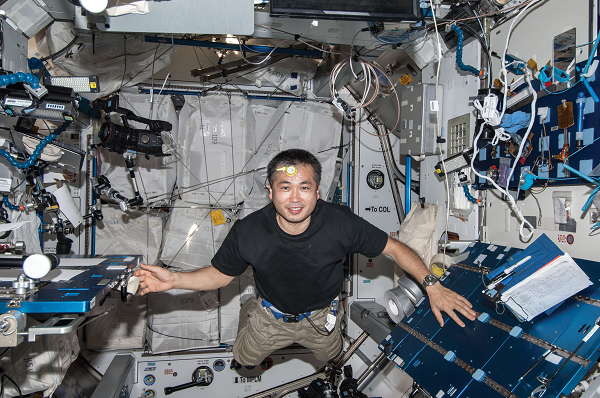
Introduction
As humans prepare for longer space missions, understanding how space conditions affect the human body is essential. IIST scientists have developed a 3D computational model of human thermoregulation, which reveals that microgravity alters how the body maintains its internal temperature. This finding is critical as it affects astronauts’ well-being on long-term missions.
Key Issues
1. Microgravity Disrupts Thermoregulation
-
Human bodies rely on sweating, shivering, and blood flow to maintain stable body temperature.
-
In microgravity, these mechanisms are disrupted due to fluid shifts, reduced convection, and altered metabolism.
2. Increased Core Temperature in Space
-
The study confirmed that astronauts in microgravity experience a steady increase in body temperature — even more while exercising.
-
For example, body temperature during exercise in space rose to 40°C compared to Earth conditions.
3. 3D Thermoregulation Model Developed
-
IIST researchers created a model that simulates the effects of space conditions on the human body in three dimensions, accounting for factors like sweating, metabolic rate, blood circulation, bone and muscle mass loss.
Findings and Implications
-
Over 2.5 months in microgravity, core body temperature increased by 1°C and metabolism rose by 30%.
-
This has huge implications for astronaut health, mission planning, and even space suit design.
-
The model can also help predict human responses in extreme environments like deserts, cold climates, or high altitudes.
Challenges and the Way Forward
-
Continuous temperature monitoring is necessary for astronaut safety.
-
Future space mission planning should incorporate such models to prepare for long-duration missions to the Moon and Mars.
-
Designers of space equipment and suits can use these findings to make safer, more adaptive systems for space travelers.
Conclusion
The IIST study sheds light on a critical aspect of space physiology — thermoregulation. With missions becoming longer and more ambitious, understanding how the body responds to space environments is vital. This research marks a significant step toward safer human space exploration.
5 Q&A Based on the Article
Q1. What recent discovery did IIST researchers make about space travel?
A: They found that microgravity increases astronauts’ core body temperature, affecting their health during space missions.
Q2. What methods did scientists use to study thermoregulation in space?
A: They developed a 3D computational model that simulates how heat moves through the body under microgravity.
Q3. What causes body temperature to rise in space according to the study?
A: Fluid shifts, reduced sweating, impaired heat dissipation, and increased metabolism in microgravity.
Q4. Why is this research important for future space missions?
A: It helps ensure astronaut safety, informs space suit design, and assists in planning for long-duration missions.
Q5. Can this model help beyond space travel?
A: Yes, it can be used to study how humans respond to extreme environments on Earth like deserts or polar regions.

