
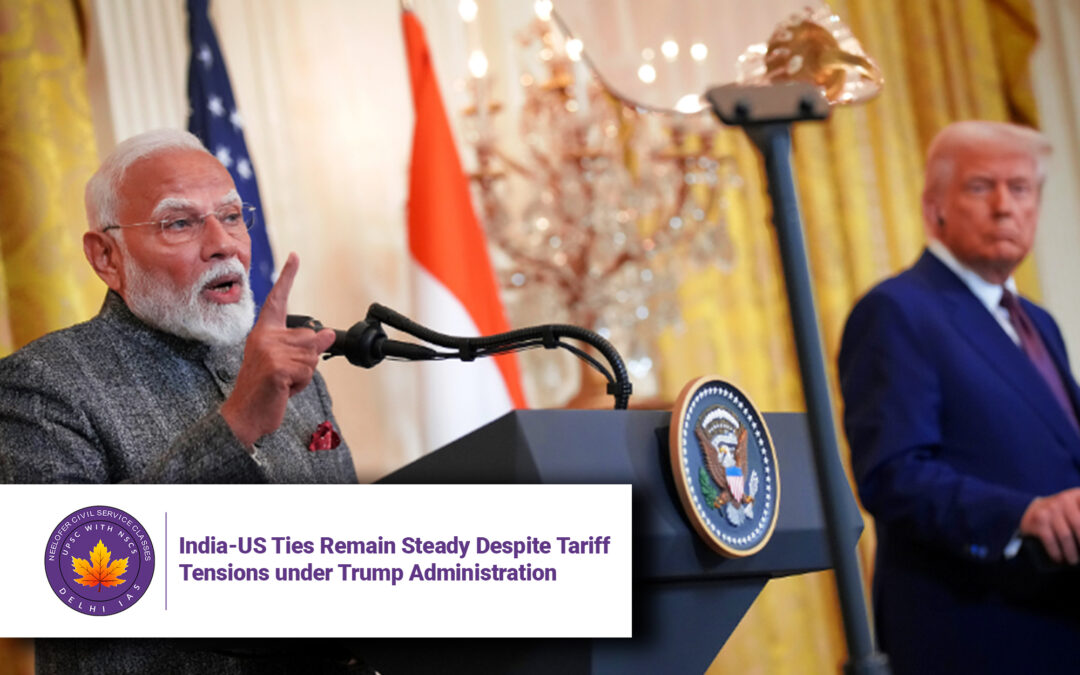
India-US Ties Remain Steady Despite Tariff Tensions under Trump Administration
Why in News?
As Donald Trump completed his first 100 days as the President of the United States, international attention turned toward how key bilateral relations, especially between India and the US, were faring under his leadership — particularly amid tensions around trade tariffs, immigration, and defence cooperation. 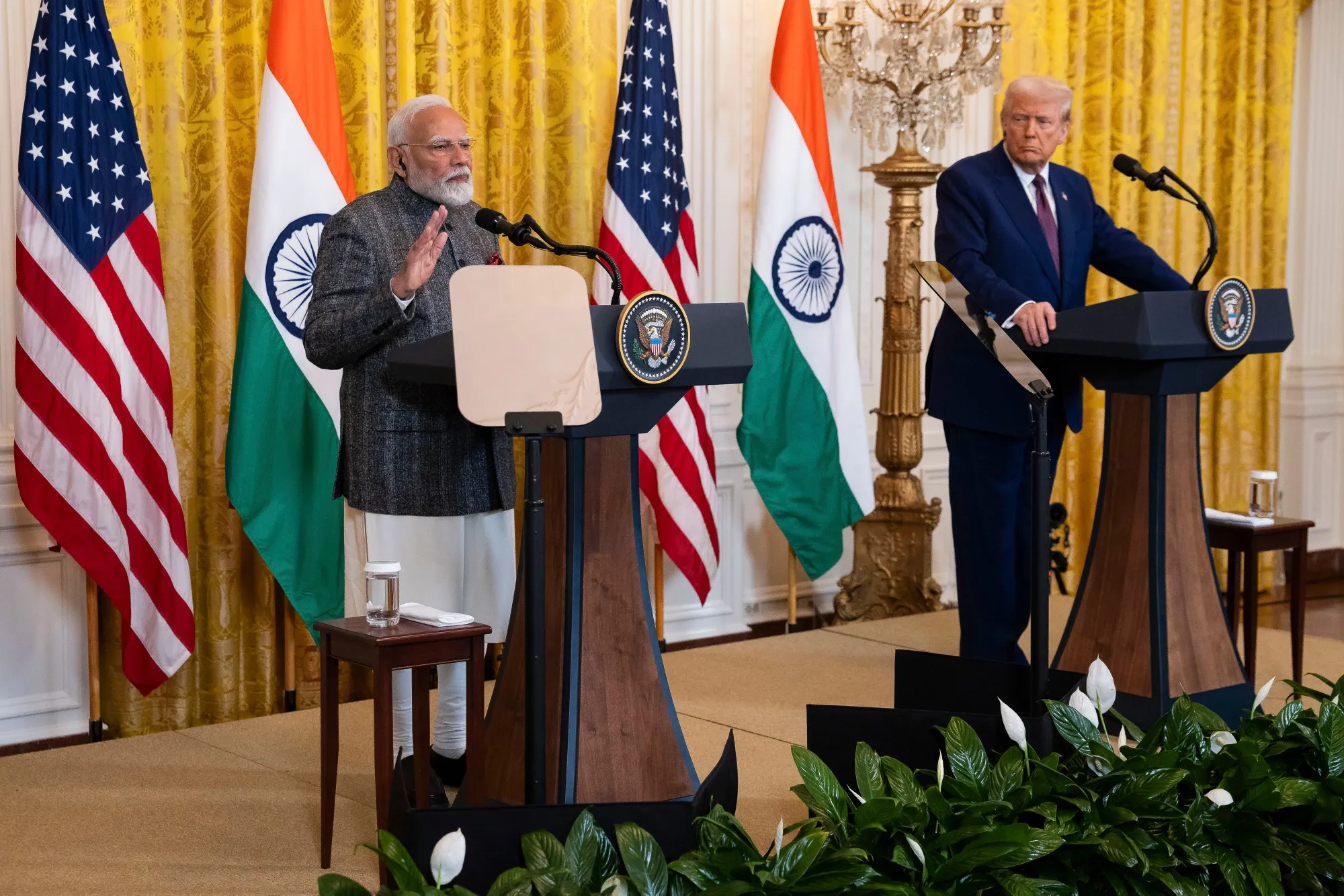
Introduction
On February 12, 2017, Prime Minister Narendra Modi became one of the first foreign leaders to visit Washington, D.C., under the Trump administration. This early move indicated India’s intent to maintain and deepen strategic ties with the US despite the Trump administration’s harsh rhetoric on trade and immigration. The visit, and several others by key Indian officials, showed India’s diplomatic agility in balancing policy with a new and unpredictable US leadership.
Key Issues and Background
1. Modi’s Strategic Outreach
-
PM Modi’s visit came just a month after Trump’s inauguration, showing India’s readiness to engage early.
-
Prior to Modi’s visit, External Affairs Minister S. Jaishankar met with US Secretary of State Rex Tillerson to lay the groundwork.
-
Trump’s administration had already labeled India a “tariff king,” signaling impending trade friction.
2. Tariff and Trade Challenges
-
Trump targeted India for imposing what he called unfair tariffs on American products like motorcycles and whiskey.
-
India, meanwhile, had imposed tariffs for strategic and domestic economic reasons, particularly to protect its manufacturing sector.
-
Modi’s government made a tentative move toward purchasing F-35 fighter aircraft, an offer that could help balance trade tensions.
3. Immigration and Deportation Issues
-
The Trump administration cracked down on illegal immigration, affecting Indian nationals.
-
Despite deportation concerns, India maintained a diplomatic silence, opting to deal with the issue through established communication channels.
-
Indian officials described US deportation measures as “shackled” and “inhumane” but avoided a public fallout.
4. Tulsi Gabbard’s Diplomatic Visit
-
Tulsi Gabbard, newly appointed director of national intelligence, visited India and met PM Modi.
-
She addressed the Raisina Dialogue and highlighted continued cooperation between India and the US on counterterrorism and intelligence sharing.
-
This affirmed that even amidst difficult policy disagreements, the two nations shared common security concerns.
5. Mutual Interests in Defence and Strategy
-
US Vice President Mike Pence’s wife and children visited India, marking a blending of personal diplomacy and strategic optics.
-
A focus remained on strengthening defence cooperation and balancing tariffs with increased purchases of US military equipment.
The Core of the Concern
Despite the harsh public tone around tariffs and immigration, India and the US managed to keep their relationship on track by focusing on shared interests like defence, counterterrorism, and strategic alignment in Asia.
Key Observations
-
Modi displayed adaptability and calm negotiation skills in managing relations with a volatile US administration.
-
Tulsi Gabbard’s visit and Raisina Dialogue participation underscored bipartisan support for India in Washington.
-
The overall tone of the first 100 days was balanced, despite looming trade disagreements.
Conclusion
The early phase of the Trump presidency presented many challenges for India-US ties — from tariffs to immigration policies. However, India handled the situation with strategic diplomacy, ensuring that the relationship remained on an even keel. Defence cooperation, counterterrorism efforts, and high-level visits helped stabilize the ties despite economic tensions.
5 Questions and Answers
Q1. Why was Narendra Modi’s visit to the US in early 2017 significant?
Answer: Modi’s early visit to the US under the Trump administration indicated India’s intent to engage early and diplomatically manage emerging policy challenges, especially on trade and immigration.
Q2. What was Donald Trump’s criticism of India regarding trade?
Answer: Trump called India the “tariff king” and criticized its high tariffs on American products like Harley-Davidson motorcycles and whiskey.
Q3. How did India respond to US concerns about immigration and deportation?
Answer: India remained diplomatically silent but observed US deportation practices with concern, particularly the shackling of deportees.
Q4. Who is Tulsi Gabbard and what was the purpose of her India visit?
Answer: Tulsi Gabbard, US director of national intelligence, visited India, met Modi, and addressed the Raisina Dialogue, highlighting strong bilateral cooperation in security and counterterrorism.
Q5. What broader strategy helped maintain stable India-US ties during Trump’s first 100 days?
Answer: India’s strategic diplomacy, focus on shared defence and security interests, and avoidance of public disputes helped keep the relationship steady despite tensions.

