
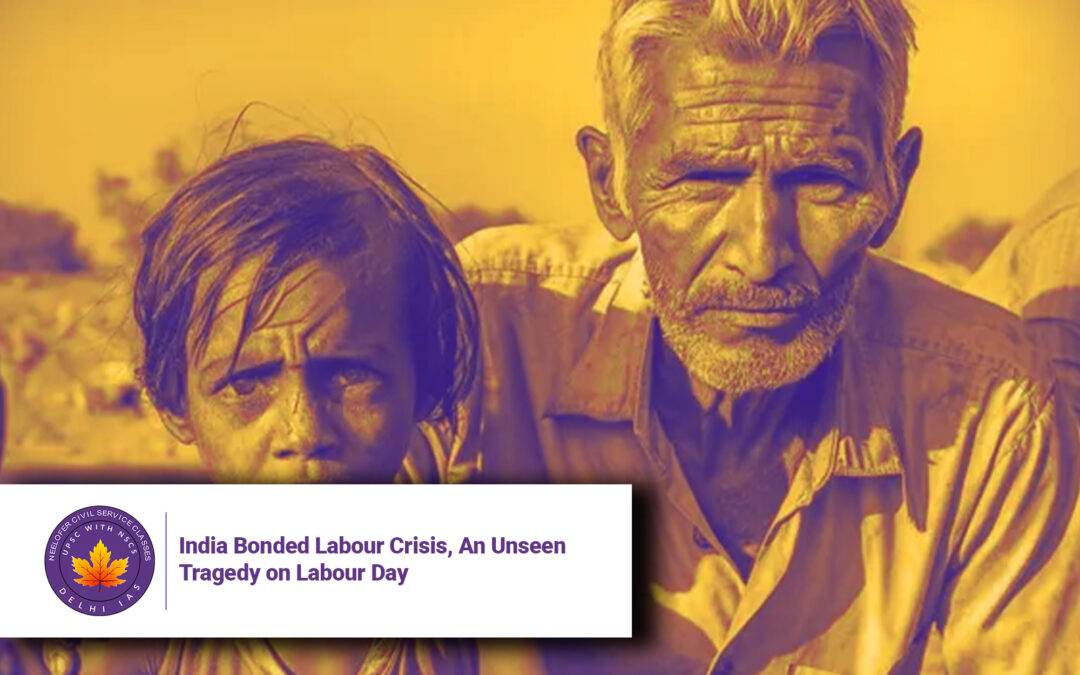
India Bonded Labour Crisis, An Unseen Tragedy on Labour Day
Why in News?
As the world observed International Labour Day on May 1, India’s dark underbelly of bonded and forced labour came into focus again. Despite being outlawed, millions in India—especially from marginalised communities—remain trapped in exploitative work conditions, lacking rights, dignity, and basic freedoms. /theprobe/media/media_files/c5WZe3IaXD5P2rLv9C36.jpg)
Introduction
In a grim reminder of modern-day slavery, the story of Mukesh Adivasi, a 35-year-old shepherd from Madhya Pradesh, reveals the horrific reality of bonded labour in India. Promised work and better pay, Mukesh and his family were trafficked 1,400 km to Karnataka, only to be subjected to brutality, confinement, and endless hours of labour. His tale reflects a larger issue: India’s economy still heavily relies on cheap, vulnerable labour, especially from informal sectors, where forced labour continues to thrive despite legal prohibitions.
Key Issues and Institutional Concerns
1. A Web of Interconnected Triggers
Bonded labour often begins with:
-
Medical emergencies, sudden job losses, debt, or food insecurity
-
Advances or loans taken under duress
-
Social exclusion based on caste, religion, ethnicity, or economic background
2. Systemic Weaknesses
-
Employer monopolies, local financial mafias, and weak law enforcement worsen the crisis.
-
Bonded labour often masquerades as a contractual relationship, trapping people in exploitative work for years.
3. Legal Provisions and Policy Gaps
-
India banned bonded labour in 1975.
-
The Bonded Labour System (Abolition) Act exists but is poorly enforced.
-
In 2016, the Indian Labour Ministry pledged to identify and rehabilitate 1.84 crore bonded labourers, but only 3.2 lakh were actually rescued and rehabilitated by 2021.
4. The Informal Sector Trap
-
According to a National Sample Survey, over 47 crore workers are in the unorganised sector.
-
Only 9 crore are in the organised sector, where some legal protections exist.
-
Most informal workers suffer from no job security, no legal contracts, and no benefits.
Challenges and the Way Forward
1. Identification and Rescue
-
Strengthen the mechanism to track and register bonded labourers.
-
Local governments must be empowered to act swiftly.
2. Legal and Social Reform
-
Enforce existing laws effectively.
-
Address root causes like discrimination, lack of education, and poverty.
3. Strengthen Rehabilitation
-
Rehabilitation should include housing, healthcare, education, legal aid, and economic opportunities.
-
Ensure victims don’t fall back into the same exploitative cycles.
4. Public Awareness and Accountability
-
Government, media, and civil society must educate the public about the reality of bonded labour.
-
Transparency and accountability must be enforced in rescue operations.
5. Decentralised Monitoring
-
Independent monitoring bodies and NGOs must be empowered to report and act on violations.
Conclusion
India’s battle with bonded labour is far from over. Despite legal frameworks, millions continue to suffer silently, trapped in cycles of debt, violence, and exploitation. Labour Day must go beyond symbolic gestures—it must renew the nation’s commitment to eradicating modern slavery and upholding the dignity of every worker, especially the most vulnerable.
Q&A Section
Q1. What is bonded labour and how does it start?
Bonded labour is a form of forced labour where individuals are compelled to work to repay a debt or loan, often under inhumane and exploitative conditions. It typically begins due to poverty, emergencies, or social exclusion.
Q2. Is bonded labour legal in India?
No. Bonded labour was abolished in India in 1975 under the Bonded Labour System (Abolition) Act, but poor enforcement allows it to continue.
Q3. How many bonded labourers has the government identified and rehabilitated?
Although the goal was to rescue 1.84 crore bonded labourers, only 3.2 lakh have been rescued by 2021.
Q4. What sectors are most affected by bonded labour?
Bonded labour is rampant in India’s informal and unorganised sectors, such as construction, agriculture, brick kilns, and domestic work.
Q5. What reforms are suggested to end bonded labour in India?
Suggested reforms include better identification mechanisms, stronger legal enforcement, social and economic rehabilitation, public awareness campaigns, and decentralised monitoring.

