
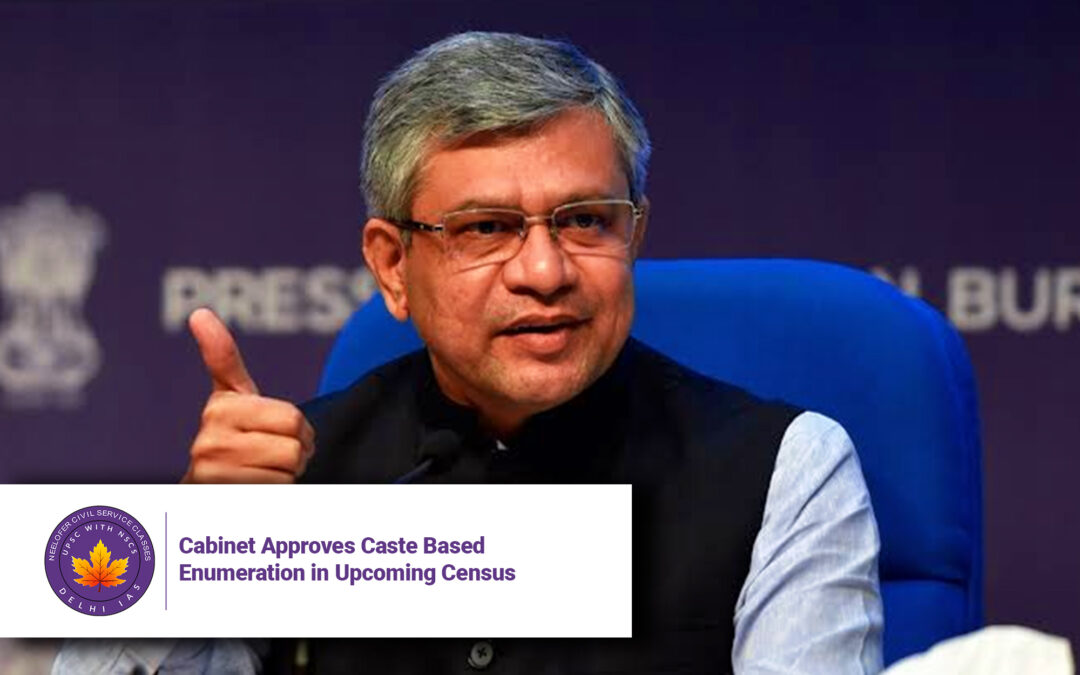
Cabinet Approves Caste Based Enumeration in Upcoming Census
Why in News?
For the first time since independence, the Indian Cabinet has approved the inclusion of caste enumeration in the upcoming Census, marking a major shift in data policy and governance. The decision was announced by Union Minister Ashwini Vaishnaw. 
Introduction
In a significant move that could influence public policy, representation, and resource distribution, the Indian government has decided to include caste enumeration in the next national Census. This is the first such move in independent India and is expected to provide crucial data for addressing social disparities.
Key Issues and Background
1. Historic Decision After Long Gap
Though caste data was collected in British-era censuses and during the 2011 Socio-Economic and Caste Census (SECC), this marks the first time caste enumeration will be part of the official Census process post-independence.
2. Delayed Census Timeline
The Census, originally scheduled for 2021, was delayed due to the COVID-19 pandemic. While dates for the revised Census have not yet been notified, the government has made it clear that caste data will now be included.
3. Use of Digital Tools and Categories
For the first time, the Census will be conducted in digital mode with self-enumeration options available. Citizens will be asked to disclose their caste in a separate column under the “other” category. This data will include not only Scheduled Castes and Scheduled Tribes but also Other Backward Classes (OBCs), providing a broader view of India’s social structure.
4. Legal and Statutory Considerations
Officials clarified that caste enumeration will be part of the Census and not a separate survey. Therefore, it will carry the legal and statutory backing of Census operations.
The Core of the Concern
The demand for caste-based enumeration has grown over the years, especially among backward communities who feel underrepresented in policymaking. This data can help determine accurate quotas in education, employment, and welfare programs.
Key Observations
-
Union Home Minister Amit Shah said this will promote inclusion and open new paths of progress.
-
The 2021 Census will be the first to allow digital self-enumeration.
-
The inclusion of caste count aims to better align policies with the real social fabric of India.
-
This move could influence electoral strategies and welfare allocations.
Conclusion
The Cabinet’s approval to include caste enumeration in the next Census is a historic policy shift with far-reaching consequences. It reflects a new approach towards data-driven inclusion and governance in India.
5 Questions and Answers
Q1. What new element has the Cabinet decided to include in the upcoming Census?
Answer: Caste enumeration.
Q2. When was the last time caste data was officially collected in India?
Answer: During the 2011 Socio-Economic and Caste Census (SECC).
Q3. What is unique about the method of conducting the next Census?
Answer: It will be conducted in digital mode with the option for self-enumeration.
Q4. Who announced the Cabinet’s decision regarding caste enumeration?
Answer: Union Minister Ashwini Vaishnaw.
Q5. What is the primary purpose of including caste in the Census?
Answer: To promote inclusion, provide better data for policymaking, and ensure accurate representation of different caste groups.

