
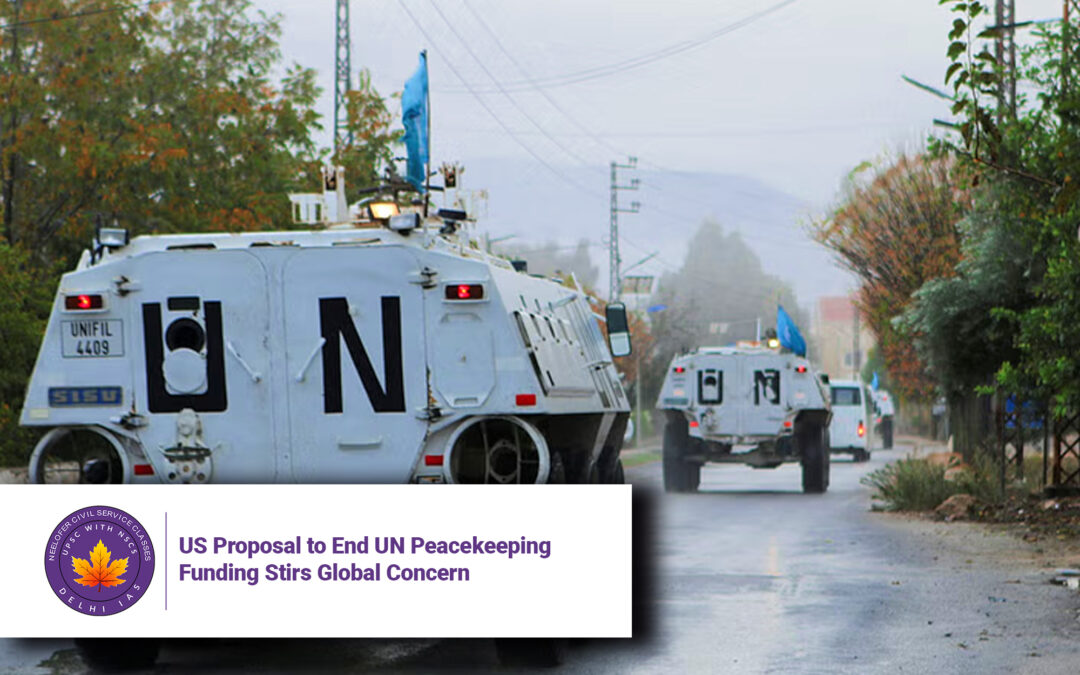
US Proposal to End UN Peacekeeping Funding Stirs Global Concern
Why in News?
The Trump administration’s controversial proposal to halt all US funding for United Nations peacekeeping operations has raised alarm among diplomats, peace advocates, and conflict-affected nations worldwide. The proposal could significantly affect global stability and peace efforts. 
Introduction
UN peacekeeping missions have historically been among the most effective and cost-efficient tools to manage conflicts and promote global peace. With the US contributing nearly 27% of the UN peacekeeping budget, a complete withdrawal would leave critical missions underfunded and vulnerable, potentially destabilizing fragile regions.
Key Issues and Background
1. The US Proposal and Its Scale
The Trump administration’s leaked proposal suggested halting all US support for UN peacekeeping, amounting to $2.1 billion. It is part of the “America First” doctrine and includes a redirection of funds toward bilateral military support and regional training programs.
2. The Role of UN Peacekeeping
Since 1948, UN peacekeepers have played a pivotal role in resolving conflicts, enforcing peace agreements, and preventing genocide. Currently, over 68,000 troops are deployed across 11 UN operations, many in nations like Liberia, South Sudan, Congo, and Somalia. Developing countries such as India, Bangladesh, Nepal, and Rwanda provide most of the troops, while the US and other wealthy nations fund the missions.
3. Risks of Defunding
Defunding could destabilize regions already suffering from war and conflict. In Somalia, for instance, the African Union’s AMISOM mission is critical in combating Al Shabaab militants. Similar risks exist in the Democratic Republic of Congo, South Sudan, and Yemen. Experts warn that withdrawing UN support might open the door to regional wars, refugee crises, and embolden militant groups like Al Qaeda and Hezbollah.
4. Strategic and Humanitarian Consequences
Critics argue the proposal is shortsighted and strategically dangerous. While it may offer immediate financial relief, the long-term consequences include loss of global influence, rising instability, and a higher likelihood of US military interventions abroad due to unchecked regional conflicts.
The Core of the Concern
The move undermines the multilateral, rule-based international order and could reverse decades of peacebuilding work. It is feared that without US support, UN missions will falter, affecting conflict resolution in hot zones like Haiti, Lebanon, Cyprus, Kosovo, and East Africa.
Key Observations
-
UN peacekeeping missions have historically prevented genocides and helped rebuild war-torn nations.
-
US contributes ~27% of UN peacekeeping funds, despite not contributing troops.
-
The Trump administration’s plan is part of a broader shift toward unilateralism.
-
The withdrawal may boost extremist groups and increase global instability.
-
Peacekeeping cuts risk undermining faith in international cooperation post-WWII.
Conclusion
The US’s plan to end UN peacekeeping support, while financially motivated, risks global peace and security. Peacekeeping may be imperfect, but it remains humanity’s best chance to prevent war, displacement, and genocide. A strong international response is needed to uphold peace and multilateralism in an increasingly fragmented world.
5 Questions and Answers
Q1. What percentage of the UN peacekeeping budget is contributed by the US?
A) 10%
B) 27%
C) 40%
D) 5%
Answer: B) 27%
Q2. What is the name of the African Union mission in Somalia?
A) UNMISS
B) MONUSCO
C) AMISOM
D) MINUSMA
Answer: C) AMISOM
Q3. What is the primary reason behind the Trump administration’s proposal to cut UN funding?
A) Increasing troop contributions
B) Promoting global unity
C) Cost concerns and ‘America First’ policy
D) Supporting NATO
Answer: C) Cost concerns and ‘America First’ policy
Q4. Which regions are particularly at risk if UN peacekeeping funds are withdrawn?
A) North America
B) East Africa, Middle East, and the Balkans
C) Australia and New Zealand
D) Arctic and Antarctic regions
Answer: B) East Africa, Middle East, and the Balkans
Q5. What is one of the biggest long-term risks of defunding UN peacekeeping missions?
A) Overpopulation
B) Oil price rise
C) Increase in global military conflicts and humanitarian disasters
D) Collapse of the World Bank
Answer: C) Increase in global military conflicts and humanitarian disasters

