
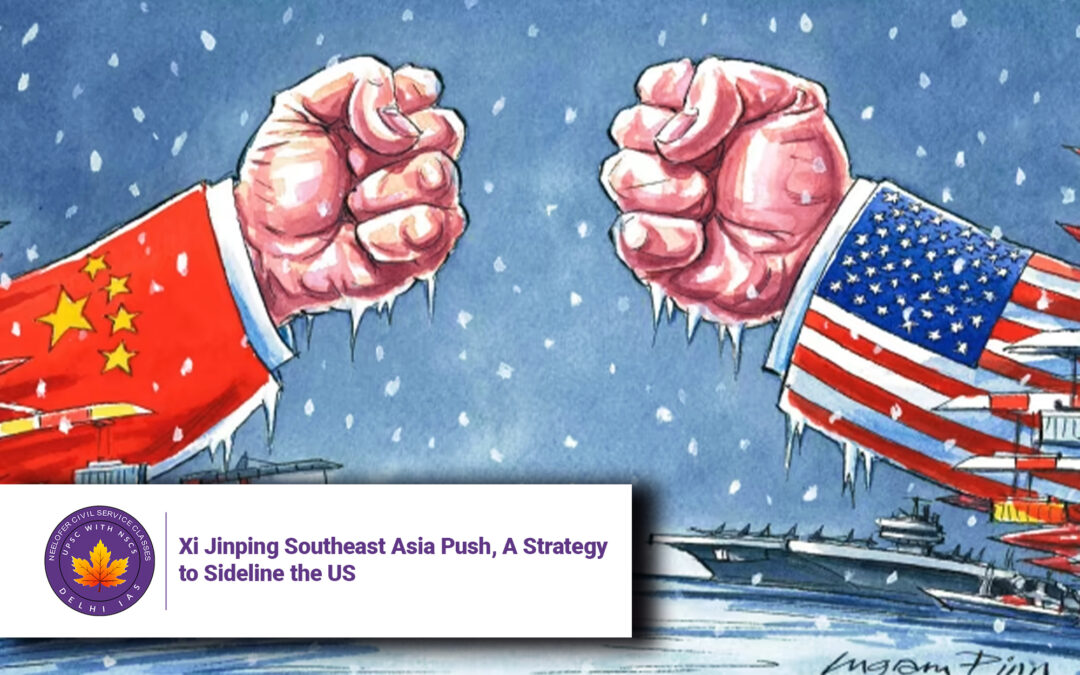
Trade Tensions Rise, Who Will Blink First the US or China?
Why in News?
The ongoing US-China trade war has become one of the most significant geopolitical and economic flashpoints. With both countries imposing tariffs and retaliatory measures, global markets are on edge. The central question now is: Who will yield first—Washington or Beijing? 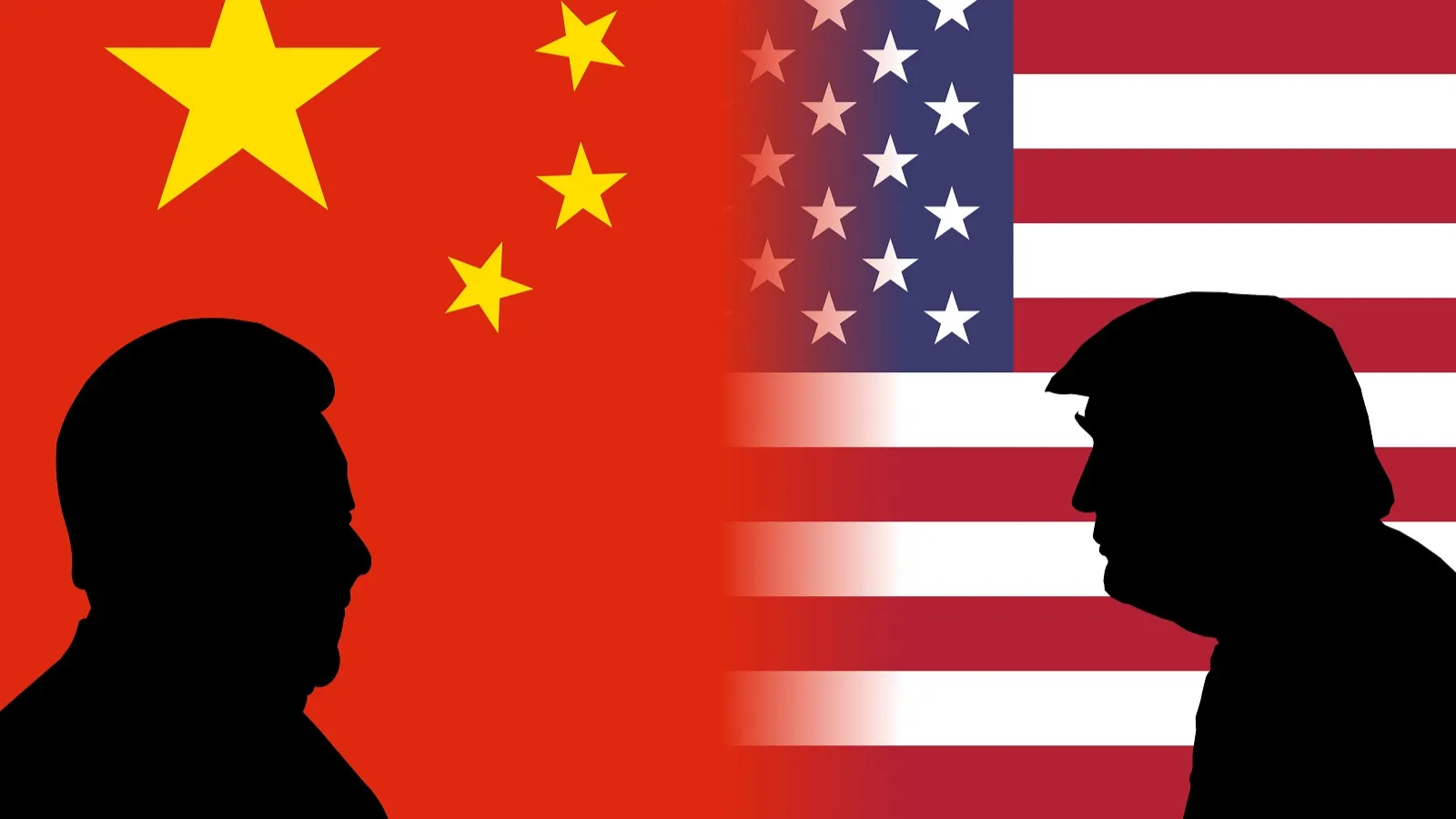
Introduction
Under Donald Trump’s administration, the United States has taken an aggressive stance against China’s trade practices by imposing heavy tariffs. While the impact on the US economy is already visible, China’s response has been less transparent, raising the stakes on who will endure the longer economic and political pressure.
Key Insights from the Editorial
-
Unequal Transparency
-
The US, being a democracy, shows its internal pressures openly—markets react, political backers raise concerns, and public voices are heard.
-
China’s political system is opaque, so it’s harder to assess how much internal pressure Xi Jinping is facing.
-
-
US Under Greater Visible Strain
-
In early April, a drop in US stock markets and bond yields signaled rising concern over the trade war.
-
These economic signals pressured Trump to pause tariff expansion for 90 days.
-
-
Impact on American Industries
-
Key sectors such as electronics, agriculture, automobiles, and aerospace are feeling the burn.
-
US farmers, especially in states like Iowa, Nebraska, and Minnesota, are among the worst hit, and many are traditionally Republican supporters—adding political stakes for Trump.
-
-
Global Implications
-
The broader global economy is also suffering from the uncertainty and supply chain disruptions.
-
Many countries are watching closely to see how the two superpowers manage their standoff, as their own trade futures are indirectly affected.
-
-
The Political Calculus
-
Trump may back down first—not necessarily because of economic weakness but due to greater visibility of pressure in the US political system.
-
Xi Jinping may face internal dissatisfaction, but the Communist Party’s control makes such pressures harder to detect from the outside.
-
5 Key Takeaways
-
The US is visibly under greater political and economic pressure.
-
China may also be under strain, but its political system masks it.
-
Key American sectors—farming, tech, autos—are experiencing real damage.
-
Trump’s decision-making is heavily influenced by market reactions and political allies.
-
Global trade and stability hinge on whether either side decides to compromise.
Challenges and the Way Forward
-
Challenges:
-
Economic pain across sectors.
-
Rising political backlash, especially in democratic societies.
-
Global trade slowdown and supply chain risks.
-
-
Way Forward:
-
Both nations need to re-engage in negotiations rather than rely on tariffs as weapons.
-
Transparent, rules-based trade systems under the WTO could offer neutral ground for resolution.
-
Allies and international organizations should play a mediating role to ease tensions.
-
Conclusion
The US-China trade war is not just about tariffs—it’s a battle of political systems, public opinion, and leadership credibility. While Trump faces visible pressure from voters and markets, Xi’s internal position remains unclear. But regardless of who backs down first, the damage to global trade confidence is already done. The need for constructive diplomacy has never been greater.
Q&A Section
1. Why is the US perceived as being under more pressure in the trade war?
Because in democratic systems like the US, market reactions and public opinion are openly visible, making pressure points easier to detect.
2. How is China managing the trade war differently?
China’s leadership, under the Communist Party, operates more opaquely, making it harder to assess internal dissent or economic strain.
3. Which US sectors are worst affected by the tariffs?
Agriculture, electronics, automotive, and aerospace industries are experiencing losses due to both Chinese retaliation and disrupted supply chains.
4. What global impact is the trade war having?
The trade war has caused stock market volatility, reduced global trade confidence, and disrupted international supply chains.
5. What could help resolve the US-China trade conflict?
Diplomatic negotiations, a return to multilateral trade rules, and mediation by global institutions could help de-escalate the situation.
