
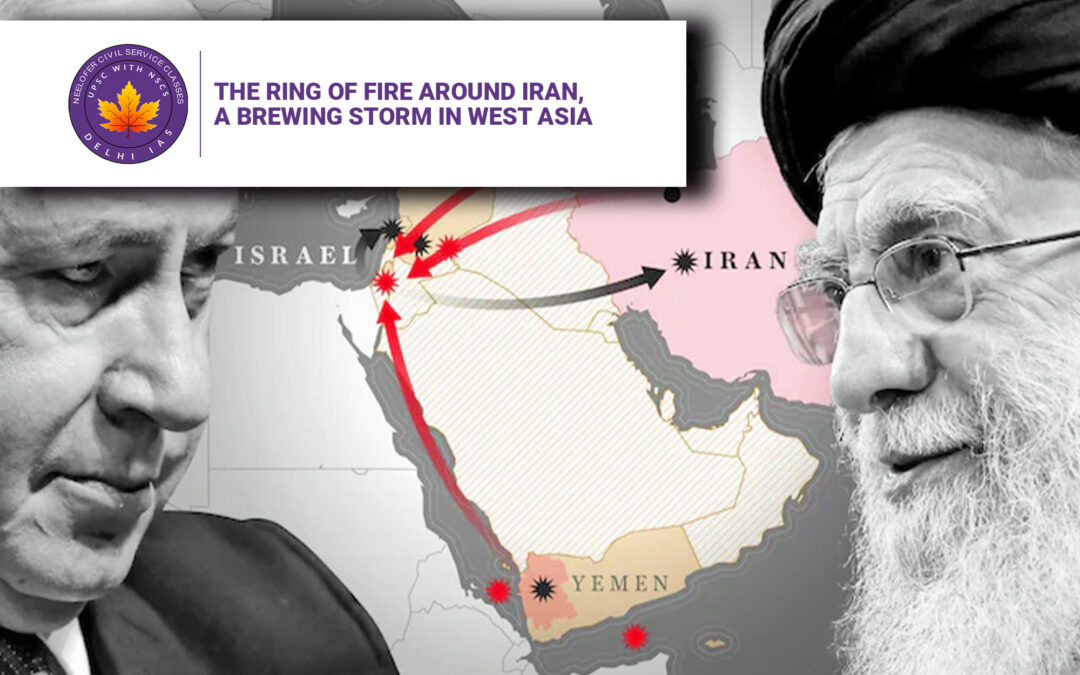
The Ring of Fire Around Iran, A Brewing Storm in West Asia
Why in News?
On March 7, 2025, former U.S. President Donald Trump revealed he had sent a letter to Iran’s Supreme Leader Ayatollah Ali Khamenei, proposing negotiations over Iran’s nuclear program. Declaring “We can’t let them have a nuclear weapon,” Trump suggested diplomacy. But what followed was anything but peaceful. A week later, on March 15, the U.S. launched multiple waves of “pre-emptive” airstrikes in Yemen targeting Ansar Allah (Houthis)—a key Iranian ally. Within days, Israel joined in, bombing Gaza and striking Lebanon, leading to what appears to be a tightening regional ring around Iran. 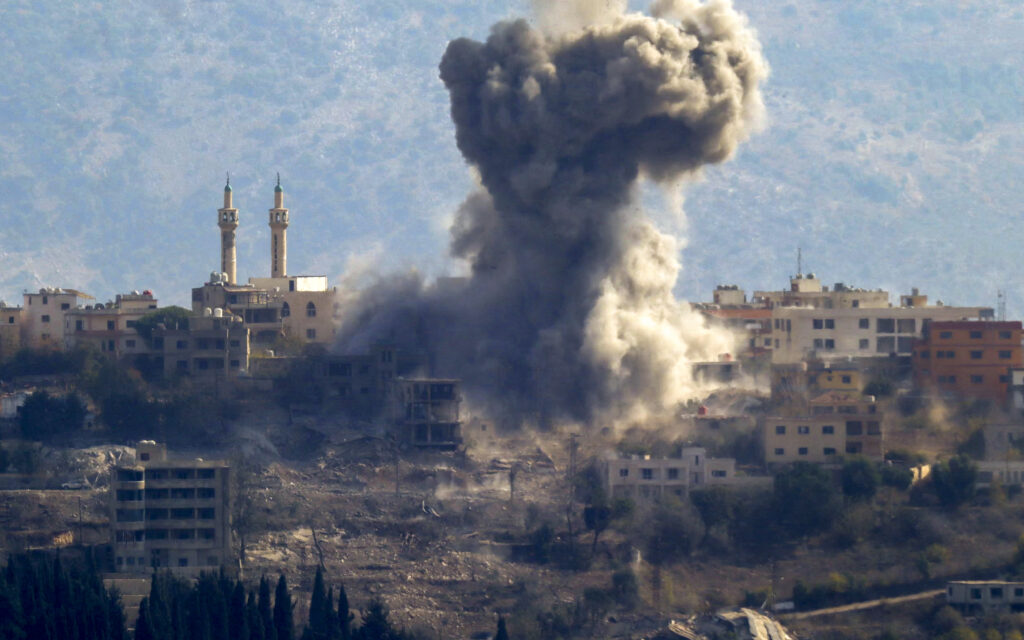
Introduction: A Region on Fire
After a brief lull, West Asia is again engulfed in tension. The series of military escalations—from U.S. airstrikes to Israeli assaults on Iranian allies—signals a new phase in the long-standing geopolitical rivalry. Despite calls for negotiations, the recent moves by the U.S. and Israel suggest a strategic shift aimed at isolating and pressuring Iran’s axis of resistance, including Hezbollah, the Houthis, and groups in Iraq and Syria.
Key Issues: The Nuclear Deal That Never Worked
The Joint Comprehensive Plan of Action (JCPOA), signed in 2015 under the Obama administration, aimed to limit Iran’s nuclear ambitions. However, Israel and Republicans in the U.S. opposed it, arguing it didn’t go far enough. Trump scrapped the deal in 2018, escalating sanctions and reviving Iran’s adversarial stance.
Now, Iran has enriched uranium to 60% purity—a short step from weapons-grade levels—according to the International Atomic Energy Agency (IAEA). Despite Trump’s outreach, the U.S. has simultaneously deployed more fighter jets and its second aircraft carrier to the region, signaling deterrence rather than diplomacy.
Changing Geopolitical Dynamics
The shifts began in late 2023, as Israel gained an upper hand militarily across the region. Several factors worked in its favor:
-
Collapse of Bashar al-Assad’s influence in Syria, weakening Iran’s foothold there.
-
Destruction of Hezbollah’s logistical infrastructure, limiting its ability to receive Iranian weapons.
-
Israel’s “two-front war” approach—striking Gaza and Iran-linked targets in Syria and Lebanon.
-
Iran’s inability to counter-strike effectively, especially after the loss of key commanders and regional partners.
Even Hezbollah’s once formidable image has taken a hit, as Israeli operations in Lebanon exposed its vulnerabilities. In Syria, Assad’s diminishing control has hurt Iran’s military supply lines. The U.S.-Israeli axis now seems focused on removing Iran’s influence across the Levant and Red Sea regions.
Alternative Approaches and Strategic Space
While Trump calls for negotiations, his administration’s moves show a dual strategy—diplomatic rhetoric paired with military pressure. The same model was used against North Korea. Israel, meanwhile, is capitalizing on what it sees as a unique moment: regional instability, U.S. support, and Iran’s internal economic and political challenges.
Despite this, Iran remains defiant. Though isolated, it continues to seek influence in Iraq, Lebanon, Yemen, and Syria, while pursuing its nuclear goals. But with growing military and economic pressure, the cost of maintaining its regional axis may become unsustainable.
Challenges and the Way Forward
The biggest question now is: Will this lead to war or negotiations? Two outcomes are possible:
-
A limited war: Iran retaliates via proxies like Hezbollah or Iraqi militias, drawing a harsh Israeli/U.S. response.
-
Diplomatic breakthrough: Facing overwhelming pressure, Iran might return to talks—perhaps under new leadership or regional incentives.
In either scenario, Iran’s strategic landscape has changed. The “ring of fire”—once Iran’s buffer—now encircles it with threats. This transformation may redefine West Asia’s power dynamics for years to come.
Conclusion
The military, political, and psychological pressure on Iran is greater than it has been in years. Whether through strategic isolation or outright conflict, Iran is being forced to reassess its regional role. With elections looming in the U.S. and instability rising in the Middle East, the coming months could be pivotal.
5 Q&A: Understanding the Iran Crisis
Q1. What sparked the recent surge in West Asia’s tensions?
Donald Trump’s outreach to Iran followed by U.S. and Israeli airstrikes on Iranian allies in Yemen, Gaza, Syria, and Lebanon reignited regional instability.
Q2. Why is the JCPOA (Iran nuclear deal) still relevant?
The JCPOA aimed to limit Iran’s nuclear capability. Its failure, especially after the U.S. exit in 2018, left Iran freer to enrich uranium, intensifying global concerns.
Q3. How has Israel’s military strategy changed?
Israel is executing a “two-front war” strategy—targeting Iranian proxies in Gaza and Lebanon—while also striking Iranian facilities in Syria and beyond.
Q4. What is Iran’s current nuclear status?
According to the IAEA, Iran now holds uranium enriched to 60%—close to weapons-grade levels—raising alarms about its ability to build a nuclear bomb.
Q5. Is a full-scale war likely?
While tensions are extremely high, most experts believe both sides prefer limited conflict or diplomatic off-ramps to avoid a catastrophic regional war.
