
Arctic Under Pressure, Geopolitical Tensions Rise at the Top of the World
Why in News?
Growing geopolitical interest in the Arctic region has turned it into a global hotspot for strategic and resource competition. Amid increasing military presence, resource exploration, and climate-driven accessibility, Arctic tensions are on the rise, particularly involving Russia, the U.S., NATO, and China. 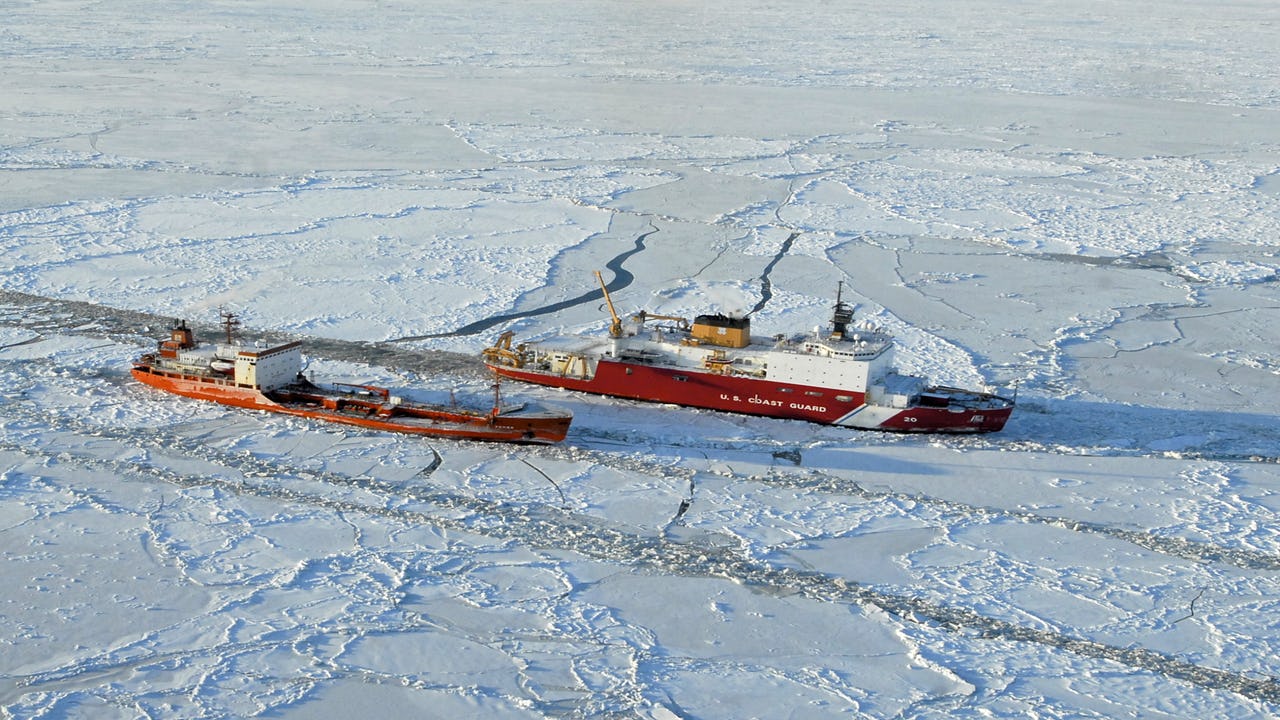
Introduction
The Arctic, once a remote and frozen expanse, has become the center of growing geopolitical and economic competition. Melting ice due to climate change is unlocking vast untapped resources and new shipping routes, raising tensions among Arctic nations and beyond. The strategic importance of the Greenland-Iceland-U.K. (GIUK) gap and Russia’s assertive posture have further intensified the situation.
Key Issues Highlighted
-
Who Controls the Arctic?
-
The Arctic is governed by eight countries: Canada, Denmark, Finland, Iceland, Norway, Russia, Sweden, and the U.S., collectively forming the Arctic Council.
-
The Council focuses on peaceful cooperation, research, and environmental protection. However, increasing military interests challenge its neutrality.
-
-
The Resource Race
-
The Arctic hosts 13% of the world’s undiscovered oil and 30% of undiscovered natural gas.
-
Melting ice is opening access to precious minerals, fish stocks, rare earths, and strategic shipping lanes like the Northwest Passage.
-
-
The GIUK Gap and Strategic Importance
-
The Greenland-Iceland-UK (GIUK) Gap is a key NATO chokepoint and a military focus area.
-
Russia has developed bases and upgraded military infrastructure, including Kola submarine bases and increased naval activity.
-
-
Russia’s Expanding Influence
-
Since 2007, Russia has conducted symbolic and strategic activities, such as planting a flag on the Arctic seabed and conducting submarine patrols.
-
In Jan 2025, Russia was caught spying near Norway’s Svalbard island. This increased tensions with NATO and raised alarms in Europe.
-
-
China’s Emerging Role
-
China declared itself a “Near-Arctic State” in 2018, advocating for participation in Arctic governance and access to the Polar Silk Road.
-
Chinese interest in shipping and resource routes challenges traditional Western dominance in the region.
-
Five Key Observations
-
Melting ice is rapidly transforming the Arctic into an accessible and contested region.
-
Resource competition and new sea lanes are key drivers of geopolitical tension.
-
Russia is expanding military and surveillance operations near NATO territories.
-
China’s Arctic ambitions are growing through trade and strategic declarations.
-
The Arctic is now at the center of a “Cold Peace” or “Ice Cold War”, with increased NATO and Russian posturing.
Challenges and the Way Forward
-
There’s a need to redefine Arctic governance, moving from cooperation to conflict-prevention.
-
Demilitarization efforts and renewed dialogue within the Arctic Council must be prioritized.
-
Establishing an international maritime code for Arctic navigation and exploitation is critical.
-
The global community must address climate and environmental risks arising from increased activity.
-
Avoiding confrontation will require transparent communication, military restraint, and resource-sharing agreements.
Conclusion
The Arctic is no longer a frozen frontier—it is now a strategic arena where climate change, natural wealth, and military interests collide. With tensions rising among Russia, NATO, and China, it is imperative for global leaders to prioritize peaceful engagement, cooperation, and sustainable development to protect this fragile and vital region.
Q&A Section
Q1. Why is the Arctic region becoming strategically important?
The melting of ice has unlocked shipping lanes and access to vast untapped natural resources, making the Arctic vital for global trade and energy security.
Q2. Who governs the Arctic and how is power shared?
The Arctic Council, consisting of eight nations, manages cooperation. However, sovereignty claims and military build-ups are testing its effectiveness.
Q3. How is Russia increasing its influence in the Arctic?
Russia is building military infrastructure, patrolling waters, and asserting sovereignty claims, especially through symbolic actions and new surveillance missions.
Q4. What is the role of the GIUK gap in the Arctic tensions?
The GIUK gap is a critical NATO surveillance and defense chokepoint, now under renewed focus due to increased Russian activity and submarine movement.
Q5. How is China involved in the Arctic disputes?
China calls itself a “Near-Arctic State”, pushing to be part of Arctic governance and trade through the Polar Silk Road, adding a new layer to the geopolitical dynamics.

