
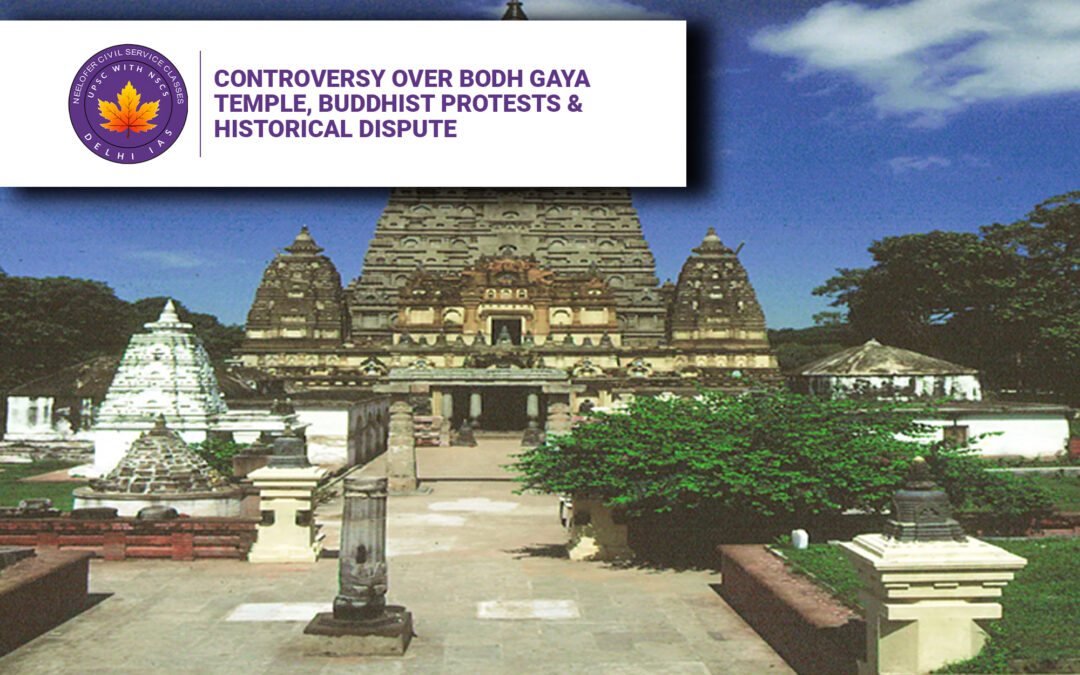
Controversy Over Bodh Gaya Temple, Buddhist Protests & Historical Dispute
Why in News?
In February 2024, nearly 100 Buddhist monks under the All India Buddhist Forum (AIBF) protested at Bodh Gaya’s Mahabodhi Temple, demanding the repeal of the Bodh Gaya Temple Act (BTA), 1949. The protests have drawn attention to a longstanding religious and administrative dispute involving the control of one of Buddhism’s holiest sites. 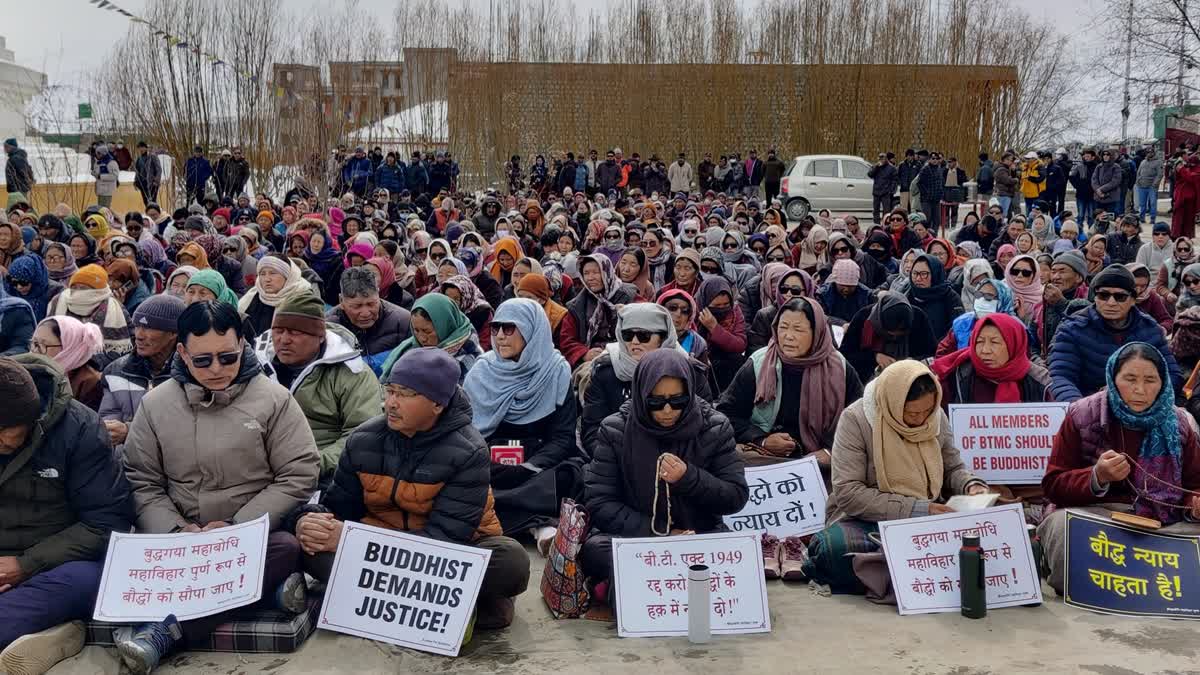
Introduction
The Mahabodhi Temple in Bodh Gaya, where Gautam Buddha attained enlightenment, is a revered site for Buddhists across the world. However, a decades-old law—the Bodh Gaya Temple Act of 1949—continues to stir controversy due to its governance structure, which many Buddhists believe marginalizes their role in managing their most sacred shrine.
Key Issues and Developments
-
Recent Protests
-
In February 2024, Buddhist monks began protesting at Bodh Gaya and later in Patna, backed by Buddhist organizations.
-
They submitted a memorandum to the Bihar government, calling for the repeal of the BTA.
-
Similar protests took place in November 2023, and a writ petition was filed in 2012, which remains pending in the Supreme Court.
-
-
What is the Bodh Gaya Temple Act (BTA), 1949)?
-
The Act created an 8-member committee to manage the temple with equal representation from Hindus and Buddhists.
-
However, the District Magistrate, often from the Hindu majority, serves as the ex-officio chairman, leading to Buddhist discontent.
-
This provision is viewed as undermining Buddhist autonomy over their own sacred site.
-
-
Historical Roots of the Dispute
-
Originally built by Mauryan Emperor Ashoka in the 3rd century BCE, the temple was a Buddhist site of worship.
-
During the 13th century, the invasion by Bakhtiyar Khilji ended the Pala rule and led to the decline of Buddhism.
-
In 1590, a Hindu monk re-established the temple, which remained under Hindu control.
-
After Independence, the BTA (1949) was passed by the Bihar government to resolve control issues, but continued Hindu leadership persisted.
-
-
Changes and Government Role
-
The BTA was amended in 2013 to allow the ex-officio chairman to be from any faith.
-
In the early 1990s, Lalu Prasad Yadav, then CM of Bihar, introduced a bill to hand over the temple to the Buddhist community. However, it was shelved and never implemented.
-
-
Cultural & Symbolic Significance
-
The temple is one of Buddhism’s four holiest sites, alongside Lumbini, Sarnath, and Kushinagar.
-
In literature, poets like Edwin Arnold have referred to Bodh Gaya as the “Mecca of Buddhism”.
-
Despite this, Buddhists continue to face challenges in gaining full control over the temple.
-
5 Key Takeaways
-
The Bodh Gaya Temple Act, 1949 is at the heart of ongoing Buddhist protests for administrative autonomy.
-
The Act allows equal representation, but Hindu-majority leadership continues due to the District Magistrate’s role.
-
Historical invasions and later Hindu control shifted ownership from the Buddhist to Hindu community.
-
Despite 2013 amendments, Buddhists still seek full control over their religious site.
-
The pending Supreme Court case and earlier abandoned legislation reflect the complexity of the issue.
Challenges and the Way Forward
-
Legal Resolution: The Supreme Court must expedite its verdict on the 2012 petition challenging the BTA.
-
Reform in Governance: A more balanced or Buddhist-led structure should be considered to reflect the site’s heritage.
-
Political Will: The Bihar government must revisit earlier commitments to Buddhist management of the temple.
-
Interfaith Sensitivity: Dialogue between communities can prevent politicization and promote harmony.
-
Cultural Recognition: The international Buddhist community’s sentiments should be taken into account.
Conclusion
The Bodh Gaya Temple controversy is not just a legal battle—it is a fight for cultural justice and spiritual recognition. As the birthplace of enlightenment, Bodh Gaya holds unmatched significance in Buddhism, and the Buddhist community’s demand for greater control and representation is rooted in both historical ownership and spiritual identity. The way forward lies in inclusive dialogue, legal clarity, and respect for religious autonomy.
Q&A Section
Q1. What triggered the recent protests over the Bodh Gaya temple?
Nearly 100 monks under AIBF protested in February 2024, demanding the repeal of the Bodh Gaya Temple Act (1949) due to its unequal leadership structure.
Q2. What does the Bodh Gaya Temple Act (BTA), 1949 say?
It sets up an 8-member management committee with equal Buddhist and Hindu members, but the District Magistrate (often Hindu) serves as chairman, which many Buddhists oppose.
Q3. What is the historical background of the temple?
Built by Emperor Ashoka in the 3rd century BCE, it remained a Buddhist site until invasions and later Hindu control in the 16th century changed its administration.
Q4. Has the government tried to intervene?
Yes. A 2013 amendment allowed the chairman to be from any religion, and in the 1990s, a bill proposed handing over the temple to Buddhists, but it was never passed.
Q5. What is the significance of the temple in Buddhism?
It is the site where Gautam Buddha attained enlightenment, making it one of the four holiest Buddhist sites globally.

