
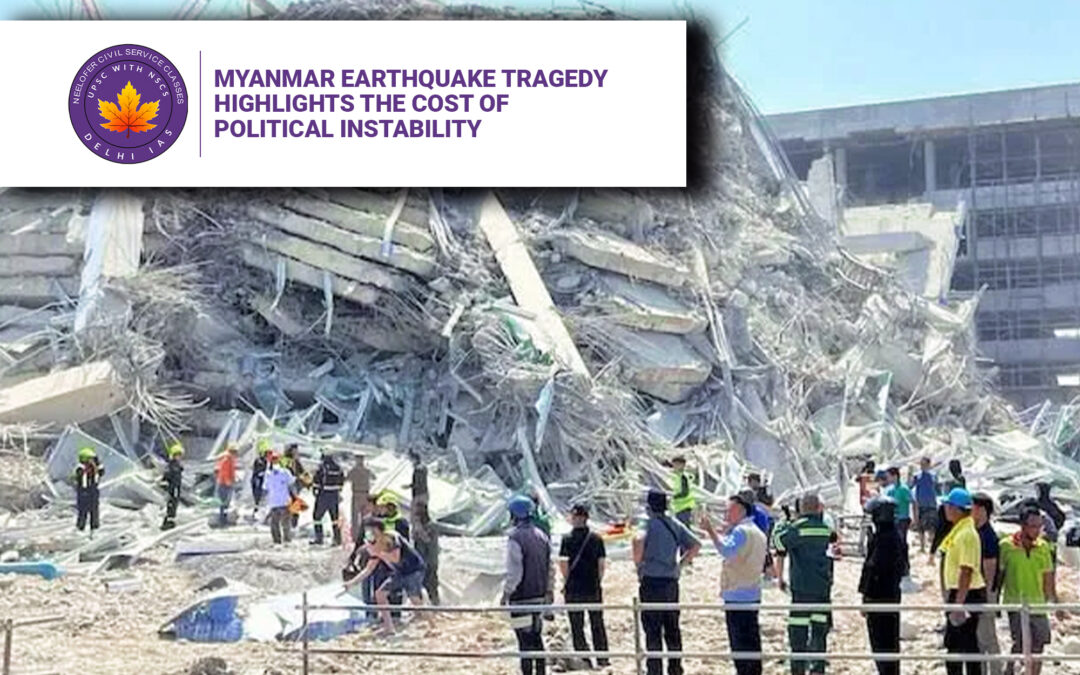
Myanmar Earthquake Tragedy Highlights the Cost of Political Instability
Why in News?
Myanmar was struck by a devastating 7.7-magnitude earthquake, leading to over 1,600 confirmed deaths, with thousands injured and widespread destruction reported. The disaster has exposed Myanmar’s lack of preparedness, worsened by ongoing political instability and poor infrastructure governance since the 2021 military coup. 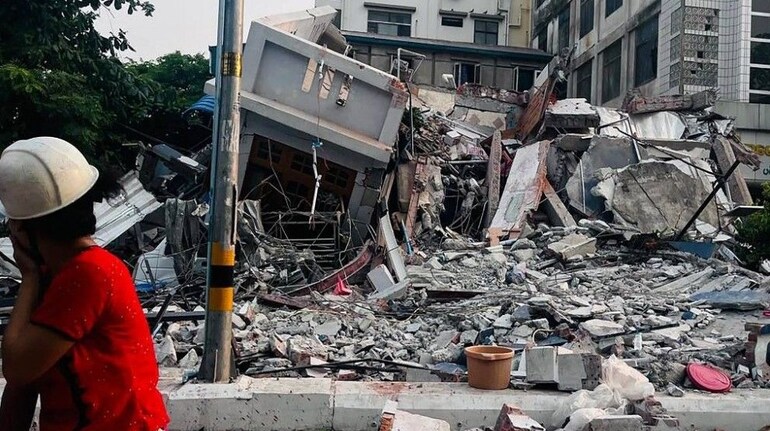
Introduction
On the heels of political turmoil and weak administrative structures, Myanmar has been hit hard by a severe natural disaster. The nation’s inability to enforce building codes and prepare infrastructure for seismic activity has compounded the tragedy, raising concerns over governance in disaster-prone regions.
Key Issues Highlighted
-
High Casualties and Infrastructure Collapse
The earthquake killed over 1,600 people, injured around 3,400, and left major cities like Mandalay and Naypyitaw without power. Thousands have been displaced, with hospitals overwhelmed and many families living on the streets. -
Swift International Response
Countries like India, China, and Thailand responded promptly, sending warships, military aircraft, and rescue teams. Indian military planes made sorties carrying supplies and rescue crews, while Chinese teams crossed overland to help. -
Seismic Zone Vulnerability
Myanmar lies at the junction of four tectonic plates—the Eurasian, Indian, Sunda, and Burma microplate—making it highly prone to earthquakes. The Sagaing Fault, one of the region’s most active, has historically produced multiple severe quakes. -
Governance Deficits Due to Political Instability
Since the 2021 coup, attention has diverted from essential governance functions such as building safety codes and disaster preparedness, leaving Myanmar vulnerable to large-scale damage during natural calamities. -
Ceasefire as an Opportunity for Reform
Although recovery will take time, the ongoing ceasefire could be a window to restore political stability, attract international investment, improve expertise, and strengthen disaster resilience for the future.
Key Takeaways
-
Over 1,600 dead and 3,400 injured due to a 7.7-magnitude earthquake.
-
Large urban areas face infrastructure collapse and power outages.
-
Sagaing Fault is among the region’s most dangerous seismic zones.
-
Weak enforcement of building regulations worsened the crisis.
-
Neighboring countries responded quickly with aid and rescue support.
Challenges and the Way Forward
-
Improve Seismic Infrastructure: Rebuilding must involve quake-resistant construction.
-
Strengthen Governance: Focus on building code enforcement and disaster response.
-
Leverage Ceasefire for Political Dialogue: Push for democratic processes and international cooperation.
-
Enhance Scientific Monitoring: Use technology to improve risk estimation and early warning systems.
-
Boost International Partnerships: Sustain foreign aid, expertise, and resources for rebuilding efforts.
Conclusion
The Myanmar earthquake underscores how natural disasters and political instability can create a deadly combination. It is a stark reminder that governance, planning, and resilience must be prioritized in seismically active regions. With international support and internal reform, Myanmar has an opportunity to build back stronger and safer.
Q&A Section
Q1. What was the magnitude of the earthquake in Myanmar and how many lives were lost?
The earthquake measured 7.7 on the Richter scale and has claimed over 1,600 lives, with thousands more injured.
Q2. Which countries sent aid and assistance to Myanmar?
India, China, and Thailand sent relief through warships, aircraft, and rescue personnel. India and China sent multiple teams and supplies.
Q3. Why is Myanmar vulnerable to such earthquakes?
Myanmar lies at the convergence of four tectonic plates and has active fault lines, such as the Sagaing Fault, making it highly earthquake-prone.
Q4. How has political instability worsened the disaster’s impact?
Since the 2021 coup, governance has weakened, leading to poor infrastructure regulation, lack of preparedness, and weak enforcement of building codes.
Q5. What opportunities does the current ceasefire offer Myanmar?
The ceasefire can pave the way for political stability, improved governance, foreign investment, and stronger disaster management policies.

