
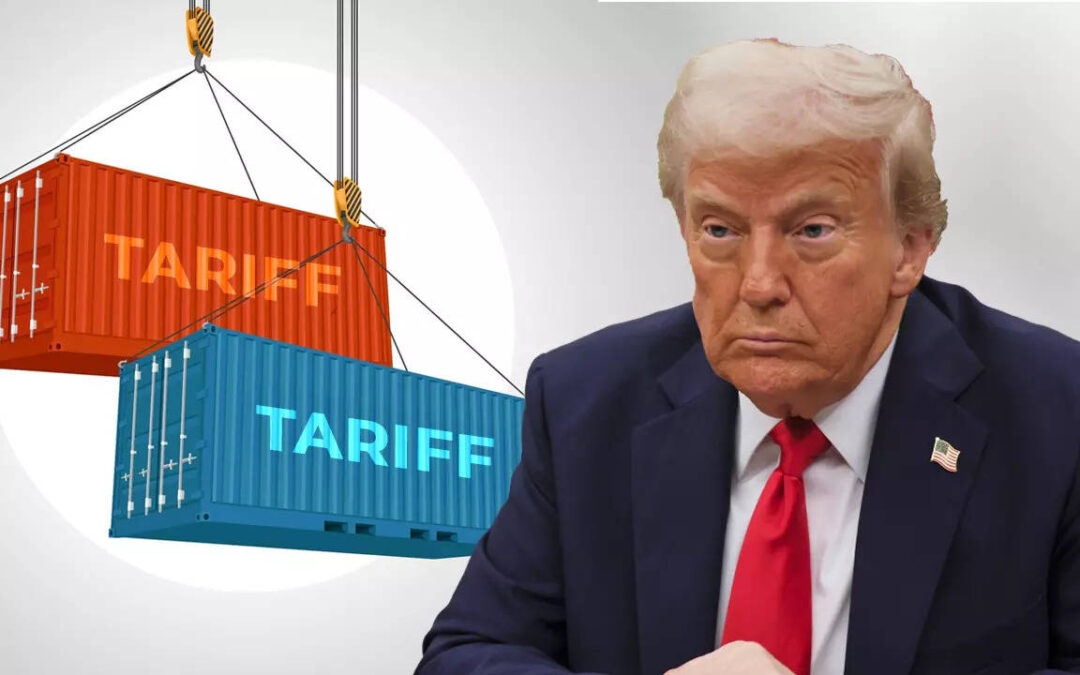
Will Reciprocal Tariff Impact India Agricultural Trade with the US?
Why in News?
The imposition of US tariffs on Mexican and Canadian agricultural products has sparked discussions on the reciprocal tariff mechanism and its potential consequences for India-US agri-trade. With longstanding tariff disparities and the changing dynamics of international trade agreements, India must navigate these challenges while exploring new opportunities in global agri-markets. 
Key Issues
1. Tariff Disparities in Agri-Trade
-
India imposes a weighted average tariff of 37.7% on US agricultural products, whereas the US imposes only 2.6% on Indian goods.
-
India’s major exports to the US include rice (basmati and non-basmati), marine products, shrimp, wheat, and buffalo meat, accounting for 46% of its agri-exports to the US.
-
Meanwhile, 82% of US agri-exports to India comprise pulses, vegetable oils, cocoa, raw jute, and fresh fruits.
2. Rising Competition from US-Mexico-Canada Trade Deal
-
The Indo-Pacific Economic Framework for Prosperity (IPEF) signed in May 2022, aims to improve food safety and reduce trade barriers between the US and several nations.
-
India may face increased competition in agri-trade from Mexico and Canada under the US-Mexico-Canada Agreement (USMCA), expected to be strengthened by 2026.
-
However, the tariffs on Mexico and Canada could also shift demand in India’s favor, creating a “blessing in disguise.”
3. India’s Export Potential and Challenges
-
India exported $5 billion worth of agricultural products to the US in 2024, while importing $1.5 billion.
-
India ranks tenth in agricultural exports to the US, trailing behind Vietnam, China, and Canada.
-
Untapped segments like rubber, spirits, tobacco, vinegar, and cotton offer potential to expand India’s agri-export footprint in the US.
4. Structural Bottlenecks in Indian Agriculture
India’s agri-trade faces internal hurdles that limit competitiveness:
-
40% of food goes to waste; 30% of fruits and vegetables perish due to poor storage.
-
Small and fragmented landholdings, lack of aggregation, and insufficient cold chain and logistics infrastructure are key issues.
-
Technology-enabled logistics, better cold storage, and quality assurance mechanisms are critical to overcoming these challenges.
5. Regulatory & Environmental Pressures
-
Sanitary and phytosanitary standards, greenhouse gas norms, and evolving food safety expectations in the US can become non-tariff barriers for Indian agri-exports.
-
India must align with global standards and trade protocols to ensure long-term market access.
What Next?
India must:
-
Strengthen agri-export infrastructure including cold storage and logistics.
-
Explore new markets and diversify export portfolios.
-
Engage in trade negotiations to reduce tariff barriers with the US and IPEF nations.
-
Promote aggregation models for small farmers and invest in value addition and quality assurance to compete globally.
