
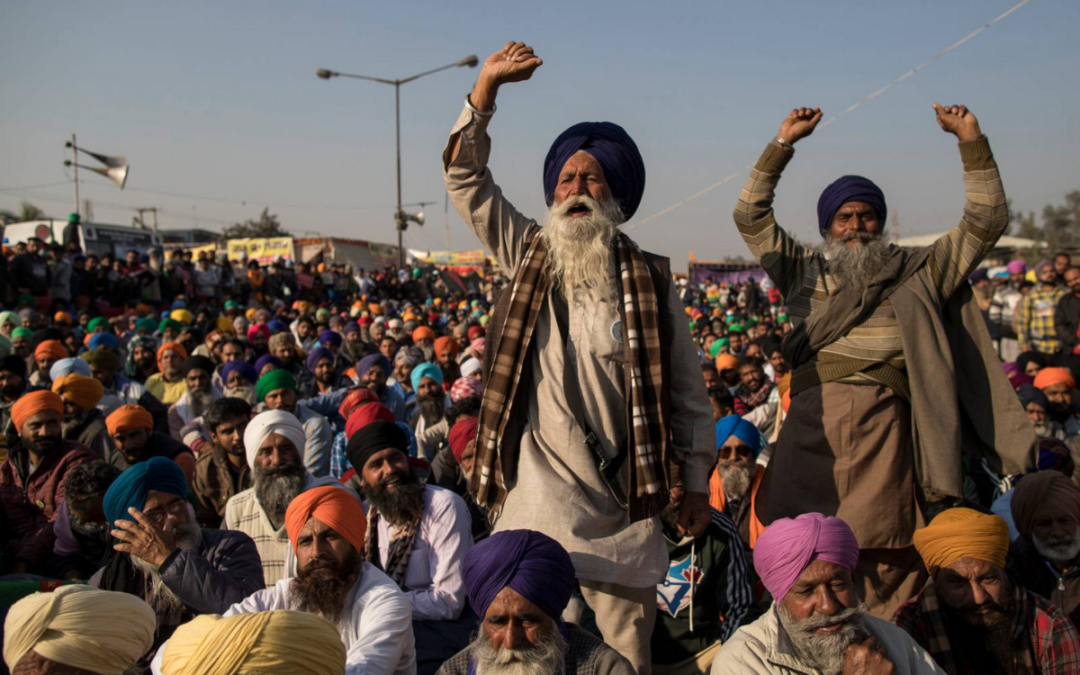
Foreign Interference in India’s Farmer Protests, A Threat to National Sovereignty
Why in News?
Recent concerns have emerged over foreign-backed interference in India’s farmer protests, with allegations that international funding and organizations are influencing the movement for geopolitical leverage rather than genuine farmer welfare.
Introduction
-
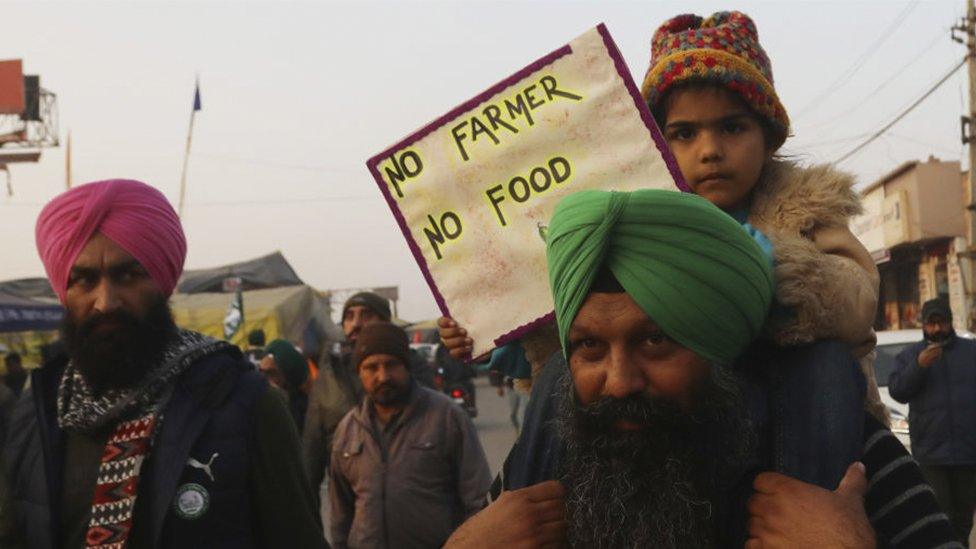
India’s farmer protests have evolved from grassroots movements to highly funded international campaigns.
-
Defense Minister Rajnath Singh recently warned of foreign-backed elements attempting to destabilize India’s internal social harmony.
-
The Open Society Foundations (OSF), linked to billionaire George Soros, is believed to be actively influencing India’s domestic issues through financial backing, ideological infiltration, and political maneuvering.
Foreign Funding and Strategic Interests
-
Ties to Global Networks
-
The OSF, known for promoting political shifts in emerging markets, has been strategically involved in India’s protests.
-
This involvement has transformed a farmer-led demand for Minimum Support Prices (MSP) into a global campaign targeting India’s governance.
-
-
Foreign Political Support
-
Canada’s Liberal Party, influenced by OSF-backed think tanks and lobbying groups, amplified the protests internationally.
-
The protests received significant backing from Canadian politicians, particularly in areas with a large Punjabi diaspora.
-
Public endorsements, fundraising campaigns, and rallies abroad highlighted how a local movement became an international diplomatic issue.
-
-
Shift from Domestic to Corporate Control
-
The influence of foreign-backed activists could shift control from Indian farmers to multinational corporations.
-
This risks creating economic dependencies on Western markets, undermining India’s self-sufficient agricultural policies.
-
How Foreign Interference Undermines Indian Farmers
-
Geopolitical Motives Behind Protests
-
While farmers’ grievances are legitimate, foreign-funded elements co-opted the movement to serve Western interests.
-
Strategic coordination, media influence, and NGO-backed funding indicate a larger attempt to weaken India’s internal cohesion.
-
-
Threat to National Sovereignty
-
The foreign manipulation of protests threatens India’s policy independence.
-
Similar patterns have been observed in other developing nations, where external forces destabilized local movements.
-
-
Impact on Agricultural Policies
-
International NGOs and multinational corporations push for market deregulation, which may increase farmer dependence on global supply chains.
-
This could reduce the autonomy of Indian farmers, leading to greater economic vulnerability.
-
Concerns Over Foreign-Backed Funding in Agriculture
-
The Role of Global Finance
-
The World Bank’s involvement in India’s farm sector raises questions about whether global financial institutions are steering India’s agricultural policies.
-
The Small Farmers Agri-Business Consortium (SFAC), meant to help small farmers, has come under scrutiny for receiving foreign funding.
-
-
Danger of Economic Dependence
-
Once farmers rely on foreign-backed solutions, they may lose control over their own resources and pricing power.
-
This aligns with a broader strategy to shift policy-making authority away from India’s own government.
-
Why This Matters for India’s Future
-
Food Security & Self-Reliance
-
India must ensure its agricultural policies remain domestically driven.
-
Foreign influence in policymaking could lead to a shift that favors global corporations over local farmers.
-
-
Strategic Resistance to Foreign Manipulation
-
Indian farmers need genuine support, not external interference.
-
The government must regulate foreign funding in protests and prioritize national sovereignty in agricultural decisions.
-
-
Preventing Political Destabilization
-
Weaponizing farmer movements for geopolitical agendas threatens India’s internal unity.
-
Ensuring local control over farming policies is crucial to protecting India’s long-term agricultural stability.
-
Conclusion
India must resist foreign-backed efforts to manipulate its farmer movements and ensure policies prioritize Indian farmers over global interests. The rise of external funding in domestic protests signals a larger geopolitical challenge—one that requires vigilance and policy safeguards to maintain India’s agricultural independence and national sovereignty.
Q&A Section
Q: Why is foreign interference in India’s farmer protests a concern?
A: It threatens national sovereignty, shifts policy control to external forces, and increases economic dependence on Western institutions.
Q: How is OSF connected to the protests?
A: OSF, backed by George Soros, has been linked to funding activist movements, influencing policy changes, and promoting ideological shifts in developing nations.
Q: What impact does foreign funding have on Indian agriculture?
A: It risks shifting control from Indian farmers to multinational corporations, leading to greater dependence on global supply chains.
Q: How should India respond to foreign interference?
A: By limiting external funding, strengthening local policies, and ensuring farmers receive domestic support rather than relying on foreign financial influence.
