
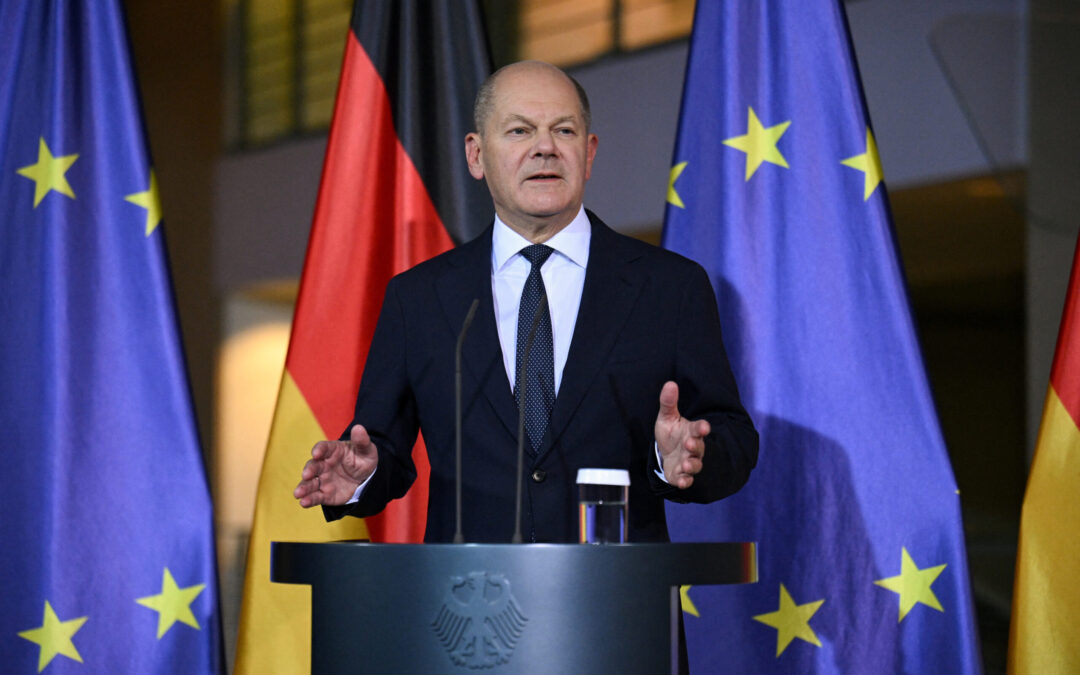
Germany Policy Shift Amid Global Alliance Changes
Why in News?
Germany is set to lift its debt cap and increase defence spending in response to global economic and geopolitical shifts. The country’s stance on fiscal policy, alliances, and trade is undergoing significant transformation, especially in the wake of security challenges in Europe and shifting US foreign policies. 
Introduction
Germany, historically known for its strict fiscal discipline, is making a major policy shift under Friedrich Merz, the expected new leader of the Christian Democratic Union (CDU). The country is adopting expansionary fiscal policies, stronger defence commitments, and strategic economic realignments with the European Union and global partners.
Key Issues
1. Reversal of Germany’s Fiscal Policies
- Germany is lifting its long-standing debt restrictions to accommodate €500 billion in defence and infrastructure spending.
- This marks a 180° shift from previous fiscal conservatism, showing a willingness to invest in military and economic security.
2. Geopolitical Realignments and Global Security
- Germany is reinforcing its alliances with NATO and Aukus, adapting to changing security concerns.
- Think tanks estimate Europe may need €300 billion annually to counter potential threats such as Russia’s aggression.
- Germany is re-evaluating trade partnerships and is expected to prioritize relations with the EU and strategic allies over China.
3. Implications for India and Global Trade
- India’s trade policies must adapt to global shifts, particularly regarding high-end technology investments and supply chain diversification.
- Talks on India-EU Free Trade Agreement (FTA), which began in 2007, are gaining urgency as Europe looks to strengthen economic ties beyond traditional partners.
- India’s focus on boosting domestic manufacturing aligns with Germany’s shift towards restructured supply chains.
Challenges and the Way Forward
- Economic Uncertainty: As Germany moves towards expansionary policies, balancing inflation risks and economic growth remains a challenge.
- Global Trade Adjustments: Countries like India need to reassess trade strategies to benefit from Germany’s shift towards alternative supply chains.
- Defence Spending and Stability: Germany’s increased military investments may reshape global security dynamics, requiring new strategic responses from its allies.
Conclusion
Germany’s policy transformation marks a new era in global economic and defence strategy. As the country abandons its fiscal conservatism, it is likely to play a more active role in global security and trade realignments. For India and other nations, adapting to these shifts will be crucial in navigating the evolving world order.

