
Jan Aushadhi Kendras, A Step Towards Universal Healthcare
Why in News?
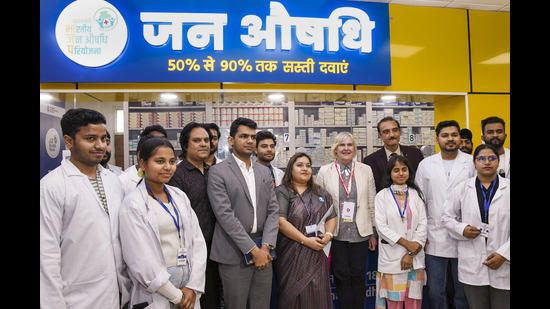
The Indian government is expanding the Pradhan Mantri Bhartiya Jan Aushadhi Pariyojana (PMBJP) to increase the accessibility of affordable medicines across the country. On October 31, 2023, the Prime Minister inaugurated the 10,000th Jan Aushadhi Kendra (JAK) at AIIMS Deoghar and announced an ambitious plan to increase the number of JAKs from 10,000 to 25,000 within the next two years. 
Introduction
Healthcare expenses, especially on medicines, form a significant portion of out-of-pocket expenditure for Indian citizens. The government has taken steps to reduce this burden through schemes like Ayushman Bharat Pradhan Mantri Jan Arogya Yojana (AB-PMJAY) and Jan Aushadhi Kendras (JAKs). The PMBJP aims to provide high-quality generic medicines at affordable prices through a widespread network of JAKs, ensuring essential healthcare for all.
Key Issues
-
Rising Healthcare Costs
- Out-of-pocket health expenditure has dropped from 64% in 2013-14 to 39% in 2021-22, but medical costs remain a challenge.
- Essential drugs are often expensive, making them inaccessible to economically weaker sections.
-
The Role of Jan Aushadhi Kendras (JAKs)
- Over 15,000 JAKs are currently operational across 776 districts, serving nearly one million people every day.
- These outlets offer 2,047 types of medicines and 300 surgical/healthcare items, at prices 50-80% lower than branded counterparts.
-
Ensuring Quality and Affordability
- Medicines are procured from WHO-GMP certified manufacturers and tested in NABL-accredited laboratories to ensure efficacy.
- Price comparison: Telmisartan (40 mg), a medicine for high blood pressure, costs ₹72 per 10 tablets in the open market, but only ₹12 at a JAK.
-
Expansion and Economic Impact
- More than 4,500 JAKs have been opened in the last 11 months, demonstrating rapid expansion.
- JAKs operate on a franchise-based model, inviting entrepreneurs, NGOs, and organizations to establish outlets with support from the Pharmaceuticals and Medical Devices Bureau of India (PMBI).
- Around 40% of JAKs are run by women, promoting entrepreneurship and job creation in the healthcare sector.
- Entrepreneurs running JAKs have earned an estimated ₹1,268 crore, benefiting the local economy.
-
Special Focus on Women’s Health
- JAKs offer biodegradable sanitary pads at ₹1 per pad, making menstrual hygiene products more accessible.
- Over the past five years, 74.5 crore pads have been sold through JAKs, benefiting millions of women.
Challenges and the Way Forward
- Awareness and Accessibility: Many people, especially in rural areas, are still unaware of JAKs and their benefits.
- Supply Chain Management: Ensuring uninterrupted availability of medicines at all centers remains a challenge.
- Infrastructure and Expansion: The government aims to establish 25,000 JAKs in the next two years, requiring strong infrastructure and logistics.
Conclusion
The Pradhan Mantri Bhartiya Jan Aushadhi Pariyojana (PMBJP) is a major step toward universal healthcare coverage, ensuring affordable medicines for all. By significantly reducing healthcare expenses, saving over ₹30,000 crore for citizens in the last decade, and promoting entrepreneurship in the medical sector, the scheme is transforming the public healthcare landscape. With the expansion of JAKs, access to affordable, quality healthcare will become a reality for millions more in the coming years.

