
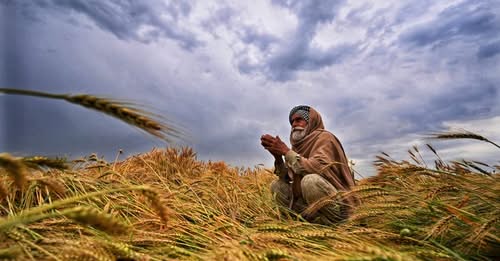
AI: A Heaven-Sent Opportunity for Udta Punjab
Why in News?
Punjab is at a crossroads, grappling with its historical legacy and present-day challenges. As the state struggles with economic, social, and agricultural crises, artificial intelligence (AI) offers a unique, transformative opportunity to address these long-standing issues. 
Introduction
Punjab, historically a cradle of civilizations and invasions, finds itself in a precarious situation today. It was once a thriving region that played a pivotal role in India’s Green Revolution. However, political instability, economic turmoil, drug abuse, and stagnant agricultural practices have put Punjab in a deep crisis. Amidst this chaos, AI could be the game-changer the state desperately needs.
Key Features
A History of Turbulence
Punjab’s strategic location made it a target for repeated invasions. It became the gateway to India through the Khyber Pass, leading to centuries of conflict and conquest. From the Mughal Empire to British colonization, Punjab’s history has been marred by turbulence.
After India’s partition in 1947, Punjab witnessed the horrors of communal violence and displacement. Further political unrest ensued with the Punjabi Suba Movement and later, the militancy that plagued the state in the 1980s and early 1990s. These events led to a deep-rooted sense of alienation and economic decline.
Economic and Social Challenges
Punjab’s public debt is soaring, projected to reach ₹3.74 lakh crore by the end of the current fiscal year. The debt-to-GDP ratio is estimated to hit 53.7% by FY 2027-28. With over ₹36,766 crore budgeted for debt servicing alone, Punjab is caught in a debt trap.
There’s little or no private investment due to political instability. Legislative assembly sessions are ineffective, and governance is weak. Unemployment is rampant; the youth are disenchanted with farming and often migrate abroad or turn to crime.
Agricultural Crisis
Punjab’s agrarian economy is in crisis. The water table is plummeting, and the agricultural model, heavily reliant on subsidies, is no longer viable. There’s an urgent need to revisit the cooperative farming model to reduce input costs and make agriculture profitable again.
The National Green Tribunal (NGT) highlighted that Punjab has lost water equivalent to its last 17 years of reserves. By 2039, Punjab could face a severe water crisis, potentially turning the state into a virtual desert.
Specific Impacts or Effects
Youth Migration and Crime
Young Punjabis are leaving in droves, while those who stay behind struggle with unemployment. The lack of opportunities has fueled cross-border narcotics smuggling and gangsterism.
Industrial Decline
Unlike southern and western Indian states, Punjab’s industrial development has stagnated. The state lags in manufacturing, and new investments are scarce.
Challenges and the Way Forward
Challenges
- Declining water tables and unsustainable farming practices.
- High public debt and fiscal mismanagement.
- Youth disillusionment and the brain drain.
- Rising crime and drug abuse.
- Lack of effective political leadership.
Steps Forward
- Reengineer the education system from nursery levels to embrace AI and technology.
- Invest in AI-driven agriculture to optimize water usage and improve yields.
- Foster industry 4.0 practices, leveraging AI, machine learning, and automation to revive manufacturing.
- Develop IT hubs and encourage startups in AI and digital technologies.
- Address governance issues by ensuring transparent, accountable leadership.
Conclusion
Punjab stands at the threshold of a once-in-a-lifetime opportunity presented by the AI revolution. To take full advantage of this transformative technology, Punjab must overhaul its education system and reimagine its economic model. Only by embracing AI and technology-driven innovation can Punjab hope to overcome its existential crises and secure a prosperous future.
Questions and Answers
1. What is the primary crisis Punjab faces today?
Punjab is struggling with economic decline, public debt, agricultural distress, and youth migration.
2. How has Punjab’s history contributed to its current situation?
A history of invasions, partition, political instability, and militancy has led to deep social and economic challenges.
3. What is Punjab’s public debt situation?
The public debt is projected to reach ₹3.74 lakh crore, with a debt-to-GDP ratio of 53.7% by FY 2027-28.
4. What is happening to Punjab’s water resources?
Punjab’s water table is dropping rapidly; it has lost water reserves equivalent to 17 years and may face desertification by 2039.
5. Why is agriculture in Punjab no longer viable?
Heavy subsidies, declining water tables, and unprofitable returns have made agriculture unsustainable.
6. How has youth migration impacted Punjab?
Youth migration has drained the state of its skilled labor force, and those who remain often fall into unemployment or crime.
7. What role can AI play in transforming Punjab?
AI can revolutionize agriculture, manufacturing, education, and governance, helping Punjab overcome its crises.
8. What changes are needed in education to leverage AI?
Punjab’s education system must be radically reengineered from the nursery level to include AI and tech skills.
9. Why is Punjab lagging in industrial development?
Political instability, lack of investment, and outdated practices have stunted industrial growth.
10. What is the key to Punjab’s future prosperity?
Adopting AI and technology-driven innovation in agriculture, industry, and governance is crucial for Punjab’s revival.

