
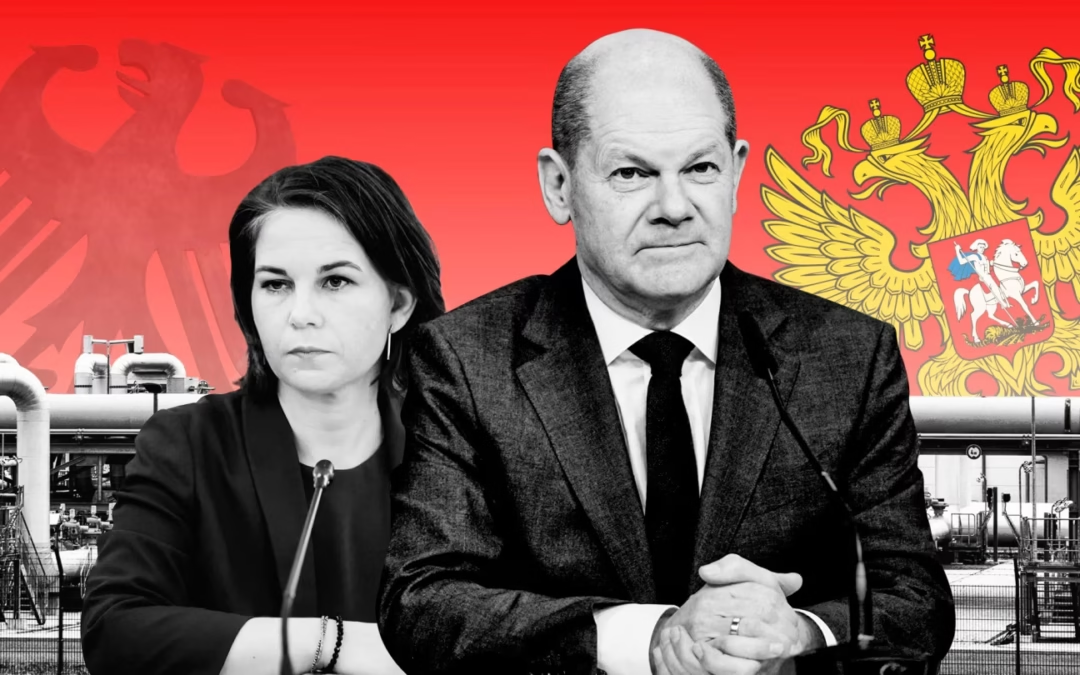
Ukraine War: The Greatest Challenge for Germany New Coalition Government
Why in News?
Germany’s recent general elections have reshaped its political landscape, with the opposition CDU/CSU emerging as the largest party under Friedrich Merz’s leadership. The key challenges ahead include navigating the Ukraine war, EU unity, and Germany’s economic revival. Notably, the right-wing AfD party has also emerged as a significant player in this election. 
Introduction
Germany’s general elections have marked a political shift. While the traffic-light coalition of Socialists, Liberals, and Greens has suffered a loss in public support, the conservative CDU/CSU party has gained momentum. However, the rise of the far-right AfD also signals a deeper dissatisfaction within the electorate. The new government will need to address pressing challenges, with the Ukraine war being the most significant issue on its agenda.
Key Features
-
Election Results and Interpretation
- CDU/CSU emerged as the largest party after a decade of lackluster economic performance under the previous coalition.
- They promised radical reforms: cutting bureaucracy, reducing taxes, and promoting research and technological growth.
- However, forming a government will require partnerships with Socialists and/or Greens—former coalition partners often blamed for Germany’s economic decline.
-
The Rise of AfD (Alternative für Deutschland)
- AfD was the biggest electoral winner, gaining the second-largest party status despite being ostracized for its nationalist stance.
- AfD’s rise reflects deep dissatisfaction with Germany’s political establishment and growing frustration with economic stagnation and immigration policies.
-
Impact on Germany’s Approach to the Ukraine War
- The Ukraine war remains the greatest challenge for Germany’s new coalition government.
- The deepening EU political split over Ukraine, US relations, and Russian rapprochement are critical concerns.
- The CDU/CSU supports ending the Ukraine war, but EU unity on the matter is fragile, especially with differing national interests at play.
Specific Impacts or Effects
-
Potential EU-US Strategic Rupture
- The US and Europe are divided not only on Ukraine but increasingly on economic and security issues.
- Trump-era skepticism about NATO’s future under Article 5 further complicates EU’s strategic autonomy.
- The EU is promoting the ReArm Europe project to chart an independent defense strategy, but differences among member states remain a hurdle.
-
Germany’s €3 Billion Package for Ukraine
- Merz is advocating for an additional €3 billion aid package to Ukraine.
- While the US has halted military support, many EU nations and the UK continue to supply weapons and aid to Ukraine.
- However, EU/UK support alone is unlikely to shift the war’s outcome without significant US military backing.
-
Fair Peace Conditions Proposed by EU
- At the EU summit on March 6, fair peace conditions were outlined.
- Yet, ultimate decisions on Ukraine are expected to rest with the US and Russia, often sidelining EU initiatives.
Challenges and the Way Forward
Challenges
-
Economic Decline
- Germany’s economy has stagnated over the last three years.
- Energy costs and reliance on Russian resources remain critical issues.
-
Dependency on Exports
- German manufacturing depends on cheaper energy and raw materials from Russia, Central Asia, and Asia.
- Access to these markets is threatened by sanctions and geopolitical tensions.
-
Internal Political Divisions
- CDU/CSU’s radical reform promises may be difficult to deliver in a coalition government.
- AfD’s rise signals a divided electorate, complicating policymaking.
Steps Forward
- Strategic Coalition Building
- Form a stable coalition that can push through much-needed economic reforms.
- EU Unity on Defense and Foreign Policy
- Work toward a consensus within the EU on Ukraine and defense matters.
- Economic Revitalization Plans
- Revive economic growth by addressing energy costs, supply chain issues, and technological innovation.
- Balance Between US-EU Relations
- Navigate the delicate balance between dependence on US military support and EU’s strategic autonomy.
Conclusion
Germany’s new coalition government faces a complex and challenging future. The Ukraine war, EU-US relations, and a struggling economy dominate the agenda. While CDU/CSU has emerged as a significant force, it must navigate coalition politics and the far-right surge represented by AfD. The path ahead demands careful diplomacy, strong leadership, and bold reforms to secure Germany’s position in a changing world.
Questions and Answers
-
Which party emerged as the largest in Germany’s recent elections?
CDU/CSU, led by Friedrich Merz. -
What are CDU/CSU’s key promises?
Radical reforms including cutting bureaucracy, tax reductions, and technological development. -
Why did the AfD perform so well?
Growing public dissatisfaction with the current coalition’s handling of the economy and immigration. -
What is the greatest challenge for Germany’s new government?
The ongoing Ukraine war and its political and economic impacts. -
What is ReArm Europe?
An €800 billion EU project to establish strategic defense autonomy separate from NATO. -
What additional support has Merz proposed for Ukraine?
A €3 billion additional aid package. -
Why is EU unity on Ukraine fragile?
Member states have differing national interests and levels of support for Ukraine. -
How has Germany’s economy performed in recent years?
It has stagnated and is struggling due to high energy costs and dependency on external markets. -
What are the implications of AfD’s rise for Germany’s political landscape?
It signals deep divisions and dissatisfaction with mainstream parties. -
What are the main economic concerns for Germany?
Energy prices, access to global markets, and the need for economic revitalization.

