
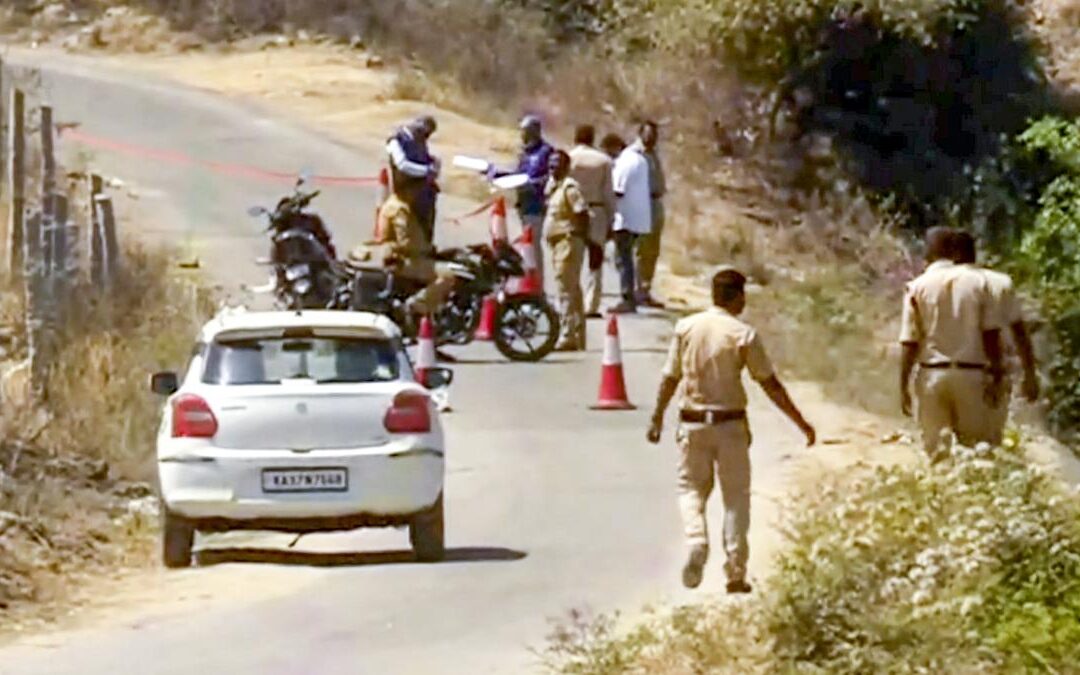
Hampi Tragedy: A Grim Reminder of Women Safety Crisis in India
Why in News?
A horrific incident near Hampi, Karnataka, where two women were raped and their male companions were brutally attacked, has once again spotlighted the persistent threat to women’s safety in India. The crime mirrors the deep-rooted issues of sexual violence in the country, not only against Indian women but also affecting foreign tourists. 
Introduction
Hampi, known for its serene beauty, historical significance, and tranquil settings, became the site of a horrifying crime. What was supposed to be a peaceful night of stargazing for a group of tourists turned into a nightmare. The incident has revived national outrage and forced the country to confront the grim reality that India remains unsafe for women.
Key Features
-
The Incident in Hampi
- Two women, an Israeli tourist and her homestay host, were raped.
- Three men accompanying them (tourists from the US, Maharashtra, and Odisha) were attacked and thrown into a canal.
- The tourist from Odisha tragically did not survive.
-
Law Enforcement Response
- The police acted quickly, making arrests.
- Yet the incident underscores the persistent failure to address and prevent such crimes, even a decade after the infamous Nirbhaya case.
-
Widespread Sexual Violence
- Sexual violence remains rampant across India.
- While women are the primary victims, the men who accompany them or love them are not safe either.
- India continues to rank among the most dangerous countries for solo women travelers.
Specific Impacts or Effects
-
Political Outrage and Apathy
- Outrage over such incidents often descends into political point-scoring.
- When a Spanish tourist was gang-raped in Jharkhand last year, the National Commission for Women was more concerned about India’s global image than addressing the victim’s trauma.
-
India’s Global Perception
- Officials claim India is safe, citing statistics like “over six million tourists visit India annually.”
- Yet, India consistently ranks high on lists of dangerous destinations for women.
-
Shared Suffering of Foreign and Indian Women
- Foreign women often face the same insecurities and threats as Indian women.
- The unsafe conditions that Indian women endure become shared experiences for foreign tourists.
Challenges and the Way Forward
Challenges
- Normalization of Sexual Violence
- Sexual assaults are often treated as routine news rather than national emergencies.
- Institutional Insensitivity
- Authorities prioritize India’s image over justice and safety for women.
- Lack of Legal Reform
- Marital rape remains legal in India.
- Court rulings continue to reflect patriarchal biases, like denying the impact of a wife’s death on her husband’s immunity from rape prosecution.
Steps Forward
- Acknowledge Sexual Violence as a National Crisis
- Treat rape as a systemic issue rather than isolated crimes.
- Comprehensive Legal Reforms
- Criminalize marital rape.
- Implement stricter punishment for all forms of sexual violence.
- Cultural and Social Awareness
- Promote gender sensitivity and respect for women through education and media.
- Focus on Victim-Centric Policies
- Ensure justice and rehabilitation for survivors, rather than focusing on the nation’s image.
Conclusion
The Hampi case is a brutal reminder of India’s ongoing battle with sexual violence. A decade after Nirbhaya, the country still struggles to provide safety to its women—both citizens and tourists. As long as crimes like rape are not met with decisive action and legal reforms, both Indian and foreign women will continue to live under constant threat. It’s time India takes this crisis seriously.
Questions and Answers
-
What happened in Hampi that brought national attention?
Two women were raped, and three male tourists were attacked, with one drowning. -
Who were the victims?
An Israeli tourist, her Indian homestay host, and three men from the US, Maharashtra, and Odisha. -
How did the police respond?
Arrests were made quickly, but the incident highlights broader systemic issues. -
Why is the Hampi case significant?
It underscores that sexual violence remains a major issue in India, even after the Nirbhaya case. -
What did the National Commission for Women focus on after the Jharkhand gang rape?
They were more concerned about India’s international image than the safety and justice for the victim. -
How does India rank for women’s safety internationally?
India ranks among the most dangerous countries for solo women travelers. -
What societal problem does marital rape represent in India?
Marital rape is legal, reflecting deep-rooted gender inequality and lack of legal protection for women. -
What recent controversial court ruling was mentioned?
A high court ruled that a wife’s death does not weaken her husband’s immunity from prosecution for rape. -
Why do foreign women face similar dangers in India?
The unsafe environment for Indian women extends to foreign women visiting the country. -
What needs to change to improve women’s safety in India?
Legal reforms, acknowledgment of sexual violence as a national crisis, victim-focused policies, and societal change toward gender equality.

