
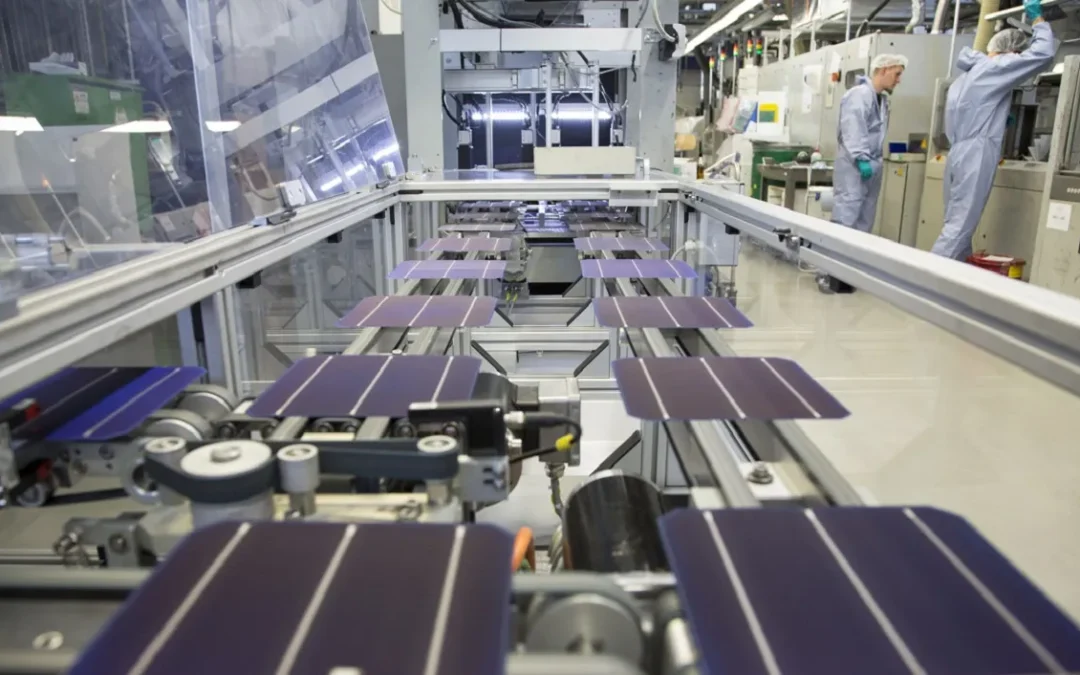
The Arjuna Moment for Electronics Manufacturing in India
Why in News?
India stands at a crucial juncture in its trade negotiations with the United States, particularly concerning economic, trade, and strategic relations. As India aims to strengthen its electronics manufacturing sector, it can draw valuable lessons from Japan’s rise and decline in semiconductors to maintain its growth trajectory. 
Introduction
The US-China trade conflict has opened a window of opportunity for India to attract electronics manufacturing away from China. However, this opportunity comes with challenges that India must navigate carefully. Lessons from Japan’s experience in semiconductors provide a strategic roadmap as India seeks to become a global player in the electronics value chain.
Key Features
-
US-India Trade Dynamics
US President Donald Trump’s demand for tariff reductions from India has put pressure on bilateral trade negotiations. India has consistently maintained that its tariffs are aligned with global norms, yet Trump claims they are too high.
Despite these tensions, India is keen to work out a deal with the US to enhance trade cooperation. -
Lessons from Japan
In the 1970s and 1980s, Japan’s semiconductor dominance was built on strategic partnerships with the US, investment in technology, and government support. However, the US later imposed restrictions on Japanese exports through the 1986 US-Japan Semiconductor Agreement, leading to Japan’s decline in the semiconductor industry. -
India’s Smartphone Export Boom
Recently, India has emerged as a major hub for smartphone manufacturing, driven by Apple’s suppliers like Foxconn, Pegatron, and Wistron. India’s smartphone exports have grown significantly, making it the second-largest exporter of smartphones globally, after China. -
Production-Linked Incentive (PLI) Scheme
India’s PLI scheme has played a vital role in attracting global electronics manufacturers, particularly those looking to diversify away from China.
Specific Impacts or Effects
-
Shift in Global Supply Chains
The US-China conflict has encouraged companies to move their manufacturing bases to India. This shift could enhance India’s position in global electronics and semiconductor supply chains. -
Increased Export Potential
With the right trade agreements and policy frameworks, India could see electronics exports surge from the current $20 billion to $80 billion by 2030. -
Strategic Importance of Trade Negotiations
India’s future in electronics manufacturing depends on avoiding trade deals that limit its technological capabilities, similar to what happened to Japan in the 1980s.
Challenges and the Way Forward
Challenges
- High tariffs on electronics components remain a sticking point in trade negotiations.
- India needs to ensure that US trade demands do not compromise its long-term strategic interests.
- The lack of a strong semiconductor manufacturing ecosystem could limit India’s potential.
Steps Forward
- India must maintain its policy autonomy while negotiating trade deals with the US.
- Strategic investments in semiconductor manufacturing should be prioritized.
- Strengthening ties with other global markets, including Europe and ASEAN, can help diversify India’s trade portfolio.
Conclusion
India finds itself at an ‘Arjuna moment’ in electronics manufacturing—where focus, strategy, and execution will determine its success. Learning from Japan’s rise and fall in semiconductors, India must chart its own path with a balance of strategic trade policies and robust domestic capabilities. The goal should be to establish India as a reliable global hub for electronics manufacturing without repeating the mistakes of the past.
Questions and Answers
-
What is the ‘Arjuna moment’ for India referring to?
India’s critical opportunity to focus and establish itself as a major electronics manufacturing hub. -
Why are India-US trade negotiations important now?
They will shape India’s future in global electronics and semiconductor supply chains. -
What lesson can India learn from Japan’s semiconductor history?
Avoiding trade agreements that restrict technological growth and maintaining policy autonomy. -
What role has the US-China trade conflict played?
It has encouraged companies to move electronics manufacturing away from China to India. -
Which companies have driven India’s smartphone export boom?
Apple’s vendors—Foxconn, Pegatron, and Wistron. -
What is India’s current rank in smartphone exports globally?
India is the second-largest exporter, after China. -
What is the target for India’s electronics exports by 2030?
From $20 billion currently to $80 billion. -
What is the Production-Linked Incentive (PLI) Scheme?
A government program incentivizing electronics manufacturers to produce in India. -
What is the role of ICEA in India’s electronics sector?
ICEA advocates for increased domestic production and exports in smartphones and electronics. -
What strategic balance must India maintain in its US trade deals?
Protecting its future capabilities in electronics while gaining favorable trade terms.

