
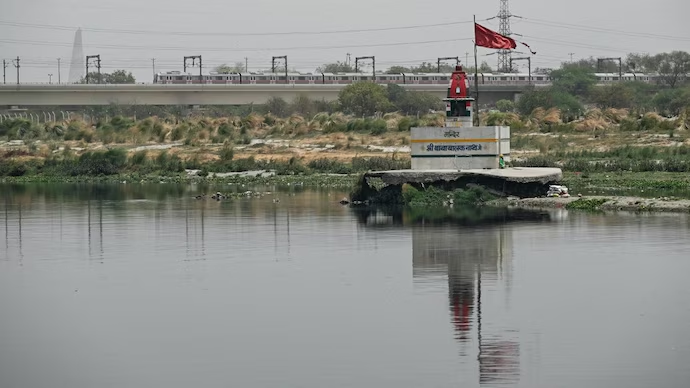
What Delhi Must Do to Rescue the Yamuna
Why in News?
The Delhi assembly elections recently highlighted the polluted waters of the Yamuna as a major campaign issue. With the new government prioritizing the revival and cleaning of the river, there is renewed focus on restoring the Yamuna’s health through better planning, circulatory water management, and innovative financing methods. 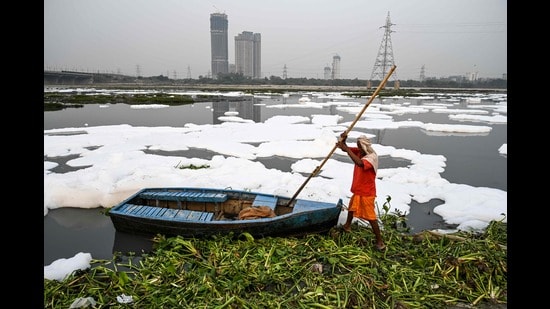
Introduction
The Yamuna River, which flows 48 km through Delhi, is one of the most polluted rivers in India. Despite being critically important to Delhi’s water supply, sanitation, flood control, and drainage, nearly 76% of the Yamuna’s water is wasted, and pollution levels have reached alarming heights. The Supreme Court has repeatedly called for its rejuvenation, but progress has been slow.
Key Features
-
Current Status of the Yamuna:
About 90% of the Yamuna’s water is diverted into canals during the summer, leaving little for ecological flow. Untreated sewage, solid waste, and industrial effluents contribute to pollution. -
Population Pressure and Urbanization:
Delhi’s urbanization, population growth, and industrial expansion have worsened pollution. Nearly 50% of the Yamuna’s pollution load comes from 3% of its length in Delhi. -
Sewage and Wastewater Management:
Only 83% of Delhi’s sewage is treated. The remaining untreated sewage is discharged directly into the river. The Delhi Jal Board (DJB) and Public Works Department (PWD) have built sewage treatment plants (STPs), but many are non-functional or operating below capacity. -
Legal and Administrative Initiatives:
The Supreme Court directed that a minimum flow of 10 cumecs be maintained in the Yamuna. The National Green Tribunal (NGT) also ordered a comprehensive plan for the river’s rejuvenation. -
Policy Frameworks and Master Plans:
The Delhi Development Authority’s (DDA) master plans and floodplain zoning regulations seek to protect the river zone. However, encroachments and illegal activities remain a challenge.
Specific Impacts or Effects
-
Environmental Degradation:
Encroachments and pollution have degraded riverine ecology. Fish species have declined, and the river’s biodiversity has suffered. -
Public Health Hazards:
Polluted water and air around the riverbanks contribute to public health issues. -
Impact on Urban Services:
The river is connected to Delhi’s water supply, sanitation, flood control, and transport systems. Its degradation directly affects these urban services.
Challenges and the Way Forward
Challenges
-
Over-Extraction of Water:
Excessive diversion of water into canals during summers reduces ecological flow. -
Inadequate Sewage Treatment:
Existing STPs are often non-functional, and untreated sewage is discharged into the river. -
Urbanization and Encroachments:
Unauthorized construction and urban sprawl into the floodplain worsen pollution. -
Implementation Gaps:
Delays in enforcing regulations, lack of inter-agency coordination, and inadequate monitoring hinder progress.
Steps Forward
-
Integrated Water Management:
Promote circulatory water management with blended green and social bonds to fund projects. -
Policy Implementation:
Strictly enforce floodplain zoning, and implement the Unified Center for Rejuvenation of Rivers. -
Technological Innovations:
Use blockchain, SCADA systems, and IoT to improve monitoring and decision-making. -
Revival of Water Bodies:
Restore lakes and wetlands to support groundwater recharge and biodiversity. -
Community Participation:
Engage citizens and stakeholders in conservation efforts.
Conclusion
Delhi must act decisively to rejuvenate the Yamuna River. Correcting planning and execution flaws, adopting circulatory water management, and leveraging innovative financing tools are crucial. Without urgent intervention, the river’s ecological health and its role in Delhi’s urban systems will continue to deteriorate.

