
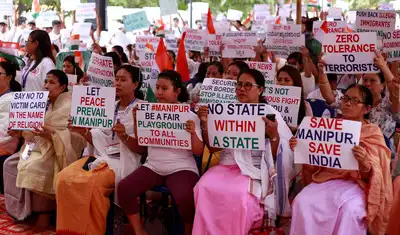
The Precarity of Peace in Manipur
Why in News?
A fresh wave of ethnic clashes has erupted in Manipur, highlighting the fragile nature of peace in the region. Despite efforts towards reconciliation and normalcy after nearly two years of violence, recent incidents underscore the challenges that persist in healing ethnic tensions. 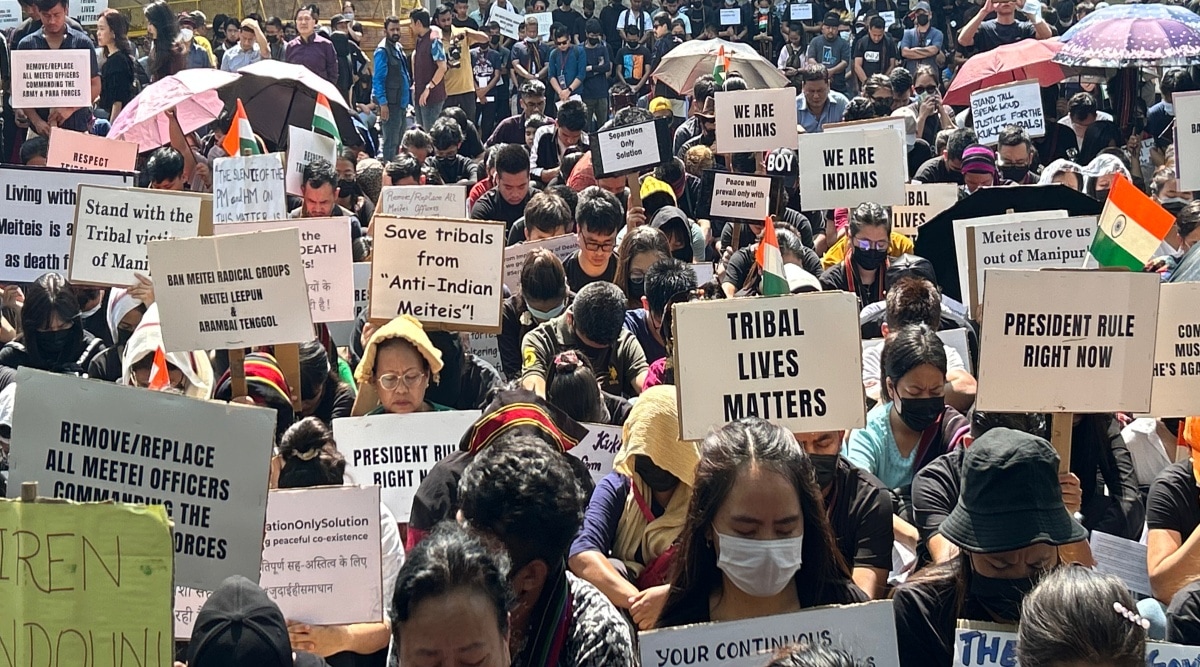
Introduction
Manipur has witnessed renewed ethnic violence, disrupting the slow progress toward peace in the state. This latest wave of clashes comes in the backdrop of complex socio-political dynamics between the Meitei and Kuki communities. It also reflects the deep mistrust between these groups and the state administration, following the deadly conflict that erupted in May 2023.
Key Features
-
Fresh Clashes and Violence: On Saturday, one person was killed, and several others injured when mobs protesting against the administration’s decision to facilitate inter-district movement of civilians and goods clashed with security forces in Kangpokpi district.
-
Demands from Kuki Groups: Kuki groups are demanding the administration fulfill eight key demands, including a separate administration in the form of a Union Territory for the Kuki-dominated hill districts, before they allow free movement on national highways.
-
Government Initiatives: Union Home Minister Amit Shah recently instructed security forces and the state administration to ensure free movement of people across Manipur. However, attempts by Meitei groups to organize a peace march to Kuki areas were met with resistance.
-
Historical Ethnic Conflict: The Meitei-Kuki clashes that erupted in May 2023 resulted in over 250 deaths, widespread destruction of homes and public buildings, looting of armories, and a breakdown of law and order.
-
Loss of State Credibility: Armed gangs took control of streets, eroding public trust in the administration, which was already grappling with allegations of bias and failure to manage the crisis effectively.
-
External Complications: Factors like the civil war in Myanmar, cross-border ethnic ties, and suspicions about gun-running and drug trade have further complicated the situation.
-
Political Changes: The resignation of Chief Minister Biren Singh in February and the imposition of Governor’s rule have provided a new opening for dialogue and peace efforts.
-
Muted Positive Response: Some ethnic groups have responded positively to calls from the administration to surrender arms looted from state armories, suggesting a potential path towards peace.
Specific Impacts or Effects
-
Intensified Ethnic Tensions: Despite official efforts, mutual distrust between Meitei and Kuki groups remains high, and violence continues in pockets.
-
Administration’s Loss of Control: The earlier breakdown of law and order diminished the administration’s credibility, making peace-building efforts more challenging.
-
Peace Overtures and Resistance: Any official attempt to impose peace is viewed with skepticism by Kuki groups, further complicating reconciliation efforts.
-
Societal Divides: Communities remain polarized, with extremist and maximalist positions undermining any progress toward sustainable peace.
Challenges and the Way Forward
Challenges
-
Restoring Trust: Mistrust between the communities and the administration makes peace-building a difficult task.
-
Addressing Grievances: Kuki groups demand a separate administration, which poses a significant political challenge.
-
Managing Security Concerns: Ongoing suspicions about cross-border criminal activities add another layer of complexity.
Steps Forward
-
Major Outreach Efforts: The state administration, dominated historically by Meiteis, needs to undertake extensive efforts to build trust with Kuki groups.
-
Inclusive Dialogue: Political actors and community leaders must engage in sincere negotiations to address longstanding grievances.
-
Rejecting Maximalism: Platforms like the Kuki-Zo council should acknowledge that extreme positions and confrontation are unsustainable.
-
Peace Over Politics: The focus should shift from political gains to genuine peace-building for long-term stability in Manipur.
Conclusion
The precarious peace in Manipur highlights the deep-rooted ethnic divisions and the challenges in restoring normalcy. While the resignation of Biren Singh and the imposition of Governor’s rule offer a window for reconciliation, true peace requires inclusive dialogue, trust-building, and a rejection of extremist politics. Healing will take time, but the effort must be persistent and inclusive to ensure lasting peace.
Questions and Answers
-
Why is Manipur in the news recently?
Due to a fresh wave of ethnic clashes disrupting efforts towards peace in the state. -
Which communities are involved in the conflict?
The Meitei and Kuki communities. -
What are the Kuki groups demanding?
A separate administration in the form of a Union Territory for the Kuki-dominated hill districts. -
What happened in May 2023?
Clashes between Meiteis and Kukis led to over 250 deaths, destruction of homes and public buildings, and looting of armories. -
What role has the Union Home Minister played?
Amit Shah directed security forces to ensure free movement across Manipur. -
Why has the state administration lost credibility?
Armed gangs took over the streets, forcing their writ on civilians and eroding public trust. -
What external factors have worsened the situation?
Civil war in Myanmar, an open border, and cross-border ethnic ties linked to gun-running and drug trade. -
What recent political development occurred in Manipur?
The resignation of Biren Singh as Chief Minister and the imposition of Governor’s rule. -
What indicates that peace efforts are showing some results?
Muted positive responses from ethnic groups and surrender of looted arms to the administration. -
What is the long-term solution suggested for peace in Manipur?
Inclusive dialogue, major outreach from the administration, and rejection of maximalist positions by ethnic councils like the Kuki-Zo.

