
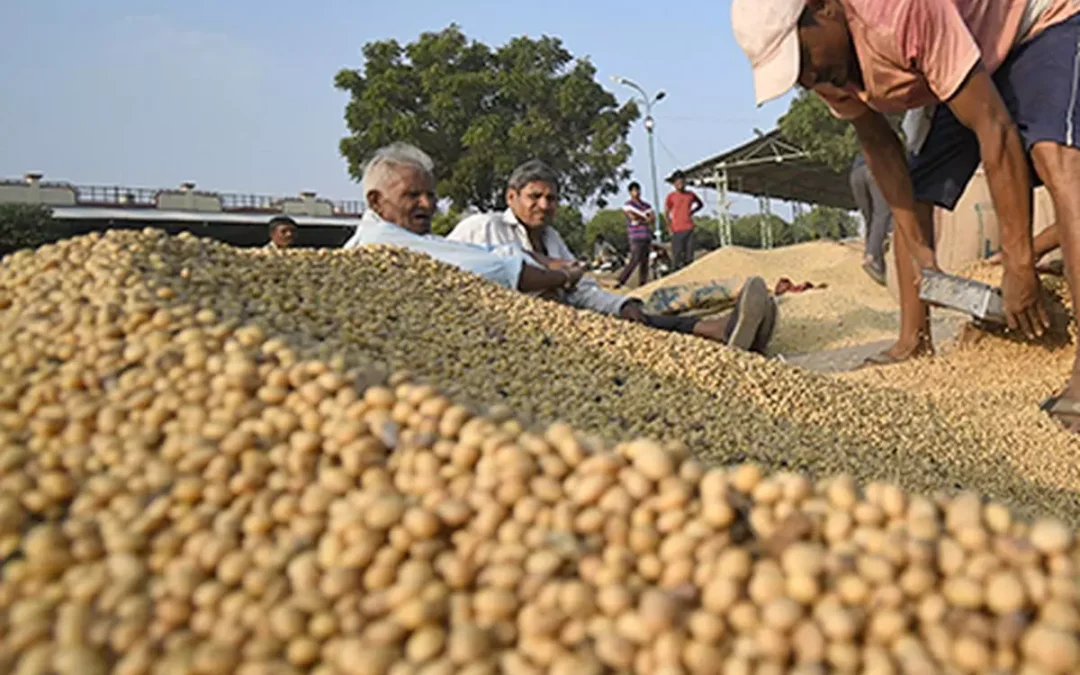
Soyabean Sector Hit by Domestic, Global Factors
Why in News?
India’s soyabean sector is facing significant challenges due to domestic and global factors. The government is exploring ways to stabilize prices and reduce dependence on imports, with strategies such as boosting production, improving post-harvest management, and tapping new export markets. 
Introduction
The soyabean, often called the golden bean, is a vital oilseed crop in India. However, India’s share of global soyabean production remains low at just 3%. Despite its importance, the domestic sector struggles with production stagnation, post-harvest losses, and price instability. Meanwhile, India imports large quantities of soyabean and soyabean oil to meet domestic demand, raising concerns about self-reliance and food security.
Key Features
-
India’s Low Share in Global Production:
India contributes only 3% to global soyabean production. About 81% of world production comes from Brazil, the USA, and Argentina. -
High Import Dependency:
India imports soyabean oil to meet over 50% of its annual consumption needs.- China leads in soyabean production globally.
- Nepal and the US have not met India’s soyameal consumption demand.
-
Production Trends in India (2015-2023):
- Soyabean production has stagnated at 1.5-2 million tonnes, with a CAGR of 8% between FY 2016 and FY 2023.
- Soyameal consumption has increased with a CAGR of 5% since FY 2018-19.
- The European Union is the largest importer of Indian soyameal.
-
Challenges in Production and Processing:
- Low productivity and acreage have reduced output.
- Post-harvest losses are estimated at 12-15%.
- Lack of price risk management tools discourages small processors.
- COVID-19 and the Russia-Ukraine war have disrupted supply chains and increased prices.
- Larger firms have started sourcing directly from major production hubs, creating supply gaps for smaller players.
Specific Impacts or Effects
- Rising Import Dependency:
India has become a net importer of soyabean oil due to stagnant production. - Price Volatility:
Global crises have driven up edible oil prices by 140% since 2020, hurting consumers and small farmers. - Supply Chain Disruptions:
Direct sourcing by large firms has created sourcing gaps for smallholders and traders in India. - Trade Opportunities:
New bilateral agreements with Brazil, Argentina, the EU, and Vietnam are being explored for soyabean and soyameal trade.
Challenges and the Way Forward
Challenges
- Low Acreage and Productivity:
Poor yields and small farm sizes limit production. - Post-Harvest Losses:
Lack of modern storage and processing infrastructure leads to losses. - Lack of Market Instruments:
Absence of futures contracts and hedging tools limits price risk management for small producers. - Dependence on Imports:
Heavy reliance on imported soyabean oil affects trade balance and self-reliance goals.
Steps Forward
- Incentivize Soyabean Cultivation:
Promote climate-resilient, short-duration varieties and provide minimum support prices (MSP) to farmers. - Improve Post-Harvest Management:
Adopt better farm-level technologies to reduce post-harvest losses. - Enhance Crushing Capacity:
Optimize crushing capacity to improve profitability and reduce reliance on imported oil. - Implement Price Risk Management Tools:
Introduce futures trading and market-based instruments for soyabean and soyameal. - Diversify Import Sources:
Reduce dependence on the US and explore trade agreements with Brazil, Argentina, the EU, and Vietnam. - Promote Sustainable Practices:
Comply with voluntary sustainability standards for soyabean production and trade.
Conclusion
India’s soyabean sector faces complex challenges, but with strategic interventions in production, post-harvest management, and trade policy, the country can move toward self-reliance. Aligning with global sustainability standards and exploring new trade partnerships are key to revitalizing India’s soyabean economy.

