
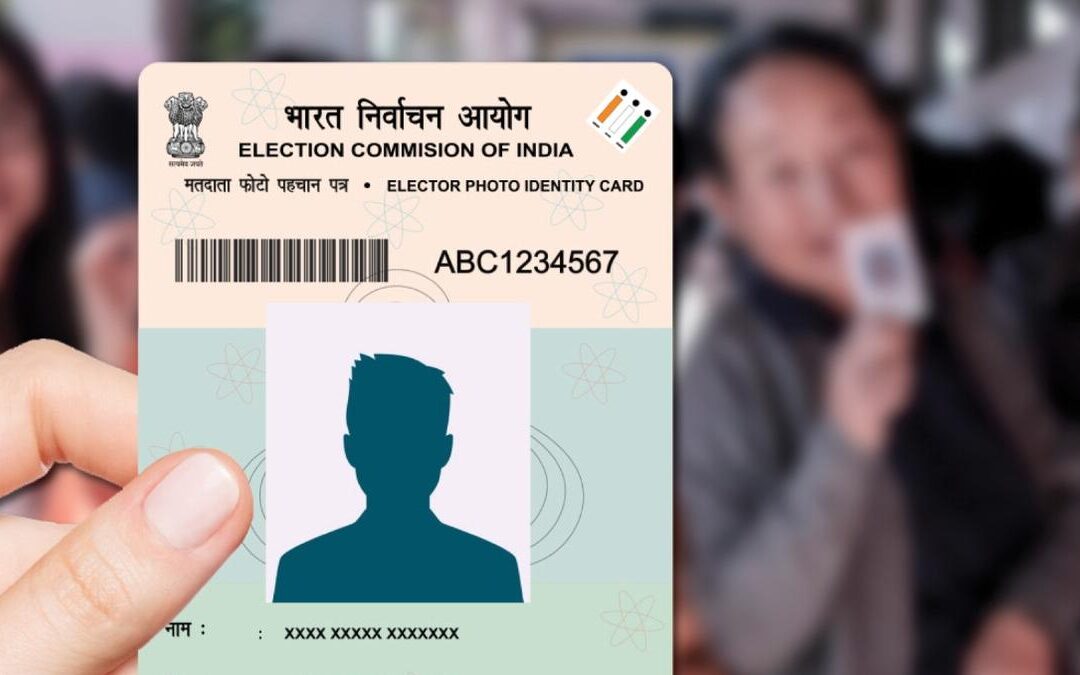
Are Unique Electoral ID Numbers Being Duplicated?
Why in News?
West Bengal Chief Minister Mamata Banerjee recently raised serious concerns regarding the duplication of Electors Photo Identity Card (EPIC) numbers. This has reignited the debate over electoral transparency and the integrity of voter registration in India. 
Introduction
On February 27, Mamata Banerjee accused the ruling BJP of including voters from other states in the West Bengal voters’ list with the alleged backing of the Election Commission of India (ECI). She cited cases where multiple voters shared the same EPIC numbers, raising concerns about potential voter impersonation.
Key Features
What is an EPIC Card?
- The Electors Photo Identity Card (EPIC) is a 10-digit alphanumeric voter ID number issued by the Election Commission.
- Introduced in 1993 under the Registration of Electors Rules, 1960, the EPIC number is designed to prevent voter impersonation and enhance electoral transparency.
- EPIC numbers are generated and assigned through the ERONET digital platform, which links each voter to their state and constituency data to maintain uniqueness.
What is ERONET?
- ERONET is a web-based platform created for election officials to manage electoral rolls in multiple languages and scripts.
- It handles the processes of voter registration, migration, and deletion of names from the electoral rolls.
- The platform automates electoral roll management and was intended to prevent errors like duplication.
Specific Impacts or Effects
Allegations by the Trinamool Congress
- Mamata Banerjee claimed that voters from other states were added to West Bengal’s voters’ list using the same EPIC numbers as legitimate local voters.
- She accused the BJP and ECI of facilitating this practice, calling the EC’s clarification a “cover-up.”
Election Commission’s Response
- The EC stated that the duplication of EPIC numbers was due to the earlier decentralized and manual systems used before the electoral rolls of all States and Union Territories were migrated to ERONET.
- Some State/UT Chief Electoral Officers (CEOs) used the same EPIC alphanumeric series, leading to possible duplication for electors in different Assembly Constituencies across different States/UTs.
Challenges and the Way Forward
Challenges:
- Duplicate EPIC numbers, though they affect different voters in different states, raise questions about data integrity and electoral transparency.
- Trust issues between the EC and political parties when allegations are not clearly resolved.
Steps Forward:
- The EC clarified that despite duplicated EPIC numbers, all other details (demographic information, constituency, polling booth) remain unique to each voter.
- The EC emphasized that a voter can cast a ballot only in their designated polling station within their State/UT, preventing cross-voting or impersonation.
- Further efforts are needed to ensure absolute uniqueness and remove the scope for duplication in EPIC numbers across India.
Conclusion
The controversy over the duplication of EPIC numbers highlights the need for continuous improvements in India’s electoral roll management. While the ERONET platform has streamlined and modernized voter registration, instances of past errors still create scope for political allegations. Ensuring complete transparency and reassuring all stakeholders remains critical for the integrity of India’s democratic processes.

