
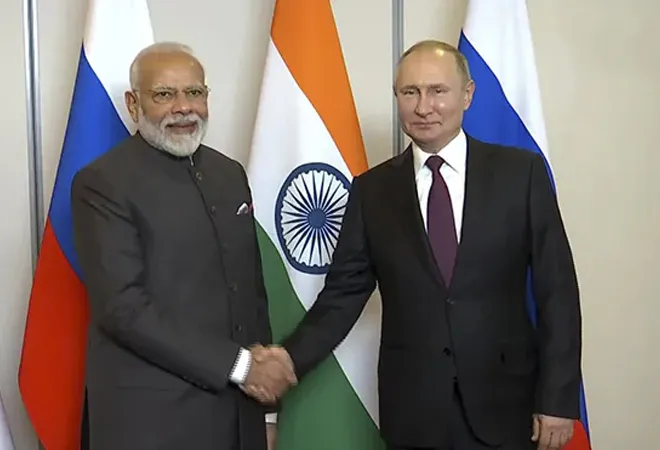
Trump-Putin-Modi Summit: Can India Redefine Global Diplomacy?
Why in News?
Amid shifting global alliances and unpredictable diplomacy, discussions have emerged about the potential for an unprecedented summit between Donald Trump, Vladimir Putin, and Narendra Modi. This idea reflects India’s growing influence and Prime Minister Narendra Modi’s deft handling of foreign policy. 
Introduction
The world of diplomacy is witnessing significant changes. A recent escalation between former US President Donald Trump and Ukrainian President Volodymyr Zelenskyy brought back memories of intense power plays. However, the global power equation is no longer the same. Trump, recognising China and Xi Jinping as his real strategic challenge, has recalibrated his foreign engagements, including towards Russia and potentially India.
Key Features
- Trump’s New Strategic Priorities: Trump has identified China, not Russia, as the primary antagonist. His efforts to draw Russia away from China’s embrace highlight a shift in global strategy.
- Putin’s Pivotal Role: Putin, often seen as closer to China, may now find renewed engagement with the US beneficial, especially as Washington offers strategic balancing.
- Modi’s Diplomatic Opportunity: Modi’s successful foreign policy has already placed India as a crucial player both in the West and East. If Modi can navigate this complex diplomacy, India could serve as a bridge between Trump and Putin.
- The West’s Changing Perceptions: Europe’s waning influence and America’s focus on Asia leave room for a more active Indian role in global diplomacy.
- The Triangular Diplomacy Vision: A summit involving Trump, Putin, and Modi could redefine global alliances, reducing hostilities and promoting new partnerships.
Specific Impacts or Effects
- Strengthening India’s Global Standing: If India successfully facilitates or participates in such a summit, it could bolster its position as a neutral power broker in East-West dynamics.
- Reducing Global Tensions: The summit could de-escalate current tensions between the US, Russia, and their respective allies, creating a more stable global environment.
- Economic and Security Benefits: India may leverage these diplomatic efforts for better trade agreements and enhanced security cooperation with both the US and Russia.
- Shift in Global Power Equilibrium: A successful engagement could weaken China’s strategic partnerships while solidifying India’s role in global governance.
Challenges and the Way Forward
Challenges
- Diplomatic Risks: Engaging deeply with two unpredictable leaders like Trump and Putin comes with significant diplomatic risks.
- Balancing Act: Modi must carefully balance relationships with both Russia and the US without alienating either side.
- Domestic Pressures: Internal political considerations in all three countries may affect the feasibility of such a summit.
Steps Forward
- Strategic Patience and Planning: Modi should engage in patient diplomacy, building trust with both Trump and Putin before proposing such a summit.
- Regional Stability Focus: Use the summit to address broader regional security concerns, including issues in South Asia and the Indo-Pacific.
- Global Leadership: India must position itself as a leader for peace and dialogue, showcasing its historical commitment to non-alignment and balanced diplomacy.
Conclusion
A Trump-Putin-Modi summit may seem ambitious, but it is within the realm of possibility given today’s dynamic global politics. Prime Minister Modi, with his growing reputation as a skilled diplomat, could potentially turn this idea into reality. Such a move would elevate India’s status on the world stage and contribute to a new era of global cooperation.
Questions and Answers
-
What is the proposed diplomatic initiative involving India?
A summit between Donald Trump, Vladimir Putin, and Narendra Modi. -
Why is Trump interested in engaging with Russia?
To draw Russia away from China’s influence and recalibrate global alliances. -
What role could India play in this summit?
As a neutral power, India could bridge the gap between the US and Russia. -
Why is Europe’s influence waning according to the article?
Due to internal divisions, colonial legacies, and reduced relevance in Asia-focused geopolitics. -
What is Modi’s potential advantage in this scenario?
His foreign policy dexterity and balanced relations with both the West and Russia. -
What challenges could such a summit face?
Diplomatic risks, balancing relations, and domestic political pressures in the involved nations. -
How has Trump’s view of China influenced his foreign policy?
He sees Xi Jinping as a bigger challenge than Putin and wants to isolate China diplomatically. -
What global benefits could emerge from this summit?
Reduced tensions, better trade and security partnerships, and enhanced global stability. -
How does the article describe Modi’s foreign policy?
As skilled and dexterous, capable of handling complex international diplomacy. -
What can India gain from this strategic engagement?
Enhanced global leadership status, economic benefits, and a strengthened role in world politics.

