
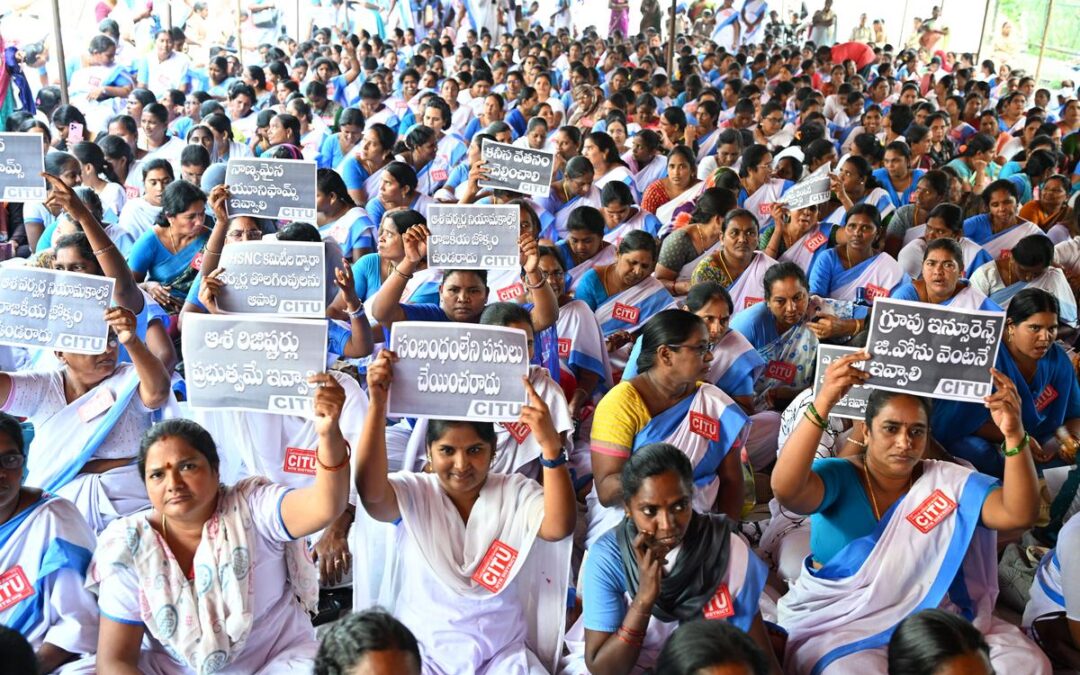
ASHA Workers Protest Is Genuine: Government Must Resolve, Not Ridicule
Why in News?
Accredited Social Health Activists (ASHAs) in Kerala have launched an ongoing protest demanding fair wages, better working conditions, and social security benefits. The agitation has exposed the inadequacies in the government’s handling of community health worker welfare and sparked a broader debate on their rights and recognition. 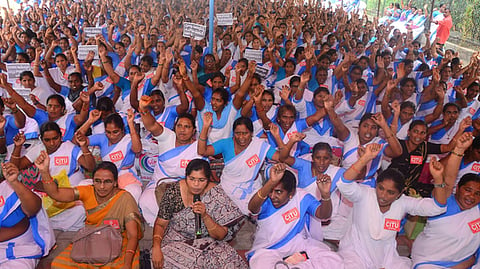
Introduction
The Left government in Kerala faces criticism over its poor handling of the ASHA workers’ protest, now nearing a month. ASHA workers, engaged under the National Health Mission (NHM), are demanding higher honorarium, pending wages, fixed working hours, and retirement benefits. However, the government’s response has been inadequate, with little effort to resolve the stalemate, leading to political blame games rather than meaningful action.
Key Issues Raised by ASHA Workers
-
Pending Wages and Honorarium Increase
- ASHAs demand an increase in their monthly honorarium from ₹7,000 to ₹21,000.
- They also seek the release of pending payments and fixed retirement benefits amounting to ₹5 lakh.
-
Fixed Working Hours
- ASHAs are pushing for regulated working hours to ensure fair labor practices.
-
Recognition and Dignity
- Despite their critical role in delivering healthcare, ASHAs remain underpaid and overworked. Their demands are centered on gaining recognition and respect for their services.
The Kerala Government’s Stand
-
Central Scheme Argument The government claims that NHM is a centrally sponsored scheme and ASHAs are considered volunteers, not regular employees. Thus, they argue, the minimum daily wage of ₹700—promised in the ruling Left Democratic Front’s (LDF) election manifesto—does not apply to ASHAs.
-
Pending Funds from the Centre Kerala’s government contends that ₹100 crore meant for ASHAs has not been cleared by the Centre. It highlights that Kerala already pays the highest honorarium to ASHAs among all Indian states.
Opposition and Protesters’ Arguments
-
State Responsibility Protesters argue that ASHAs work under the state health department, making their honorarium Kerala’s responsibility.
-
Centre’s Release of Funds The opposition claims the Kerala government is misleading people since the Centre has already released ₹815 crore out of ₹913 crore allocated to Kerala for NHM schemes (which include but are not limited to ASHAs).
Escalation of Tensions
- The situation worsened due to:
- Unsavory comments from ruling party leaders directed at ASHA workers.
- The government’s decision to train 1,300 new recruits for various health programs.
- NHM Kerala’s threats to dismiss protesting workers.
- Police action against ASHA protesters.
- A personal attack on S Mini, vice-president of Kerala Asha Health Workers Association.
These actions were perceived as intimidation tactics by the protesting ASHAs and civil society.
Civil Society Support and Public Outrage
- Civil society has strongly supported the ASHA workers, recognizing their pivotal role in Kerala’s healthcare achievements.
- Prominent individuals have condemned the government’s intimidation tactics and voiced solidarity with ASHAs.
Challenges and the Way Forward
-
Dignified Engagement The government must acknowledge the contributions of ASHAs, not ridicule their protest.
-
Fair Wages and Benefits Providing a fair honorarium, regulated working hours, and retirement benefits is essential to ensuring the dignity and welfare of ASHA workers.
-
Constructive Dialogue Instead of politicizing the issue, the government should hold sincere negotiations with the workers to resolve their grievances.
Conclusion
ASHAs are the backbone of Kerala’s community healthcare system, and their struggle for fair wages and dignity should not be trivialized. The government’s approach, marked by intimidation and blame-shifting, undermines their contributions. It’s time for the Kerala government to step up, engage with the ASHAs respectfully, and offer them the recognition and support they deserve.
Questions and Answers
-
Who are ASHAs?
Accredited Social Health Activists (ASHAs) are community health workers engaged under the National Health Mission (NHM). -
What are ASHA workers in Kerala demanding?
They are demanding pending wages, an increased honorarium from ₹7,000 to ₹21,000, fixed working hours, and retirement benefits of ₹5 lakh. -
How many ASHA workers are protesting in Kerala?
Around 26,125 ASHA workers are part of the agitation. -
What is the Kerala government’s argument against the ASHA demands?
The government claims ASHAs are volunteers under a central scheme and not entitled to minimum wages as regular employees. -
What does the opposition allege about the government’s handling of the issue?
The opposition accuses the government of misleading the public and claims the Centre has already released most of the NHM funds. -
What actions by the Kerala government have been criticized as intimidation tactics?
Threats to dismiss protesters, police action, personal attacks on union leaders, and training of new recruits during the protest. -
Why is civil society supporting ASHA workers?
Because of their significant contributions to Kerala’s healthcare system and the injustice of their underpayment and poor working conditions. -
What does the article suggest the government should do?
Engage with ASHAs in respectful dialogue, recognize their contributions, and resolve their grievances fairly. -
What has been the reaction of prominent individuals regarding the ASHA protests?
Many have spoken out against the government’s tactics and expressed solidarity with ASHA workers. -
What is the overall message of the article?
The government must resolve the protest respectfully and ensure dignity, fair wages, and proper working conditions for ASHA workers.

