
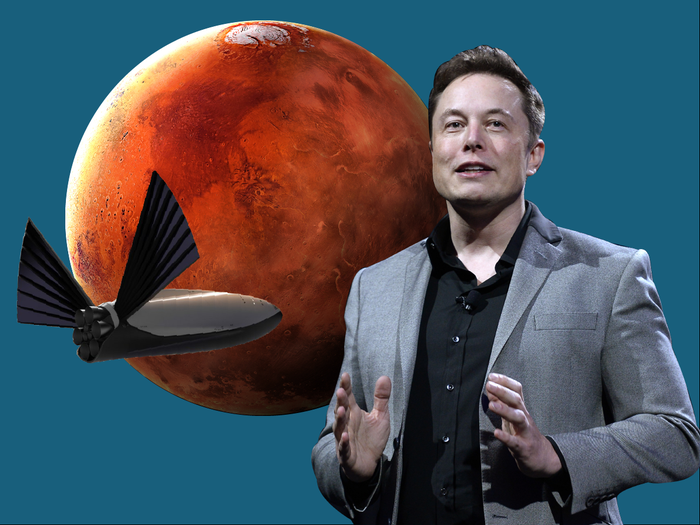
Imperator of Mars: Elon Musk Audacious Dream to Colonize the Red Planet
Why in News?
Elon Musk’s ambitions for colonizing Mars are back in the spotlight as SpaceX faces delays in its latest Starship rocket launch due to booster problems. Despite setbacks, Musk remains steadfast in his vision of putting humans on Mars by 2026 and building a self-sustaining city of one million inhabitants by 2050. His renewed social media presence, including the title “Technoking of Tesla, Imperator of Mars”, signals his unwavering commitment to this interplanetary mission.
Introduction
At a campaign rally alongside Donald Trump on October 5th at the Butler, Pennsylvania fairgrounds, Elon Musk made a low-key but symbolic statement: his T-shirt read “Occupy Mars.” While it was a casual appearance, it subtly reaffirmed Musk’s long-term plan—colonizing Mars. Musk’s SpaceX has made no secret of its bold vision: transforming humanity into an interplanetary species.
Key Features of Musk’s Mars Vision
| Feature | Details |
|---|---|
| Objective | Colonize Mars; establish a self-sustaining human settlement |
| Timeline | First human landing by 2026; a city of 1 million residents by 2050 |
| Motivation | Fear of Earth’s “population collapse” and existential threats to humanity |
| Major Milestones | Launch of SpaceX’s Starship rockets; development of booster technology |
| Estimated Cost for Travelers | $100,000 to $500,000 per person for potential settlers |
| Challenges | No breathable atmosphere; transporting essential materials; lack of Mars-based economy |
| Economic Model Concerns | Difficult to sustain economic activity; Mars may remain a tourist attraction at best |
The Concept of “Imperator of Mars”
In 2021, Musk updated his Twitter bio to read: “Technoking of Tesla, Imperator of Mars.” The term “Imperator” historically refers to an emperor or military commander. While Musk isn’t the first to champion Mars colonization, he has certainly popularized the concept like no other entrepreneur in modern times.
Pop Culture and Mars Colonization
Musk’s dream isn’t entirely science fiction. Movies and series such as:
- Total Recall (1990), starring Arnold Schwarzenegger, depicted a colonized Mars in 2084.
- Red Planet (2000) imagined a Mars terraformed by algae producing oxygen.
Similarly, the sci-fi series The Expanse discusses off-world colonies driven by the need to survive Earth’s collapse.
Practical Challenges of Colonizing Mars
-
Sustaining an Economy:
- Mars lacks a breathable atmosphere.
- Capital, technology, and labor must be transported from Earth.
- Without economic incentives, Mars may only serve as a tourist attraction.
-
Population Interest:
- Surveys suggest tepid enthusiasm for Mars migration.
- A YouGov survey in 2021 found that three-quarters of Americans were uninterested in space colonization.
- Only 43% of Britons would venture to Mars if guaranteed a return trip.
-
Cost of Travel and Settlement:
- Musk estimates a ticket price between $100,000 and $500,000.
- Expenses for colonization could reach $1 trillion, just to deliver usable payloads to Mars’ surface.
- Even the world’s richest nations may hesitate to invest without profit incentives.
Climate Priorities vs. Space Exploration
Many critics argue that:
- Resources could be better spent addressing climate change.
- Projects to lower Earth’s temperature or save biodiversity should take precedence.
- Space colonization may serve only ultra-rich tourists without addressing urgent human needs.
Notably, Bernie Sanders and Greta Thunberg have expressed skepticism about prioritizing Mars colonization over Earth’s environmental crisis.
Who’s in the Race?
Besides Musk’s SpaceX, competitors include:
- NASA
- Jeff Bezos’ Blue Origin
These entities are advancing their own Mars missions, potentially shaping the future of space colonization. Musk, however, stands out with his grand, high-risk, high-reward strategy.
Conclusion
Elon Musk’s dream of becoming the Imperator of Mars is no longer confined to science fiction. While his plan to colonize Mars by 2050 remains ambitious—and controversial—the conversation it sparks around the future of humanity is undeniable. Whether Musk’s vision is practical or a rich man’s fantasy, his efforts are reshaping the debate on humanity’s next great adventure: life beyond Earth.
In Summary
- Why in News?: Musk’s SpaceX delays and his continued push for Mars colonization.
- Key Features: Vision of a million-person Mars city by 2050; enormous costs and risks involved.
- Public Opinion: Mixed, with significant skepticism about feasibility and relevance.
- Global Impact: Raises questions about Earth’s priorities versus space exploration.

