
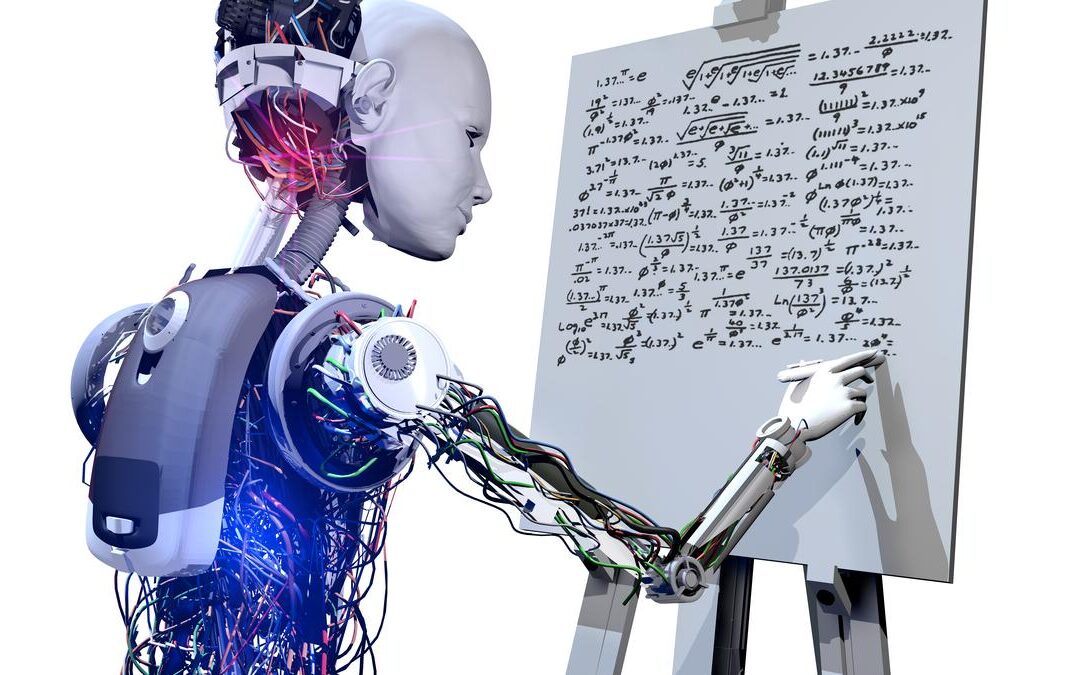
Is Artificial Intelligence Affecting Critical Thinking Skills?
Artificial Intelligence (AI) tools are increasingly becoming part of classrooms worldwide. A recent study revealed that almost all undergraduates use generative AI (GenAI) in their studies. Additionally, over 61% of educators in India are using AI tools in education. This rising trend has sparked concerns that students might start accepting information at face value rather than critically analyzing it.
To address this issue, Arun Kumar Tangirala and Arul George Scaria discussed the impact of AI on education, particularly on critical thinking skills. 
Key Discussion Points
Should AI Be Permitted in College Classrooms?
🔹 Arun Kumar Tangirala:
AI should be permitted since it has already become an essential part of life. Even if it is prohibited, students will still find ways to use it. However, the extent of AI usage should be carefully considered, depending on the subject.
For example:
- If the goal is to improve computational thinking, AI should be used minimally.
- If coding is involved, AI should be used strategically to enhance students’ learning rather than replace their skills.
🔹 Arul George Scaria:
While AI can be a useful tool in classrooms, its unregulated use can be problematic. AI-based teaching methods must include ethical guidelines to ensure students develop critical thinking skills alongside their learning.
AI’s Role in Education & The Need for Regulation
🔹 Impact of AI in Classrooms
- The use of AI in education is not just about students; teachers and institutions also need to adapt.
- Schools must create frameworks that guide the ethical and responsible use of AI.
🔹 Concerns About AI Overdependence
- Studies suggest that overreliance on AI-generated answers can reduce students’ critical thinking skills.
- AI can store and broadcast personal data, raising privacy and ethical concerns.
- Governments and policymakers must implement stronger AI regulation policies in education.
Course Design and AI’s Impact on Critical Thinking
🔹 Arun Kumar Tangirala:
- AI should be an integral part of modern education as industries are already integrating AI into workplaces.
- Courses must balance AI integration while ensuring students develop problem-solving and analytical skills.
🔹 Arul George Scaria:
- AI should not replace traditional learning but rather complement it.
- Universities should conduct ethical AI usage dialogues to train students in responsible AI practices.
Why in News?
- The rise of AI-based tools in classrooms has led to debates about its impact on students’ cognitive skills.
- Recent studies warn that overuse of AI might lead to a decline in analytical and critical thinking abilities.
- Government bodies are exploring regulatory measures to ensure AI in education does not hinder students’ intellectual development.
Conclusion
While AI has transformed education, its impact on critical thinking skills remains a major concern. The future of education must balance AI integration with ethical policies to prevent over-reliance. AI should be seen as a tool to enhance learning, not as a substitute for cognitive development. Institutions and educators must work together to ensure AI is used responsibly, preparing students for a future where technology and critical thinking coexist.

