

Federal Principles and Democratic Impulses in Conflict Over Delimitation
Why in News? The recent all-party meeting chaired by Tamil Nadu Chief Minister M.K. Stalin has reignited debates over the delimitation process. The demand to freeze the strength of the Lok Sabha and State Assemblies beyond 2026 for 30 years raises critical questions about federalism, representation, and demographic shifts.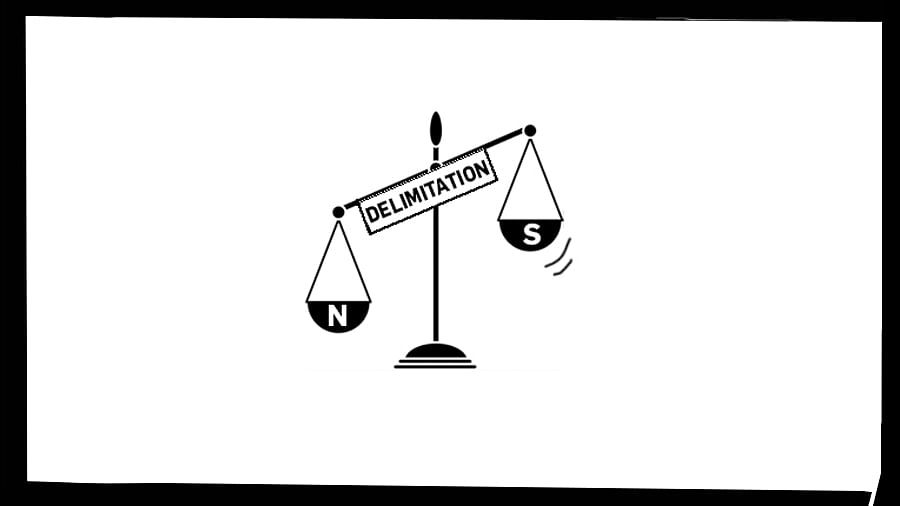
Background on Delimitation Delimitation refers to the process of redrawing electoral constituency boundaries based on population changes. The last major exercise was conducted after the Delimitation Commission was set up in 2002. The upcoming 2026 delimitation process, if implemented based on Census data, is expected to bring significant challenges, particularly for southern states.
Key Issues in the Delimitation Debate
- Population-Based Seat Allocation:
- Southern states argue that their lower fertility rates and population control efforts should not penalize them in terms of seat share reduction in the Lok Sabha.
- States with higher population growth may gain more seats, creating an imbalance in representation.
- Electoral Malapportionment:
- Between 2004 and 2024, India’s electorate has grown by approximately 45%.
- Disparities in voter distribution across constituencies exist, with Karnataka’s Bangalore North having 3.2 million voters, while Udupi Chikmagalur has only 1.6 million.
- Unequal representation leads to inefficient electoral structures.
- Federal vs. Democratic Principles:
- Allowing delimitation within each state while keeping overall seat share frozen is a potential solution but may not be equitable for states with large population increases over decades.
- Southern states fear losing political influence if representation is strictly population-based.
Tamil Nadu’s Concerns and the Call for Freeze
- The all-party meeting highlighted the risk of “indelible injustice” if the 2026 Census is used for delimitation.
- Tamil Nadu supports delimitation but not at the cost of penalizing progressive states that have achieved population stability.
- The need for a transparent, consensus-driven approach was emphasized to prevent political and regional distrust.
Way Forward
- The Union government should engage with states to establish fair delimitation criteria.
- A transparent Delimitation Commission process is necessary to ensure equitable representation.
- Balancing democratic representation with federal considerations will require constitutional flexibility and regional sensitivity.
The upcoming delimitation exercise must strike a balance between electoral fairness and preserving India’s federal structure. The challenge lies in ensuring that states that have successfully controlled population growth do not suffer politically, while maintaining equitable representation across the nation.

